




Meta Description: Backyard mini farms coop ideas are transforming small outdoor spaces into productive homesteads. Discover 9 clever, space-saving designs perfect for any yard size.
9 Space-Saving Backyard Mini Farms Coop Ideas
You don’t have to own acres of land to raise chickens or start a mini farm. A tiny backyard can be just as successful — if you play your cards right.
Others are converting their yards into part-time productive homesteads. Fresh eggs, homegrown herbs, and composted soil are only a few of the rewards. But there is one big challenge that keeps most beginners at bay: space.
That is where smart coop design comes into play.
The right backyard mini farms coop ideas can transform even a small urban yard into a productive food-generating garden. Whether you’re working with a 10×10 patch or a quarter-acre lot, there’s a setup that suits your lifestyle.
This guide takes you step-by-step through 9 must-know coop ideas that maximize space without compromising function, comfort, or style.
Why Space-Saving Coops Are More Important Than Ever
Land is expensive. Backyards are shrinking. City zoning restrictions limit flock sizes. This means traditional big coops just don’t suit most modern homesteaders.
But being smaller does not equal lesser output.
A well-designed compact coop can house 4–6 hens comfortably, produce 20–30 eggs a week, and fit in an area smaller than most garden sheds. The trick is verticality, furniture that serves several functions, and clever layouts.
1. The Vertical Tower Coop — Go Up, Not Out
When there is limited floor space, go vertical.
A vertical tower coop stacks sleeping quarters, nesting boxes, and a tiny run on top of one another. Think of it as a chicken apartment building. The footprint can be as small as 4×2 feet, yet still provides a suitable area for birds to roost, nest, and move.
How to Build One
The basic structure consists of a wooden frame — typically cedar or treated pine — with wire mesh on the sides. The run occupies the bottom level. The middle level holds food and water. The sleeping and nesting area sits on the top level.
A ramp connects each level so birds can move freely up and down.
This design is better suited for bantam breeds or small standard hens such as Silkies, Easter Eggers, or Seramas. These birds require less horizontal space and adapt well to tiered living.
Why It Works for Small Backyards
- Minimal ground footprint (under 10 sq ft)
- Easy to move around the yard
- Predator-resistant if built with hardware cloth
- Can be placed against a fence or wall to save even more space
One thing to watch: make sure ventilation is strong at every level. Hot air rises and can get trapped in upper sections during summer months.
2. The A-Frame Chicken Tractor — Move It Where You Need It
A chicken tractor is a movable coop with no floor. You pull it around the yard so the chickens always have access to fresh grass.
The A-frame version is the most space-efficient design. It’s lightweight, simple to construct, and requires minimal material.
What Makes the A-Frame Special
The triangular shape gives the structure natural strength. No extra bracing is needed. The sloped sides also automatically shed rain and snow, simplifying maintenance.
A standard A-frame tractor is approximately 4 feet wide by 6–8 feet long. One end holds the enclosed coop. The opposite end is an open run covered with wire mesh.
It’s moved every day or two to provide fresh foraging ground for chickens. This also naturally fertilizes your lawn — no raking up droppings necessary.
Best Practices
Move it in the morning, before the heat sets in. Avoid placing it in waterlogged areas. Also ensure the wire mesh extends slightly into the ground to prevent digging predators from getting in.
This is one of the most popular backyard mini farms coop ideas for homesteaders seeking a low-effort, high-return setup.
3. The Pallet Coop — Cheap, Sturdy, and Surprisingly Attractive
Free pallets are everywhere. Craigslist, Facebook Marketplace, local warehouses — most places give them away just to get rid of them.
A pallet coop uses these discarded wooden platforms as the main building material. With basic tools, you can build a solid 4×6 coop for very little money.
Turning Pallets Into a Proper Home
Start by finding heat-treated pallets (marked “HT” on the side). Avoid chemically treated ones (marked “MB” — these contain methyl bromide and are not safe for animals).
Stand four pallets upright to form the four walls. Attach them with screws at the corners. Add a pallet on top as a roof base, then cover it with corrugated metal or roofing felt for weatherproofing.
Cut openings for a door, a pop hole for chickens, and ventilation gaps near the roof line.
Interior Setup
Inside, install two or three nesting boxes along one wall. Run a wooden dowel or thick branch across the upper section as a roosting bar. Chickens naturally want to sleep up high, so give them that option.
Finish the floor with a hardware cloth skirt extending at least 12 inches outward to stop digging predators.
4. Under-Deck Coops — A Genius Use of Wasted Space
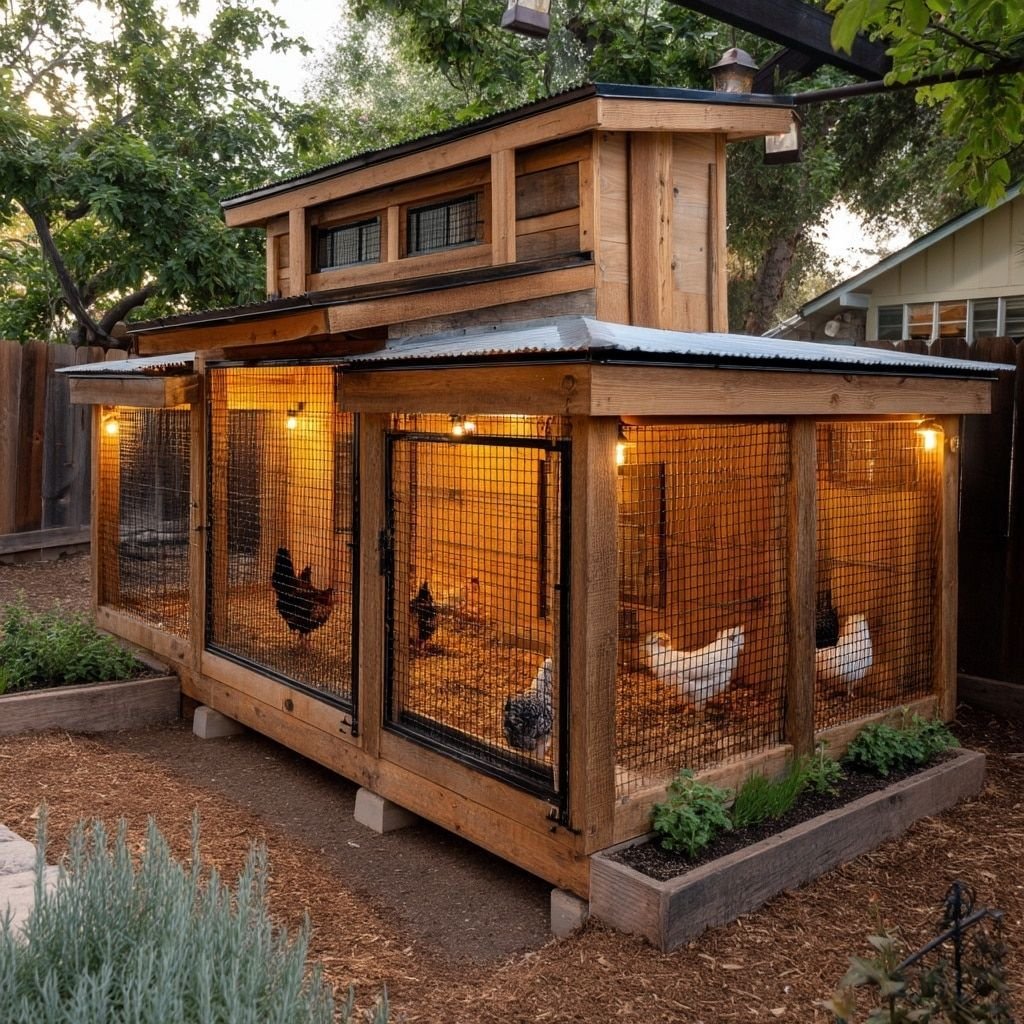
Most homes with a raised deck have 30–60 square feet of unused space underneath. That shaded, protected spot is ideal for a chicken coop.
What You’ll Need
If you build into a corner, the deck structure itself becomes your roof and two walls. You only need to construct the remaining walls and a front-facing door.
Use pressure-treated lumber for any ground contact. Install wire mesh across all open sides. Make sure there’s enough headroom for you to walk in and collect eggs comfortably — at least 4.5 feet is ideal.
Key Benefits of This Design
| Feature | Benefit |
|---|---|
| Natural shade | Keeps hens cool in summer |
| Protected roof | Reduces weathering on the coop |
| Hidden from view | Looks tidy from the yard |
| Maximizes unused space | No extra land required |
| Predator deterrent | Structure adds a barrier layer |
The biggest challenge is drainage. Water can pool under a deck during heavy rain. Solve this by laying a gravel base at least 4 inches deep before placing the coop floor, or using a wire-mesh floor with a droppings tray.
5. The Lean-To Coop — Built Against a Wall or Fence
A lean-to coop attaches directly to an existing structure — a fence, a garage wall, a garden shed, or even the side of your house.
This design saves material because one full side of the coop already exists. It also uses a sloped roof that drains rain away from the structure, reducing rot and water damage.
Space It Takes Up
A lean-to as small as 4×4 feet can house 3–4 small hens. Larger versions (6×8 feet) comfortably fit 6–8 birds with a small attached run.
The run can extend outward in front of the coop, which means you’re only “using” yard space in one direction, not all four sides.
Smart Additions to a Lean-To Design
- A droppings board under roosting bars makes weekly cleaning fast
- Auto-opening doors keep your schedule flexible
- Hinged roof panels allow easy egg collection without entering the coop
- Paint or stain the exterior to match your fence or home siding
This is a great option for homesteaders who care about how their setup looks from the street. It blends in naturally with existing structures and doesn’t look out of place in a suburban backyard.
6. The Raised Ark — Elevated Living With a Built-In Run
An ark coop resembles a wooden tent. It’s a triangular structure with solid sides and a covered sleeping section at one end.
The raised version elevates the sleeping quarters off the ground on short stilts. This does two important things: it protects against ground moisture and predators, and it creates extra run space beneath the sleeping area.
Why Elevation Matters
Chickens that sleep directly on the ground are vulnerable to damp, cold, and burrowing predators like rats and foxes. Raising the coop just 12–18 inches off the ground dramatically reduces these risks.
The sheltered space under the raised section gives birds a shaded, protected area to dust-bathe and rest during hot days.
Building Tips
Use exterior-grade plywood for the solid panels. Apply a non-toxic wood stain or sealant on all outer surfaces. Add ventilation holes near the peak of the ark and cover them with hardware cloth.
The run section of the ark should be covered with welded wire mesh — not chicken wire, which is too easy for predators to tear through. Bury or pin the edges flat to the ground.
This is one of the backyard mini farms coop ideas that works equally well on flat ground, slopes, or patchy grass.
7. The Corner Coop — Fit Into Forgotten Angles
Every yard has corners. Most people ignore them or pile garden furniture there. A corner coop turns that triangular dead space into one of the most productive square footage on your property.
Designing for a Corner
A corner coop uses two existing fences (or walls) as two sides. You only need to build one angled front wall and a roof. This significantly cuts material costs and labor.
The design naturally creates a wedge shape, which is more visually interesting than a plain box. You can add a small attached run that fans out in front of the structure.
What to Watch Out For
Corner areas often collect leaves, debris, and moisture from both adjacent fence lines. Before building, clean the area thoroughly and lay hardware cloth along the ground with a gravel layer on top.
Also check that your fences are strong enough to support roof attachment. If not, add a corner post in the back angle and run your roof rafters from there.
8. Modular Coops — Expand When You’re Ready
A modular coop system starts small and grows with your flock. You begin with a basic 2-hen unit and add sections as needed — without demolishing the original structure.
How Modularity Works
Each section connects to the next with a standard-width doorway and matching run panels. The coop sections use identical framing dimensions, so new units fit together like building blocks.
This is the most future-proof of all backyard mini farms coop ideas. You start within city flock limits (often 4–6 hens), then expand if zoning changes or you move to a bigger property.
For more inspiration on planning your setup from the ground up, visit Backyard Mini Farms — a dedicated resource for small-space homesteaders looking to grow smart.
Costs and Planning
Modular systems cost more upfront because you need standard dimensions throughout. But they save money long-term since you’re not rebuilding from scratch every time your flock grows.
| Modules | Footprint | Hens Supported | Approx. Build Cost |
|---|---|---|---|
| 1 | 4×4 ft | 2–3 | $120–$200 |
| 2 | 4×8 ft | 4–5 | $200–$340 |
| 3 | 4×12 ft | 6–8 | $320–$500 |
| 4 | 4×16 ft | 9–12 | $450–$700 |
Costs vary based on materials used, local lumber prices, and whether you add extras like automatic doors or heating elements.
9. The Shed Conversion — Maximum Space, Minimum New Build
If you already have a garden shed sitting unused or underused, you might already own the best coop on this list.
Converting a shed into a chicken coop is faster and cheaper than building from scratch. The walls, roof, and floor already exist. You just need to adapt the interior.
Step-by-Step Conversion
First, clean the shed completely. Remove all chemicals, oil stains, or anything toxic. Sand the interior walls and paint with a non-toxic poultry-safe paint.
Add ventilation by installing two vents near the roofline on opposite walls. Cover them with hardware cloth to keep predators out.
Build nesting boxes along one interior wall at about 18 inches off the ground — one box for every 3–4 hens. Install roosting bars at the highest accessible point inside.
Cut a pop hole (a small chicken-sized door) near the bottom of one wall. Attach an automatic opener if possible.
Finally, build or attach a run outside the shed. This is where most birds will spend the majority of their waking hours.
Shed Conversion Space Guide
A 6×8 shed comfortably houses 8–10 standard hens with a good run attached. A 4×6 shed works well for 4–6 birds.
This is the fastest setup on the list and one of the most popular backyard mini farms coop ideas for people who want to start keeping hens quickly.
Picking the Right Idea for Your Yard
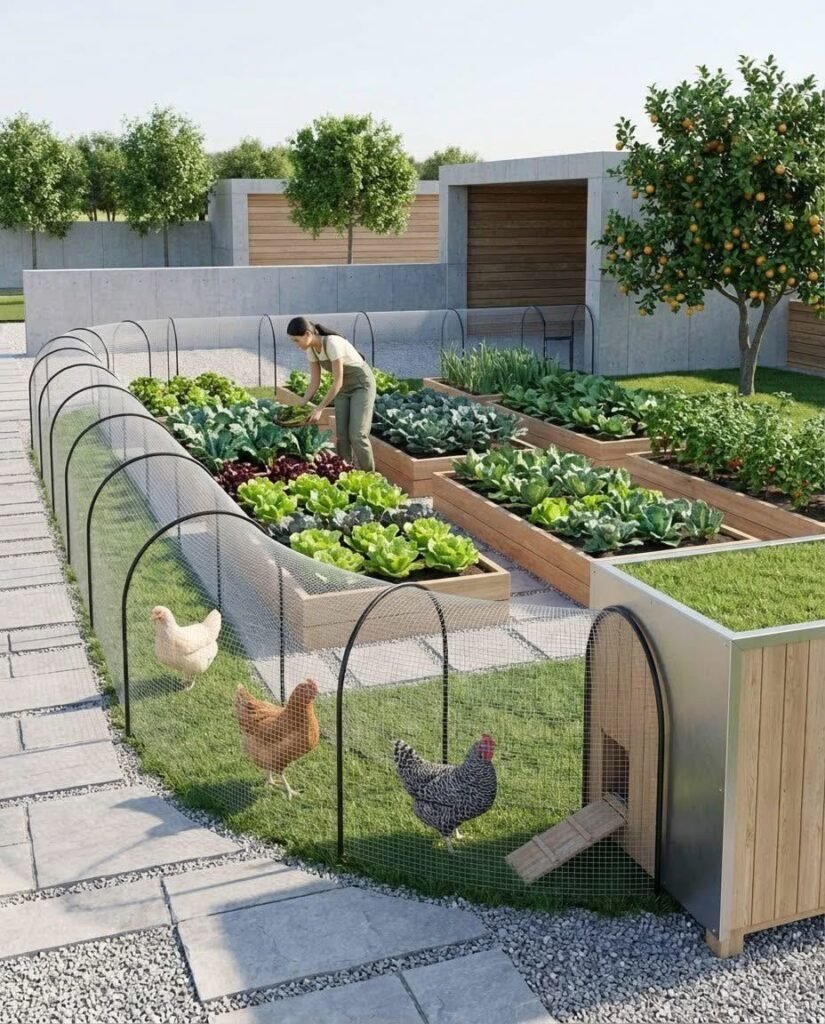
Not every design suits every backyard. Here’s a simple guide to help you choose:
| Your Situation | Best Coop Idea |
|---|---|
| Tiny urban yard (under 200 sq ft) | Vertical tower or A-frame tractor |
| Rental property or temporary home | A-frame tractor (fully movable) |
| Budget under $150 | Pallet coop |
| Existing deck or shed | Under-deck or shed conversion |
| Want something attractive | Lean-to or corner coop |
| Planning to expand your flock | Modular coop |
| Mild climate with flat ground | Raised ark |
Matching your setup to your actual yard conditions saves a lot of frustration down the line.
Essential Features Every Space-Saving Coop Needs
No matter which design you choose, every good coop shares a few non-negotiable features.
Ventilation. Fresh air prevents respiratory illness. Every coop needs openings near the top that stay open year-round, even in winter.
Predator protection. Use hardware cloth — not chicken wire — on all open sections. Bury or secure edges flat along the ground. Secure all doors with a bolt — raccoons can open simple latches.
Easy cleaning access. Design for weekly cleanouts from day one. Hinged roofs, removable droppings trays, and wide access doors make this much less of a chore.
Nesting boxes. One box for every 3 hens is enough. Make them dark and slightly raised — hens prefer a sense of privacy when laying.
Roosting bars. Position them higher than the nesting boxes so hens sleep on the bars, not in the nests.
FAQs About Backyard Mini Farms Coop Ideas
How much space does a chicken need in a backyard coop? Most experts recommend at least 2–4 square feet of indoor coop space per hen, plus 8–10 square feet of outdoor run space per bird. Smaller breeds can manage with a little less, while larger breeds need more room.
Can I keep chickens in a very small backyard? Yes, absolutely. With the right backyard mini farms coop ideas — like a vertical tower or A-frame tractor — even a 100-square-foot yard can support 2–4 hens. Always check local zoning rules before you start.
What is the cheapest coop to build? A pallet coop is typically the cheapest option, often costing under $50 if you source free pallets and have basic tools. A lean-to coop using an existing fence wall is another very low-cost option.
Do backyard chickens smell bad? Only if the coop is not cleaned regularly. A well-maintained coop cleaned weekly with dry bedding — straw, wood shavings, or sand — should produce very little odor. Deep litter method setups with the right carbon-to-nitrogen balance are almost odor-free.
How many eggs can I get from a backyard flock? A healthy hen lays roughly 4–6 eggs per week during peak production (usually spring through autumn). A small flock of 4 hens can produce 16–24 eggs per week — more than enough for most households.
What’s the best wood to use for a backyard chicken coop? Cedar and redwood naturally resist rot and insects. Treated pine works well for ground contact. Avoid using OSB (oriented strand board) on exteriors — it absorbs water quickly and degrades fast.
Do I need planning permission for a backyard chicken coop? This depends on where you live. Most local councils and municipalities have rules about flock size, coop placement, and whether roosters are allowed. Check with your local authority before building anything permanent. According to The Spruce’s guide on chicken-keeping laws, regulations vary widely even between neighboring towns, so always verify before you build.
Can chickens live in a small coop all year round? Yes, with good insulation and ventilation. In cold climates, add extra bedding during winter and block drafts — but don’t seal all vents, since fresh air is more important than warmth. In hot climates, focus on shade and airflow above everything else.
Bringing Your Backyard Mini Farm to Life
Starting a backyard mini farm doesn’t require land, big budgets, or construction experience.
It requires the right idea matched to the right space.
Whether you go with a sleek lean-to against your garden wall, a mobile A-frame that fertilizes your lawn, or a converted shed that was sitting empty for years — the goal is the same: make the most of what you have.
Backyard mini farms coop ideas have come a long way. Today’s designs are smarter, more space-efficient, and more beginner-friendly than ever before.
Pick one idea from this guide. Start small. Get your first flock settled in. You’ll be collecting fresh eggs from your own backyard before you know it — and wondering why you didn’t start sooner.
Happy building — and happy farming.