





Meta Description: Backyard mini farms chicken care can be simple, fun, and rewarding. Discover 10 clever hacks that save money, boost egg production, and keep your backyard flock thriving all year long.
10 Secret Backyard Mini Farms Chicken Care Hacks Every Flock Owner Needs to Know
Imagine: You step out into your backyard on a calm morning, collect a basket of eggs, and know that your hens are healthy, happy, and fully taken care of — without spending hours doing chores.
Sounds too good to be true?
It’s not. Backyard chicken keepers have secretly relied on a set of clever tricks for years. These hacks save on work, reduce feed expenses, keep hens out of harm’s way, and increase egg production — all at once.
If you’re brand new to backyard mini farms chicken care or if you’ve had a small flock for years, these 10 secret hacks will transform how you work with your birds. Let’s get into it.
Why Keeping Chickens in Your Backyard Has Skyrocketed
Now more families than ever are raising chickens at home. It makes sense. Fresh eggs taste better than anything you can find in a store. Hens eat kitchen scraps, produce rich compost, and keep kids engaged.
But here’s the part no one tells you: chickens require daily care. Feed, water, coop cleaning, predator protection — it all adds up.
And that is precisely why these hacks are important. They don’t just make things easier. They also make your entire setup smarter and more productive.
Hack #1 — The Deep Litter Method: Ditch the Daily Cleanup
Most beginners believe they need to clean the coop weekly. That’s exhausting. The deep litter method takes an entirely different approach — and it works.
The theory: rather than cleaning out waste regularly, you spread carbon-rich materials — pine shavings, straw, or dried leaves — on the coop floor. You put on a new thin layer every week or two. The pile composts in place, naturally breaks down waste, and even generates a bit of heat in winter.
How to set it up:
- Start with a 4–6 inch layer of pine shavings or straw
- Replenish with a new 1-inch layer every 1–2 weeks
- Use a pitchfork to turn and stir the litter weekly
- Only do a full cleanout once or twice a year
The litter should smell earthy — like a forest floor. If it smells like ammonia, add more carbon material or stir more frequently. Sprinkle in a handful of food-grade diatomaceous earth once a month to prevent mites.
One coop. Two full cleanouts per year. That’s the power of this method.
Hack #2 — Fermented Feed Makes Your Dollars Go Further and Keeps Hens Healthier
Dry chicken feed is fine. Fermented chicken feed is in another league entirely.
Fermentation is a natural process that increases the availability of nutrients in feed to your hens’ digestive systems. Hens take in more from every mouthful, which means they consume less. After switching to fermented, you will almost always use 25–30% less feed.
How to Ferment Chicken Feed in 3 Days
- Fill a bucket or large jar two-thirds full with pellets or crumbles
- Cover with non-chlorinated water — 2 inches above the feed
- Stir once a day and leave at room temperature for 3 days
- When it has a pleasant sour smell (like yogurt or sourdough), it’s ready
Serve it as a wet mash. Your hens will love it. The benefits show up fast — brighter, deeply orange yolks, better feather quality, and improved gut bacteria.
Fermented vs. Dry Feed — Side by Side
| Feature | Dry Feed | Fermented Feed |
|---|---|---|
| Feed consumption | Standard | ~25–30% less |
| Digestibility | Good | Excellent |
| Probiotic content | None | High |
| Preparation time | None | 72 hours passive |
| Egg yolk color | Pale to medium | Deep orange |
| Cost per week | Higher | Lower |
| Flock energy level | Baseline | Noticeably improved |
Hack #3 — Nipple Waterers: Clean Water Whenever, Wherever
Open water dishes are a mess. Hens step in them. They knock them over. They poop directly in them. You end up refilling dirty water multiple times a day.
Nipple waterers solve this completely.
These small devices attach to the bottom of a 5-gallon bucket. The hen pecks the metal nipple and a few drops of water flow out. The main supply stays sealed, clean, and algae-free.
Setting one up takes about 20 minutes:
- Buy horizontal poultry nipples online (very cheap — under $1 each)
- Drill holes into the bottom of a food-grade 5-gallon bucket
- Tighten the nipples firmly with a pair of pliers
- Hang the bucket at your hens’ shoulder height
One bucket handles 6–8 hens comfortably for a full day or two. In summer, check daily. In winter, drop a small aquarium heater inside to prevent freezing. Once a week, add a splash of raw apple cider vinegar — it wards off algae and supports gut health naturally.
Hack #4 — A Pest-Free Dust Bath Station Without Chemicals
Chickens roll in dry dirt to clean themselves. It’s not an eccentricity — it’s essential. Dust bathing suffocates and removes external parasites like mites and lice. Without a dedicated spot, your hens will dig up your garden or flowerbeds instead.
Give them a dust bath station of their own, and it’s a win-win.
Building the Perfect Dust Bath
Use any shallow container: an old tractor tire, a wooden sandbox, a plastic storage bin, or a car wheel rim filled with a custom mix.
The ideal dust bath recipe:
| Ingredient | Amount | Purpose |
|---|---|---|
| Fine dry dirt | 50% | Base material |
| Play sand | 25% | Drying and grit |
| Wood ash | 15% | Natural mite killer |
| Food-grade diatomaceous earth | 10% | Parasite control |
Place the station in a dry, shaded area so it doesn’t fill with rainwater. Hens will use it instinctively — no teaching needed. This one setup can replace chemical parasite treatments in many backyard flocks.
Hack #5 — Solar Coop Lighting Keeps Eggs Coming All Winter
Here’s something that surprises many first-time flock owners: hens require about 14–16 hours of light every day to lay eggs consistently.
When winter arrives and daylight drops to 9 or 10 hours, egg production falls — sometimes to nothing. A small solar-powered light in the coop fools your hens’ bodies into believing the long days haven’t ended.
What you need:
- A small solar panel with a built-in battery (garden-light style)
- A warm-white LED bulb (7–9 watt equivalent — nothing too harsh)
- A timer to turn on the light in the morning hours
Always add the supplemental light in the morning, never in the evening. You want light to ramp up before sunrise and shut off when natural daylight takes over. Suddenly cutting off light at night confuses hens, which may cause them to pile in the wrong spots to roost.
This simple setup maintains egg production through the coldest, darkest months — for roughly the cost of one bag of feed.
Hack #6 — Predator-Proof Your Setup the Right Way (Not the Cheap Way)
Predator attacks are one of the most heartbreaking parts of backyard chicken keeping. A single gap in your fencing, a weak latch, or an unprotected run floor can cost you your entire flock overnight.
The most common mistakes are using chicken wire (which raccoons tear through easily), skipping ground protection, and using simple hook latches that clever raccoons can open in seconds.
The Complete Predator-Proofing Checklist
| Predator | Most Common Entry Point | Proven Fix |
|---|---|---|
| Raccoon | Weak latches, gaps in wire | Carabiner clips; hardware cloth (not chicken wire) |
| Fox | Digging under the fence | Bury hardware cloth 12 inches underground, angled outward |
| Weasel | Any gap over 1 inch | Seal every gap; use 1/2-inch hardware cloth |
| Hawk | Open-top runs | Bird netting or solid roof over the run |
| Rat | Floor gaps, feed storage | Metal feed bins; seal floor gaps with concrete or hardware cloth |
| Opossum | Open doors, weak walls | Automatic coop door with timer; solid wooden walls |
Hardware cloth (half-inch welded wire) is the gold standard for backyard mini farms chicken care. It costs more than flimsy chicken wire. It’s worth every cent.
Hack #7 — Plant a Chicken-Friendly Herb Border Around Your Run
This hack costs almost nothing and pays you back in three different ways.
Some herbs naturally repel insects and pests. Others support hen health when chickens nibble on them through the fence. And a living herb border makes your backyard mini farm look intentional and beautiful.
For more ideas on setting up a productive and low-maintenance backyard mini farm, visit Backyard Mini Farms — a great resource for beginner and experienced flock keepers alike.
Best Herbs to Grow Near Your Chicken Run
Lavender — deters flies and moths; calming scent reduces stress in the flock
Mint — repels rodents and insects; freshens the air around the coop
Rosemary — natural antibacterial properties; helps keep respiratory issues at bay
Oregano — one of the top natural immune boosters for chickens; supports gut health
Marigolds — deters many insects; deepens egg yolk color when eaten by hens
Plant these in a border around the outside of your run. Let some grow through the wire so hens can peck at them freely. The mix of aromatic herbs serves as a natural pest barrier while quietly improving your flock’s wellbeing every single day.
Hack #8 — Use a Mobile Coop to Rotate Your Flock Across the Yard
A stationary coop and run eventually creates a problem. The ground beneath and around the run gets stripped bare. Manure builds up. Parasites multiply in the same soil. The grass dies and doesn’t come back.
A mobile coop — also called a chicken tractor — solves all of this.
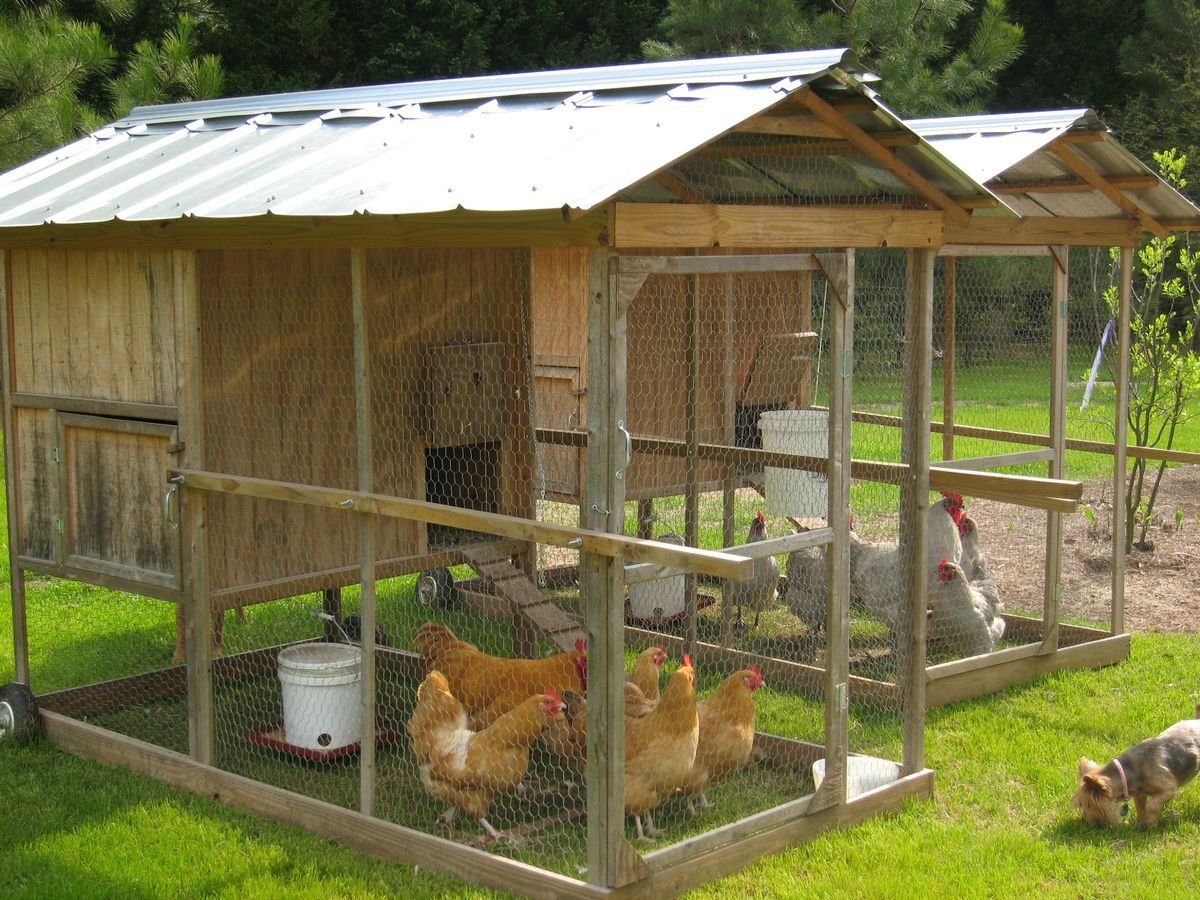
It’s simply a small coop with wheels or handles that you move every few days. The chickens graze a fresh patch of grass, fertilize it with manure, and move on before they destroy it. The previous patch has a chance to recover and regrow.
Benefits of a mobile coop system:
- Natural pest control as hens eat bugs and grubs in fresh ground
- Free fertilizer distributed evenly across your yard
- Healthier hens with access to fresh forage
- No permanently dead patches of lawn
- Lower feed costs as hens supplement their diet from the ground
Even if you only move the coop once a week, you’ll notice a dramatic improvement in both your flock’s health and your lawn’s condition within a single season.
Hack #9 — The Poop Board System: The Cleanest Coop Hack Ever
Around 70% of all chicken waste is produced while hens are roosting overnight.
That means most of the mess in your coop accumulates directly under the roosting bars while your hens sleep. A poop board takes advantage of this fact and makes cleanup incredibly fast.
How the Poop Board System Works
A poop board is simply a flat shelf or tray placed just below the roosting bars. You line it with a thin layer of Sweet PDZ (a natural stall freshener), fine sand, or wood shavings.
Every morning, you scrape the board clean with a rubber spatula or old paint scraper. The whole job takes about two minutes.
The benefits are huge:
- The main coop floor stays much cleaner for far longer
- Ammonia levels inside the coop drop significantly
- You spot health issues early — unusual droppings are easy to notice
- Full cleanouts become very rare
Pair this with the deep litter method from Hack #1 and your coop maintenance time drops to practically nothing.
Hack #10 — DIY Rollaway Nest Boxes Stop Egg Eating Dead in Its Tracks
Once a hen figures out that eggs are edible, the habit spreads quickly through your flock. Egg eating is one of the hardest backyard chicken problems to fix once it starts.
The smartest prevention? Make sure hens never get the chance to peck at fresh eggs in the first place.
A rollaway nest box is designed so that eggs gently roll away from the hen immediately after being laid. The egg disappears into a small, padded collection tray at the front or back of the box — out of reach and out of sight.
Building a Simple DIY Rollaway Box
You don’t need to buy an expensive commercial version. Build one from scrap wood with these key features:
- A floor that slopes gently (around 5–7 degrees) toward the collection end
- A small lip at the collection end to stop eggs from rolling too far
- Astroturf or a rubber mat on the slope for gentle rolling
- A curtain or hood over the laying area to give hens a sense of privacy
Rollaway nest boxes also keep eggs cleaner since they leave the laying area immediately and don’t sit under the hen’s feet.
According to the University of California Agriculture and Natural Resources, nest box design plays a significant role in egg quality, cleanliness, and reducing pecking behavior in backyard flocks.
Quick-Reference: All 10 Hacks at a Glance
| # | Hack | Problem It Solves | Setup Difficulty |
|---|---|---|---|
| 1 | Deep litter method | Constant coop cleaning | Easy |
| 2 | Fermented feed | High feed costs, low nutrition | Easy |
| 3 | Nipple waterers | Dirty, wasted water | Easy |
| 4 | Dust bath station | Mites, lice, pest problems | Easy |
| 5 | Solar coop lighting | Winter egg drop-off | Medium |
| 6 | Predator-proofing | Flock losses overnight | Takes some work |
| 7 | Herb border | Pests, hen stress, aesthetics | Easy |
| 8 | Mobile coop | Bare ground, parasite buildup | Takes some work |
| 9 | Poop board system | Daily messy cleanup | Easy |
| 10 | Rollaway nest boxes | Egg eating behavior | Medium |
Putting It All Together: A Simple Weekly Routine
Knowing the hacks is one thing. Building them into a routine is another. Here’s a realistic daily and weekly schedule for a small backyard flock of 3–6 hens using these systems:
Every morning (5–10 minutes): Scrape the poop board. Check nipple waterer levels. Collect eggs from rollaway boxes. Toss any kitchen scraps into the run.
Every 2–3 days: Serve fermented feed mash. Move the mobile coop to fresh ground (if applicable). Check the dust bath to make sure it’s dry.
Once a week: Add a thin layer of bedding to the coop floor. Top up the dust bath mix. Wipe down the nipple waterer bucket. Check for any gaps or damage to the run fencing.
Once a month: Sprinkle food-grade diatomaceous earth in the litter and dust bath. Check herb plants and trim back anything overgrown. Inspect all latches and predator-proofing.
Once or twice a year: Full coop cleanout (if using the deep litter method). Replenish nest box materials. Deep-clean the nipple waterer bucket.
That’s it. A few minutes each day, a bit more once a week. Backyard mini farms chicken care does not have to take over your life.
Common Rookie Mistakes That These Hacks Help You Avoid
Even seasoned gardeners and homesteaders make these errors when they first start keeping chickens. Knowing about them in advance saves a lot of frustration.
Mistake 1 — Using chicken wire instead of hardware cloth. Chicken wire keeps chickens in. It does not keep predators out. Raccoons tear right through it. Always use half-inch hardware cloth for any fencing that needs to stop a determined predator.
Mistake 2 — Ignoring ventilation. A coop that is too sealed traps ammonia fumes. Ammonia damages hens’ respiratory tracts and invites disease. Good coops have ventilation near the top where cold drafts don’t hit roosting birds directly.
Mistake 3 — Overcrowding. The general rule is 4 square feet of indoor coop space per hen and 8–10 square feet of outdoor run space. Cramped birds get stressed, peck each other, and lay fewer eggs.
Mistake 4 — Skipping the grit. If your hens aren’t free-ranging on natural ground, they need access to poultry grit. Grit sits in the gizzard and helps grind up food. Without it, hens cannot digest feed properly.
Mistake 5 — Changing things too fast. Chickens are creatures of habit. Sudden changes to feed, schedule, or environment cause stress and can trigger a molt or a temporary pause in egg laying. Introduce changes gradually.
Frequently Asked Questions About Backyard Mini Farms Chicken Care
How many chickens should a beginner start with? Three to four hens is ideal for a beginner. Just enough to get a steady supply of eggs without getting overwhelmed by the workload. Chickens are social animals and should never be kept alone, so one is never a good number.
How often do backyard hens lay eggs? A healthy, laying-age hen in good conditions lays roughly one egg every 24–26 hours. Most productive breeds average 250–300 eggs per year. Production drops in winter unless you supplement with light, and hens naturally lay fewer eggs as they age.
What do chickens eat besides commercial feed? Chickens are omnivores that enjoy a wide range of kitchen scraps — cooked rice, leafy greens, vegetables, fruits, and even small amounts of cooked meat or fish. Avoid onions, avocado, raw beans, chocolate, and anything salty or sugary. Always make sure grit is available if they’re eating solid foods beyond standard pellets.
How do I know if my hen is sick? Watch for signs like lethargy, pale or discolored comb, watery eyes, runny droppings, loss of appetite, or ruffled feathers when it isn’t cold. Healthy hens are alert, active, and curious. Any hen sitting puffed up alone and not eating warrants close attention and possibly a vet visit.
Can I keep chickens in a small urban backyard? Absolutely. Three to four hens can thrive in a surprisingly small space as long as they have a clean coop, daily food and water, and some outdoor run time. Check your local regulations first — some cities allow hens but not roosters, and there may be limits on flock size or coop placement.
Do I need a rooster to get eggs? No. Hens lay eggs without a rooster — those eggs just won’t be fertilized. You only need a rooster if you want to hatch chicks. Many urban backyard keepers skip the rooster entirely to avoid noise complaints from neighbors.
How do I keep my coop from smelling bad? A smelly coop usually means too much moisture, not enough ventilation, or manure building up faster than it’s being broken down. The deep litter method, the poop board system, and good airflow solve most odor problems without chemical sprays. Ammonia smell is a red flag — act on it quickly.
Conclusion: Small Farm, Big Results
Backyard mini farms chicken care doesn’t have to be a daily grind. With the right systems in place, your hens can practically take care of themselves — healthy, productive, and protected — while you spend your time enjoying the rewards.
Start with two or three of these hacks, not all ten at once. Get comfortable with the deep litter method, set up a nipple waterer, and build a proper dust bath. Those three alone will transform your daily routine.
Then add the rest over time. Each hack builds on the previous ones. Before you know it, your backyard mini farm runs like a well-oiled machine — and your egg basket is full every morning.
The chickens do the hard part. Your job is simply to set the stage.
Have a chicken care question or a hack of your own? Share it — there’s always something to learn from fellow backyard flock keepers.