
The first time I seriously considered raising animals in my backyard, I was staring at a grocery store egg carton — $7 for a dozen. I remember thinking, there has to be a better way. So I did what any slightly impulsive person would do: I bought six baby chicks, threw a coop together over a long weekend, and never looked back.
That was three years ago. Since then I’ve raised chickens, ducks, quail, and a pair of Nigerian Dwarf goats (don’t let anyone tell you those things are “low maintenance” — we’ll get to that). And honestly? It’s been one of the most rewarding — and humbling — things I’ve ever done. The grocery bill dropped. The kids learned responsibility. And I accidentally became that neighbor who shows up to cookouts with homegrown eggs.
If you’ve been thinking about starting a backyard farm but have no idea where to begin, this guide is for you. I’ll walk you through 10 practical ideas that actually work for small spaces, explain what startup really costs, and share some of the dumb mistakes I wish someone had warned me about.
1. Backyard Chickens — The Classic Starter Animal
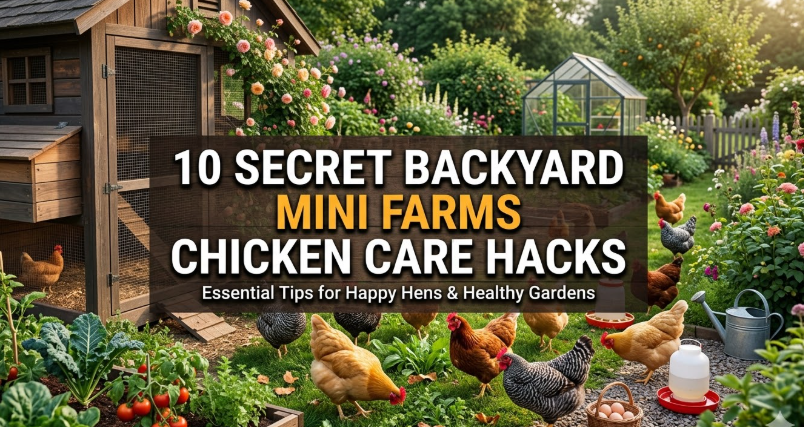
If there’s a “gateway drug” to backyard farming, it’s chickens. They’re beginner-friendly, productive, and a flock of 4–6 hens can easily supply eggs for your whole household.
Here’s what your setup will look like in the first month:
- Week 1–2: Buy day-old chicks from a local hatchery or a trusted platform like Murray McMurray Hatchery. Keep them in a brooder box with a heat lamp (around 95°F for week one, dropping 5°F weekly).
- Week 3–6: Transition them to an outdoor coop. Plan for at least 4 square feet per bird inside the coop and 10 square feet in the run.
- Week 20+: Your first egg. I kid you not, the first egg my hens laid felt like winning a prize.
The biggest mistake beginners make? Building the coop too small. You think “six chickens, how much space could they need?” — and then you end up with aggressive, stressed birds and a mess that’s three times harder to clean. Build bigger than you think you need.
One tool I genuinely love: the Chickens app (available on iOS) tracks egg production, feeding schedules, and even flock health notes. Sounds overkill, but when you’re managing multiple animals, it saves your brain.
2. Quail — The Best Kept Secret for Small Yards
I slept on quail for two years before finally giving them a shot. That was a mistake.
Coturnix quail are tiny — each bird needs only about 1 square foot of space — which makes them perfect for urban backyards. They mature in 6–8 weeks (versus 20 weeks for chickens) and start laying eggs almost immediately after.
Their eggs are small but rich, and they sell really well at farmers markets. Some people price them at $6–$8 per dozen. If you raise 20 quail in a 4×5 cage on a balcony, you could be pulling in 15–18 eggs per day.
What surprised me most was how quiet they are. Quail won’t wake your neighbors. They don’t crow, they don’t honk — they make a soft cooing sound that’s almost meditative.
3. Ducks — Better Layers Than Chickens (Yes, Really)
My Khaki Campbell ducks out-lay my chickens every single week. I’m not exaggerating. A good Khaki Campbell hen can produce 300+ eggs per year, and duck eggs are prized by bakers because of their higher fat content.
The catch? Ducks need water. Not a pond — even a simple plastic tub works — but they will make mud and mess everywhere around their water source. I learned that the hard way after one rainy week left me with what could generously be called a swamp.
Practical tip: Use rubber matting around their water station, and position it so drainage flows away from the coop. A $20 fix that saved hours of cleanup.
Ducks are also excellent natural pest controllers. Mine patrol the yard and keep slug and insect populations way down without me doing anything. It’s genuinely satisfying to watch.
4. Rabbits — The Quiet Protein Machine
Rabbits are underrated by almost everyone who hasn’t raised them. They’re silent, they don’t smell if you manage their cage properly, and they reproduce faster than you’d expect.
A single doe (female rabbit) can produce 4–6 litters a year, with 6–8 kits per litter. If you’re raising them for meat, that’s a serious amount of food from a very small space. New Zealand Whites and Californians are the go-to meat breeds.
Beyond meat, rabbit manure is called “black gold” by gardeners — it’s the only animal manure you can put directly on plants without composting. My garden has never been more productive than since I started using it.
A wire hutch raised off the ground, a hanging water bottle, and some fresh hay is genuinely all you need to start. Total setup cost can be under $150.
5. Nigerian Dwarf Goats — Small Size, Big Personality
Okay. I said I’d be honest about goats, so here it is: they are not as easy as the internet makes them sound.
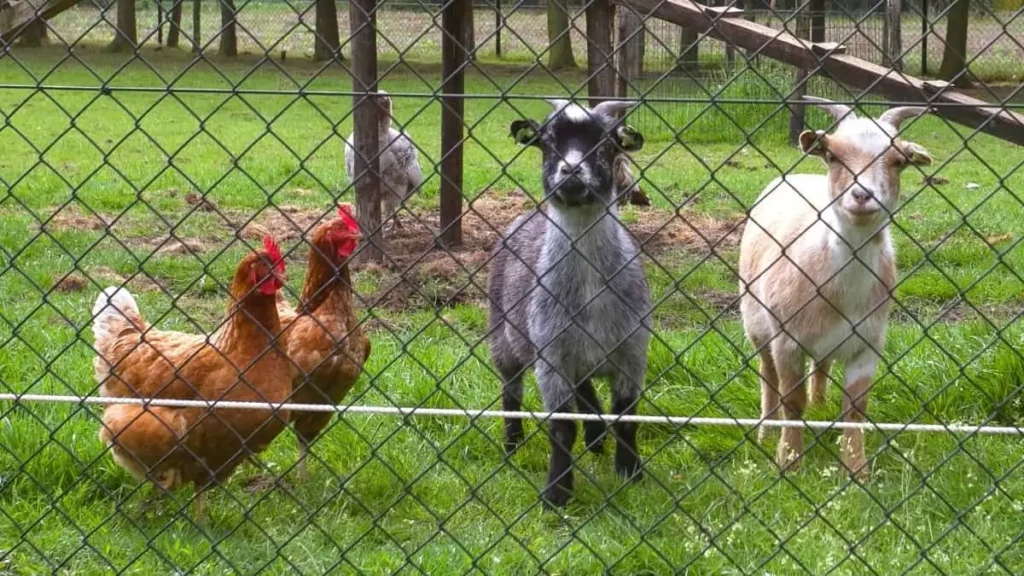
Nigerian Dwarf goats are small (about 20 lbs), friendly, and they produce surprisingly rich milk. But they are also escape artists, mischief-makers, and emotionally demanding. They need companionship — you can’t keep just one, or it’ll be miserable and vocal about it.
That said, the payoff is real. A Nigerian Dwarf doe in milk can produce about a quart per day of milk with 6–10% butterfat content (cow milk is usually 3–4%). That’s incredible for making cheese, butter, or just drinking.
You’ll need at minimum 200 square feet for a pair, solid fencing (they’ll test every weak point), and a basic shelter. Budget around $400–$900 for two quality does.
They also respond well to routine. I use the Goat Journal app to track milking schedules, worming dates, and breeding cycles. Once you build the habit, it becomes second nature.
6. Honey Bees — The Backyard Investment That Gives Back
A single hive can produce 30–60 pounds of honey in a good season. Raw local honey sells for $12–$20 per pound at farmers markets. Do that math and you’ll see why beekeeping has exploded in popularity.
The startup cost for a basic Langstroth hive setup, protective gear, and a nucleus colony (nuc) runs about $400–$700. It sounds steep, but a well-managed hive pays that back within the first full season.
The learning curve is steeper than chickens or quail. You need to understand bee behavior, seasonal management, and how to identify diseases like American Foulbrood or Varroa mite infestations. I’d strongly recommend taking a local beekeeping club course before you buy your first package. Most areas have one run by the state extension service, often free or under $50.
One unexpected benefit? My vegetable garden’s productivity jumped noticeably in the first summer after I installed hives. Pollination is everything.
7. Turkeys — Seasonal Income With Low Overhead
Most people think of turkeys only at Thanksgiving, but that’s exactly what makes them a business opportunity. Heritage breed turkeys like Bourbon Reds or Narragansett sell for $80–$150 each around the holidays.
Turkeys take about 28 weeks to reach market weight, so if you start poults in April or May, you’re harvesting in late October or November — right when demand peaks. The timing almost does itself.
They need more space than chickens and they’re a bit more demanding as young poults (they require higher protein feed and can be prone to respiratory issues in cold drafts). But once they’re past 8 weeks, they’re surprisingly hardy.
For a beginner, starting with just 6–10 birds as a test run is smart. The goal is to learn the production cycle before scaling up.
8. Guinea Fowl — The Free Security System
Guinea fowl are loud, strange, and absolutely fearless. They are also incredibly good at two things: alerting you to predators and destroying tick populations in your yard.
If you live in an area with deer ticks (which carry Lyme disease), a small flock of 6–8 guinea fowl can genuinely reduce tick counts on your property by a significant amount. Studies from agricultural universities have backed this up.
They free-range more than chickens and prefer to roost in trees if you let them. Their eggs are smaller but edible. The big downside: they’re noisy. Not background noise — alarm system noise. You need patient neighbors.
Don’t keep guinea fowl as your only bird. They integrate better as part of a mixed flock with chickens.
9. Miniature Pigs — More Work Than You Think, But Rewarding
Before I go any further: miniature or “micro” pigs are not the tiny forever-piglets some breeders advertise online. Most “mini” pigs grow to 50–150 lbs. Anyone selling you a fully grown “teacup pig” that fits in a shoebox is not being straight with you.
That said, a small-breed pig like a Kunekune or American Mini is genuinely manageable in a large backyard. They’re excellent for converting food scraps into meat, they’re intelligent, and they’re trainable.
They need rooting space (a dirt area they can dig in), shade, a mud wallow, and sturdy fencing. Pigs are strong — they’ll test chain link. Use cattle panels or hog wire.
For a first-timer, I’d recommend raising a pair of feeders (young pigs bought to raise to market weight) rather than starting a breeding operation. You’ll learn the basics in about 6 months and end up with a freezer full of pork.
10. Tilapia (Aquaponics) — High-Tech Farming for Small Footprints
This one is for the person who likes systems and data. An aquaponics setup combines fish farming (usually tilapia) with hydroponic vegetable growing in one closed-loop system. The fish waste fertilizes the plants, the plants filter the water for the fish. It’s elegant.
A basic backyard setup with a 200-gallon fish tank and grow beds can produce 50–100 lbs of fish per year plus vegetables — lettuce, herbs, tomatoes — all from a footprint smaller than a parking space.
The investment is higher ($600–$1,200) and the system requires monitoring water chemistry (pH, ammonia, nitrates). Apps like Aquabuddy or even a basic spreadsheet log help you track parameters. Once the system cycles and stabilizes (takes about 4–6 weeks), it’s actually quite self-managing.
The biggest mistake beginners make is adding too many fish too fast before the bacterial colony (the biological filter) is established. Start with 5–10 fish, wait 6 weeks, then scale up.
Common Mistakes to Avoid (That I Made So You Don’t Have To)
- Underbuilding housing. Every animal needs more space than you think. Always build one size up from what you plan to use.
- Skipping fencing. Predators are real. Hardware cloth (not chicken wire) for coops. At least 4-foot goat-proof fencing for goats.
- Not checking local ordinances. Before you buy any animal, look up your city or county zoning rules. Many municipalities allow chickens but prohibit roosters. Some have rules on number of animals per acre. A quick call to your local zoning office saves you a lot of grief.
- Buying too many animals at once. Start with one species, get comfortable, then add another. Trying to manage chickens, ducks, rabbits, and goats all in month one is a recipe for burnout.
- Ignoring biosecurity. New animals should be quarantined for at least 2 weeks before mixing with your existing flock or herd. Disease spreads fast.
A Few Final Thoughts
Starting a backyard farm changed how I think about food — where it comes from, what it costs to produce, and how satisfying it is to eat something you raised yourself. It’s not always clean or convenient, but it’s genuine.
If I were starting over today, I’d begin with 4 Coturnix quail and a small quail cage. Low cost, low risk, fast results. Get your first egg in 7 weeks, sell a few dozen at the local market, and you’ll be hooked. From there, you build.
The comparison table above is a good reference to bookmark. Match the animal to your space, your budget, and your honest time availability — and you’ll do great.