

Meta Description: Raising backyard mini farms rabbits is a fun, space-saving way to prepare fresh meat or keep them as pets. Here are 5 breeds excellent for small yards, along with care tips, setup ideas, and FAQs.
5 Best Mini Farm Rabbits for Small Backyards
So you’re working with a small backyard and have a big dream of growing your own food — or maybe you just love the idea of raising fluffy, friendly animals at home. Either way, rabbits are exactly what backyard mini farms could use.
Rabbit is the most efficient small-scale farm animal. They are quiet, compact and surprisingly productive. One doe (female rabbit) can yield up to 50 pounds of meat each year. Their excrement is one of the best natural fertilizers for garden beds. And unlike chickens or goats, they won’t rouse your neighbors at 5 a.m.
However, not every rabbit breed is intended for small-yard farming. Some breeds are too large. Others are too anxious or brittle. The right breed from the start makes everything easier — the setup, the feeding, the breeding and daily care.
In this guide, you’ll find five popular breeds of rabbits that can make great additions to mini farms in even the smallest outdoor spaces. You’ll also find straightforward, down-to-earth advice on keeping your rabbits: housing them, feeding them, breeding them and maintaining their health.
Let’s dig in.
Why Rabbits Are Ideal for Small Backyard Farms
Before diving into the breeds, it’s worth understanding what makes rabbits work so well in small spaces.
Rabbits don’t require a lot of space. Even a pair of full-size rabbits can be kept in a hutch that doesn’t take up much more than a few square feet. They’re also very quiet — no crowing, no mooing, no bleating. This is a huge deal if you’ve got houses right next to yours in your neighborhood.
They also breed quickly. A doe can breed when she is about 4–6 months old. Each litter can contain 4–12 kits (baby rabbits). That means your small farm can grow — or produce — at a meaningful level.
Rabbit waste, also known as “cold compost,” is another option beyond meat. It doesn’t need to be composted before it is used on plants, unlike chicken manure. It can be spread directly in garden beds. For gardeners who also keep rabbits, this is a revelation.
And perhaps most convincing for families — rabbits are docile, easy to handle and a perfect starter livestock critter for kids interested in farming.
Breed #1 — New Zealand White
The Classic Production Rabbit for Beginners
The New Zealand White is perhaps the most popular meat rabbit in the world. It’s the breed you’ll find on most commercial farms, and for good reason. These rabbits are fast growers — they reach a decent butcher weight quickly, and the breed has a calm nature that makes them relatively easy to handle.
They mature to a weight of 9 to 12 pounds. Their white coat makes it easy to detect any health issues, such as scratches, parasites or skin conditions — things that can hide on darker-coated breeds.
Does are excellent mothers. They typically have large litters (8–12 kits or more) and they are great caregivers. One buck and two does can keep you provided with meat year-round on a small backyard farm.
Hutch and Space Requirements
New Zealand Whites require a hutch that is at least 30 by 36 inches for each rabbit. A colony-style arrangement also works great, with a few rabbits sharing a larger pen on the ground. All you really need to do is make sure you’ve got proper, secure fencing so predators can’t get in.
They don’t thrive in extreme heat. If it’s hot where you are in the summer, make sure your rabbits’ hutch is shaded and gets a good amount of airflow. Use frozen water bottles to help keep them cool on hot days.
Feed Needs
Feeding New Zealand Whites is simple. Their diet consists of a good-quality commercial pellet (16–18% protein) as its base. Add hay — timothy or orchard grass works well — and fresh leafy greens a few days a week.
They have high water consumption needs, so always provide clean drinking water.
Breed #2 — Californian Rabbit
The Dual-Purpose Breed With a Friendly Face
The Californian rabbit was bred specifically for meat, however it is also known to be one of the friendliest breeds. It has a white body and dark ears, nose, feet and tail, so it looks a little like a Siamese cat.
Adults weigh 8 to 10 pounds. They’re a little smaller than New Zealand Whites, so they’re a good option if your yard or hutch space is tight.
Californians hit butcher weight (about 5 pounds) around 8–10 weeks, which is pretty fast. They have a good meat-to-bone ratio and produce a clean, well-muscled dressed carcass.
What Californians Do Well in Small Yards
Californians don’t need that much room. A hutch that is 24 by 30 inches can comfortably hold one adult. They also do not startle as easily as some other breeds, which makes day-to-day chores more relaxed and easier.
Californians also need summer shade, just like New Zealand Whites. They’re sensitive to damp conditions, so keep their bedding neat and dry at all times.
Breeding Notes
Californian does are reliable breeders. They usually give birth to litters of 6–10 kits. They’re careful mothers who almost never abandon their young. For a backyard breeder seeking consistency, Californians are a solid choice.
Breed #3 — Mini Rex
The Ideal Small-Space Pet Rabbit That Also Gives Back
If you’re not primarily interested in meat production — or your yard is very small — the Mini Rex is one to consider seriously. These rabbits (3.5 to 4.5 pounds) are small and lightweight with one of the most distinctive coats in the rabbit world. Their fur is incredibly plush and velvety. Some say it feels like petting velvet.
Mini Rex rabbits are popular pets, but they also produce soft fur that can be used for crafts, spinning or sold to hobbyists. It’s a creative side-income option for small farms.
Personality and Handling
Mini Rex rabbits are known for being curious and interactive. They enjoy attention and generally form strong attachments with their owners. This makes them a great option for families with little ones.
They’re also very active. If kept in a small hutch, they need time outside the cage to hop around and stretch. A small exercise pen in the backyard works perfectly for this.
Space Efficiency
Because they’re small, Mini Rex rabbits require less food and space than larger breeds. A hutch as small as 18 by 24 inches can work for one rabbit, although bigger is always better. This is a big plus for families with urban or suburban restrictions on space.
Breed #4 — Dutch Rabbit
A Low-Maintenance Classic Backyard Companion
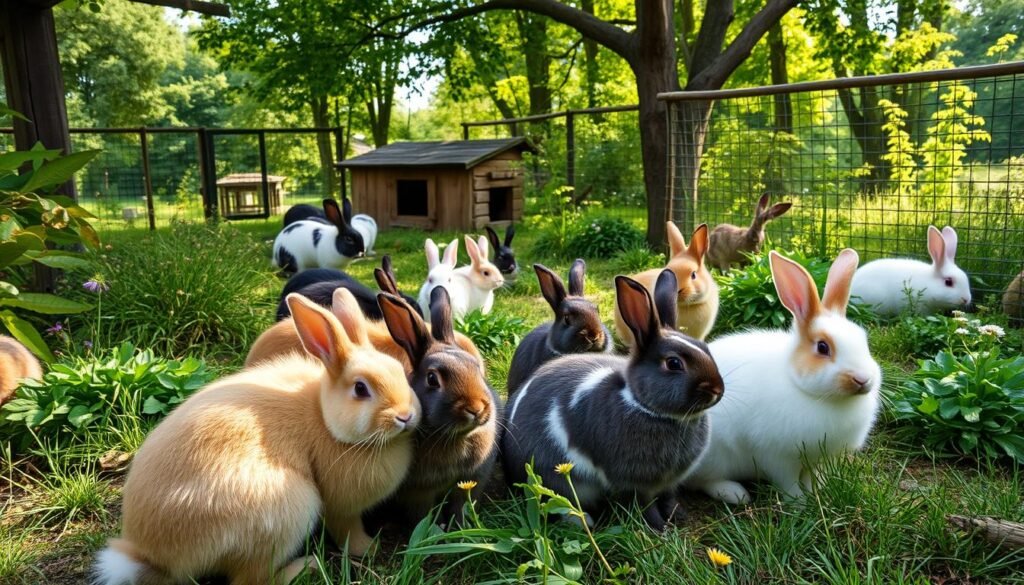
Dutch rabbits are one of the most recognized breeds in the rabbit world. You’ve probably noticed their distinctive two-tone markings — white on the front half, solid color (black, blue, gray, brown) on the back half.
They’re a small breed that weighs 3.5 to 5.5 pounds. They’re not generally raised for meat, but they excel as backyard farm companions for families who wish to keep rabbits for education, fun or light production (manure for the garden, occasional kits to sell).
Great for Families and Beginners
Dutch rabbits are easy to handle. They are seldom aggressive and adapt well to being picked up and handled frequently. This makes them ideal for children who want to help with farm chores.
They’re also much lower maintenance than larger breeds — less food, smaller hutch, easier to clean up after. Dutch rabbits are a great starting point for the new rabbit keeper, giving you an opportunity to build confidence before moving on to larger meat breeds.
What to Feed Dutch Rabbits
Like all rabbits, Dutch rabbits require unlimited hay (timothy is ideal), a daily portion of pellets and fresh leafy greens. Stay away from starchy vegetables such as carrots in large quantities — over time, the natural sugar content can lead to digestive issues.
They should always have access to fresh, clean water. A water bottle or heavy ceramic bowl both work fine.
Breed #5 — Silver Fox Rabbit
Why This Heritage Breed Is Worth Raising
The Silver Fox is one of the rarest rabbit breeds in the United States, and it’s highly underappreciated on the small farm scene. This is a heritage breed — one that was developed generations ago and nearly went extinct. Today, it survives thanks to dedicated breeders.
Silver Fox rabbits weigh 9 to 12 pounds. Their coat is distinctive: dense and dark, with silvery tips that stand upright away from the body like a fox’s fur when stroked toward the head. It’s one of the most beautiful coats of any rabbit breed.
Dual-Purpose Production
Silver Fox rabbits are a true dual-purpose breed. Their big, well-muscled bodies yield fine meat. Their unique fur is popular with crafters and fur hobbyists.
Does are outstanding mothers. They produce good-sized litters and are calm, attentive parents. Many small farmers raising Silver Fox rabbits say they are among the easiest rabbits to breed and manage.
Conservation and Community
Raising Silver Fox rabbits also links you to a wider community of heritage breed enthusiasts. Raising and selling quality Silver Fox kits can be a small but meaningful source of income. And because the breed is rare, there’s real demand for quality breeding stock.
If you want a backyard rabbit project that does more than fill the freezer — one that carries a sense of history and conservation — Silver Fox is your breed.
Backyard Mini Farm Setup: Rabbit Housing
A Primer on Rabbit Hutch Design
Your rabbit’s home is one of the most important choices you will make. A quality hutch keeps rabbits safe, dry and comfortable at any time of year.
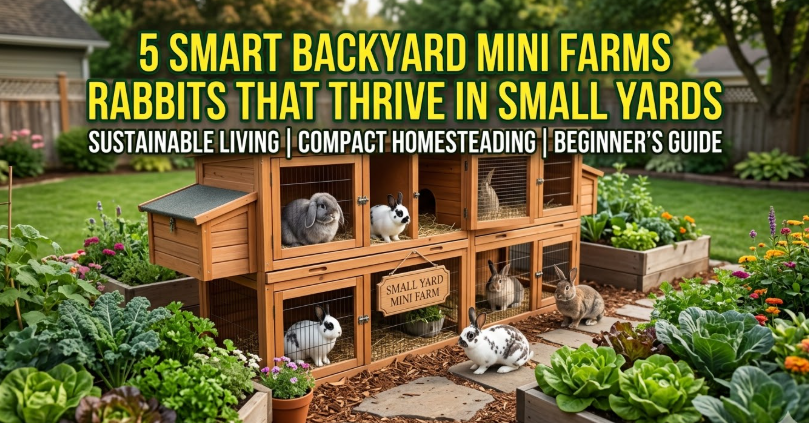
The ideal hutch is made of solid wood or metal framing with wire mesh sides for ventilation. The floor can be wire mesh (with a solid resting board for comfort) or solid wood covered with bedding.
Remember these three rules when designing or purchasing a hutch:
Rule 1 — Bigger is always better. The minimum sizes mentioned are just that — minimums. If you can provide more space, do so. A larger hutch means happier, healthier rabbits.
Rule 2 — Elevation matters. Hutches raised off the ground (at least 12 inches) stay drier and are harder for predators to access. They also make cleaning easier.
Rule 3 — Shade and shelter are essential. Rabbits overheat quickly. Place your hutch in a shaded area, or build a roof that blocks direct sunlight. In winter, windbreaks on the north and west sides of the hutch make a big difference.
Predator Protection
Dogs, foxes, raccoons and birds of prey pose real threats to backyard rabbit farms. Secure your hutch with hardware cloth (not chicken wire — it’s too flimsy). Latch all doors securely. Make sure the hutch is fully closed at night.
How to Feed Rabbits on Your Backyard Mini Farm
What Rabbits Can Eat (and What They Shouldn’t)
Feeding rabbits is easier than many people think. Hay is the basis of every rabbit’s diet. Good-quality grass hay — timothy, orchard grass or meadow hay — should ideally make up at least 70% of your rabbits’ diet. Hay keeps their digestive system moving and wears down their constantly growing teeth.
Pellets provide concentrated nutrition. Choose a plain pellet without colorful bits or seeds mixed in. Those mixed “treat” pellets may look fun, but they can lead to nutritional imbalances.
Fresh leafy greens are a healthy supplement. Dark leafy greens like romaine lettuce, kale, cilantro and parsley are great options. Introduce new greens slowly to avoid upsetting their stomach.
Foods to avoid completely:
- Iceberg lettuce (causes diarrhea)
- Potatoes and starchy vegetables
- Avocado (toxic to rabbits)
- Chocolate and sweets
- Processed human food of any kind
Fresh, clean water must be refilled daily. A rabbit that runs out of water will stop eating and can become seriously ill within hours.
How Much to Feed
A general guideline: offer about 1/4 cup of pellets per 5 pounds of body weight per day for adult rabbits. Young, growing rabbits (under 6 months) can have unlimited pellets. Hay should always be available free-choice.
Rabbit Health — What to Watch Out For
Common Health Issues on Small Farms
Rabbits are generally hardy, but there’s a risk of health issues if their environment or diet isn’t right. These are the most common ones to look out for.
GI Stasis is the most dangerous condition for pet and farm rabbits alike. It occurs when the digestive system slows down or stops. Symptoms include a rabbit that stops eating, stops producing droppings, and becomes hunched or lethargic. GI stasis is a medical emergency — get to a vet immediately.
Snuffles is a bacterial respiratory infection caused by Pasteurella multocida. Symptoms include sneezing, nasal discharge and damp fur around the nose and face. It can sweep through a rabbitry quickly, so isolate sick animals right away.
Ear mites are tiny parasites that live in the ear canal. You’ll notice dark, crusty buildup inside the ears and the rabbit scratching at its head. Your vet can prescribe ear drops to treat them.
Fly strike is a warm-weather danger. Flies lay eggs in dirty fur or open wounds, and the maggots that hatch can cause severe harm very quickly. Keep hutches clean, especially in summer.
Preventive Care Tips
Prevention beats treatment every time. Here’s a simple care routine to keep your rabbits healthy:
Check droppings daily — healthy rabbit droppings are round, firm and uniform. Soft, clumped or absent droppings signal a problem. Clean the hutch at least twice a week — more often in hot weather. Handle rabbits regularly so you notice any lumps, weight changes or behavioral shifts early.
Rabbit Breeding Basics for a Small Backyard Rabbitry
How to Get Started
If your goal is meat production or growing your herd, you’ll need to understand the basics of rabbit breeding.
Rabbits are induced ovulators — this means the doe only releases eggs after mating. This makes breeding fairly reliable compared to some other animals.
To breed, always bring the doe to the buck’s cage — never the other way around. Does are territorial and may attack a buck placed in her space. The mating usually happens within minutes. Confirm it happened — you’ll see a brief mounting and a fall-off behavior from the buck, called a “fall-off.” Return the doe to her own cage.
Does are pregnant for about 28–32 days. Provide a nesting box filled with hay and pulled fur about 3–4 days before the expected birth date.
Litter Management
Most does give birth at night. In the morning, check the litter quietly and remove any stillborn kits. Don’t disturb the litter too much in the first week.
Kits are born blind, hairless and entirely dependent on their mother. Their eyes open at around 10–12 days. By 3–4 weeks, they’ll begin nibbling hay and pellets. Weaning happens naturally at 6–8 weeks.
For a backyard mini farm, breeding one or two does every 10–12 weeks gives a steady, manageable supply of kits without overwhelming your space or time.
Using Rabbit Manure in Your Garden
The Hidden Bonus of Backyard Rabbit Farming
One of the best-kept secrets of rabbit farming is the manure. Rabbit droppings are often called “black gold” by gardeners. Unlike cow, chicken or horse manure, rabbit manure is a cold fertilizer — you can apply it directly to garden beds without composting first.
It’s rich in nitrogen (2.4%), phosphorus (1.4%) and potassium (0.6%), as well as trace minerals. Regular application improves soil structure, encourages earthworm activity and boosts plant growth noticeably.
One rabbit produces around 200 to 300 pellets per day. With five rabbits, that means a steady supply of natural fertilizer all year round. For backyard vegetable gardens, this alone can justify the cost of keeping rabbits. If you’re looking to expand your setup or explore more small-farm ideas, Backyard Mini Farms is a great resource for beginner and experienced homesteaders alike.
You can also collect manure in a bin under a raised hutch and let it age into compost for use on seedlings or container plants.
The Real Cost of Starting a Backyard Rabbit Mini Farm
Initial Setup Costs
Starting small doesn’t have to mean spending a lot. Here’s a realistic breakdown for a beginner setup with 2–3 rabbits:
A basic starter hutch costs $80–$200 if bought new, or much less if you build one from reclaimed lumber. Feeders and water bottles run about $10–$20 each. A bag of quality pellets (25 lbs) costs around $15–$25. Hay bales, depending on where you live, run $10–$30 per bale. Your first rabbits — depending on breed and quality — may cost $15 to $100 each.
For a starter setup of two does and one buck, expect to invest $300–$600 upfront, including the animals.
Ongoing Monthly Costs
Monthly feed for three rabbits costs roughly $20–$40. Bedding (straw or wood shavings) adds another $10–$15. Veterinary costs are generally low if your rabbits are healthy, but budget a small emergency fund of $50–$100 per year just in case.
The return on investment comes from meat production, sale of kits, manure value for your garden, and — for breeds like Mini Rex — fur sales or show winnings.
FAQs About Backyard Mini Farm Rabbits
Q: Can I keep rabbits in a small urban backyard?
Yes, absolutely. Rabbits are one of the best livestock animals for urban and suburban settings. They’re quiet, compact and produce no strong odors when their hutch is cleaned regularly. Check your local ordinances first, as some areas have restrictions on livestock — but many permit rabbits even where other animals aren’t allowed.
Q: How many rabbits should a beginner start with?
Start with one buck and two does. This gives you a manageable workload while allowing you to produce litters and learn the rhythms of rabbit keeping. You can always expand once you’re comfortable.
Q: Do rabbits need companionship?
Rabbits are social animals and generally do better with company. However, housing unspayed or unneutered rabbits of different sexes together will result in constant breeding. Keep same-sex pairs or trios if you’re not ready to manage litters, or separate bucks and does except during planned matings.
Q: What is the best rabbit breed for meat production in a small yard?
The New Zealand White and Californian are the top two choices. Both grow quickly, produce excellent carcasses and are calm enough for beginners to handle with confidence.
Q: How do I keep rabbits cool in summer?
Provide shade, ensure excellent ventilation in the hutch, and offer frozen water bottles for the rabbits to lean against. You can also mist the top of a wire cage on very hot days. Avoid placing the hutch in direct afternoon sun.
Q: How long do rabbits live?
Pet rabbits typically live 8–12 years. Farm rabbits raised for meat are usually processed at 8–12 weeks. Breeding does and bucks on a backyard farm are often retired by age 3–4 when their productivity declines.
Q: Is rabbit meat healthy to eat?
Yes. Rabbit meat is one of the leanest, highest-protein meats available. It’s lower in fat and cholesterol than chicken, pork or beef, and high in vitamins B12 and B3. It has a mild, slightly sweet flavor that many people compare favorably to chicken. According to the USDA Agricultural Research Service, rabbit meat contains more protein per serving than most common livestock meats, making it a smart dietary choice for health-conscious families.
Q: Can I raise rabbits alongside chickens in the same yard?
That’s doable but requires careful management. Chickens and rabbits can share outdoor space in some setups — but they should not share a hutch or coop. Chickens carry bacteria (like Salmonella) that can harm rabbits. Keep their living areas separate and supervise any shared outdoor time.
Wrapping It All Up
Backyard mini farm rabbits are one of the smartest small-scale farming choices you can make — especially when space is limited. Whether you’re seeking homegrown meat, a renewable source of fertilizer, a calm family companion or some extra income from kits and fur, there’s a breed on this list that fits your goal.
The New Zealand White and Californian are the gold standards for meat production. The Mini Rex and Dutch are perfect for families focused on companionship and learning. And the Silver Fox is a heritage gem for the farmer who wants to do something meaningful — and beautifully productive — along the way.
Start small. Get your housing right. Feed consistently. Handle your rabbits daily. And don’t be surprised when your little backyard operation starts producing more than you expected.
That’s the quiet magic of backyard mini farm rabbits.