




Meta Description: Mini farms chickens for beginners are easier than you believe. 7 easy setups you need to get started, the best breeds for your farm, and care basics so you can get started today.
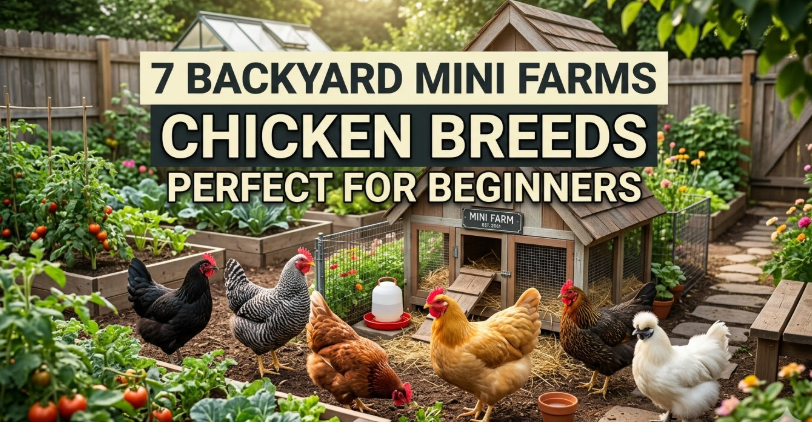
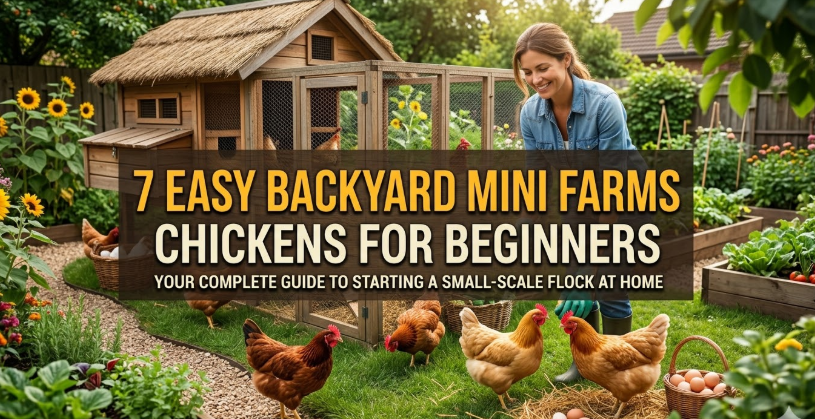
7 Simple Backyard Mini Farms Chickens for Beginners
Chickens: A Perfect Starter Farm Animal
You do not need 10 acres to grow your own food.
A small backyard, a bit of planning, and a few good hens are all you need to set off on the adventure. Keeping chickens in backyard mini farms has become one of the most popular trends in urban and suburban homesteading — and for good reason.
Chickens are inexpensive, low-maintenance, and hugely rewarding. They provide you with eggs, help eradicate pests through their scavenger instincts, and also fertilize your garden. Chickens, compared to goats, cows, or pigs, are a far friendlier initiation.
This guide is designed for complete beginners. If you’ve never owned a chicken before, that’s OK. You’ll know by the end what setup will work in your yard, which breeds to choose, and how to care for your flock starting day one.
Let’s dig in.
What Exactly Is a Mini Farm in the Backyard?
A backyard mini farm is raising animals or growing food in your own home. It doesn’t need to be fancy. Even a 10×10 foot area is sufficient.
The first addition most people make when they think of backyard mini farms is chickens. They’re small, manageable, and produce something useful every day.
A typical backyard chicken setup consists of:
- A coop (their shelter)
- A run (outdoor space to roam)
- Feed and water stations
- Nesting boxes for egg-laying
That’s really it. You don’t need special skills. You only have to start well and wait for the right moment.
Backyard Chicken Laws: Know Them Before You Build
Before you purchase your first chick, look up the laws in your area.
Backyard chickens are permitted in many cities and towns, but some have restrictions on flock size. Others outlaw roosters because of the noise. Some require permits or minimum lot sizes.
A quick call to your local city hall or a look at your municipality’s website should answer these questions in moments.
Here’s a quick list of what to look for:
| Rule Type | What to Look For |
|---|---|
| Flock size limit | Residential zones typically allow 4–6 hens |
| Roosters | Usually illegal in urban/suburban areas |
| Setback rules | Coops must usually be 10–25 ft from property lines |
| Permits | Some regions require a small livestock permit |
| HOA rules | Private communities often have their own restrictions |
Once you know the rules, you’re all set to choose your setup.
7 Easy Backyard Mini Farm Chicken Setups for Beginners
Here are seven effective, time-tested chicken setups for beginners. Each is ideal for a different yard size, budget, or lifestyle.
1. Classic Small Coop and Run Combo
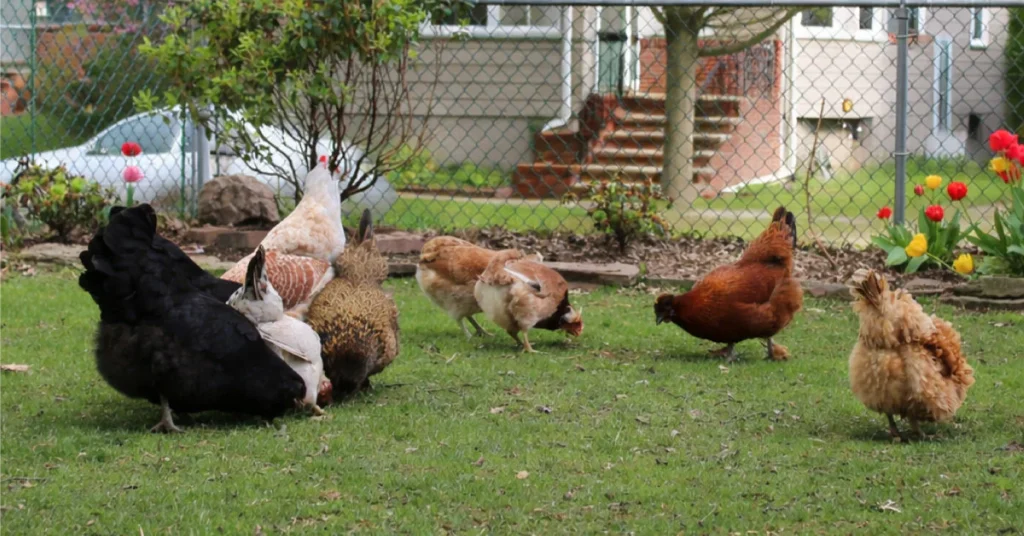
This is the setup the majority of backyard mini farms chickens have, and it’s some of the best ground level to start from if you’re a beginner.
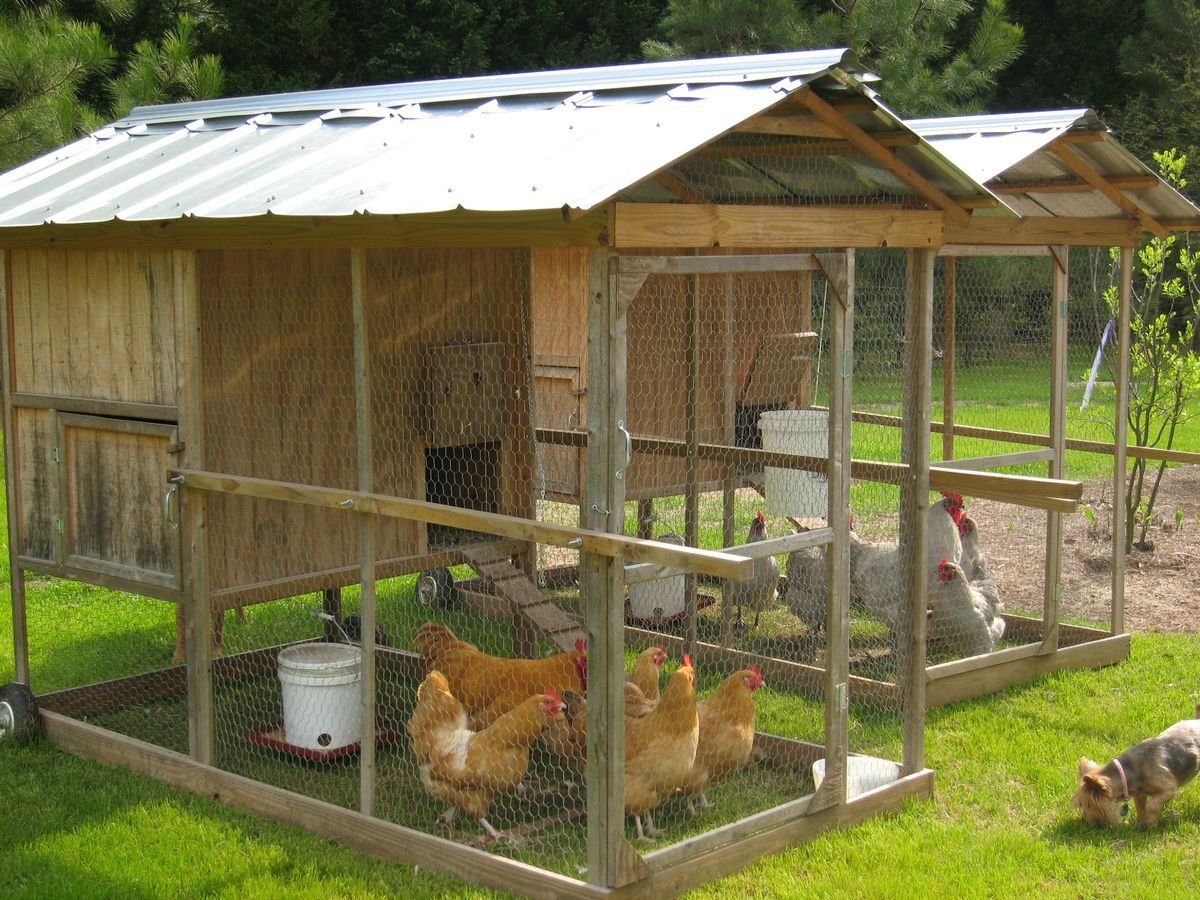
You construct or purchase a small wooden coop with an adjoining wire run. The hens are kept and roam in a safe, enclosed space. They go into the coop at night to sleep.
A standard small coop can keep 3–4 hens comfortably. The run affords them space to scratch, peck, and act like chickens.
What you need:
- A coop with at least 4 square feet of indoor space per bird
- A run of at least 10 square feet per bird
- 2–3 nesting boxes
- A feeder and waterer
This system runs between $150–$400, depending on whether you buy a pre-configured option or build your own.
It does well in small suburban yards. It’s easy to keep clean and manage, and it’s sturdy enough to keep predators out.
2. The Chicken Tractor (Moveable Coop)
A chicken tractor is a coop without a floor. It sits directly on the ground, and you move it around your yard every couple of days.
This setup is brilliant for backyard mini farms because the chickens fertilize your grass as they go. They also consume bugs and weeds, which means less work for you.
The tractor contains 2–4 hens on average. It features a small sheltered sleeping area at the top and an open wire run beneath.
Benefits of a chicken tractor:
- No permanent structure required
- Chickens naturally fertilize and aerate your lawn
- Less manure accumulation in any given location
- Great for gardens — move it to a new bed each season
It works best on flat ground. A fixed coop may be better if your yard is hilly or very small.
3. The Urban Micro Flock (2–3 Hens Only)
Not everybody has room for five or six chickens. If your yard is small, this setup is for you.
An urban micro flock consists of only 2–3 hens in a small, well-planned coop. You value quality over quantity.
Two healthy hens can lay anywhere from 8–14 eggs weekly. That is plenty for the average household.
The critical component to this arrangement is selecting the appropriate breeds — those that are docile, quiet, and productive. Bantam breeds (miniature chickens) are a popular choice here because they take up less space.
This arrangement is also the most neighborly one. Reduced noise, reduced smell, and reduced visual impact.
4. The Garden Integration Setup
This is perfect for gardeners looking to start their very own small-scale chicken farm.
You design your chicken run to connect with or rotate through the garden beds. The chickens provide the labor — they scratch up weeds, eat bugs, and drop rich manure.
In fall and winter, when nothing is growing, they can roam freely among the empty beds. In spring, move them out before you plant.
Tips for making it work:
- Screen off areas with portable fencing
- Never let full-grown chickens into a bed with young seedlings
- Give them access to mature beds post-harvest
- Create paths between garden beds and the run
This configuration does take a little planning, but it really cuts your pest and fertilizer costs. It is one of the most efficient setups for a real backyard mini farm.
5. The Raised Coop with Storage Below
In a small backyard, space is at a premium. This design addresses that problem beautifully.
The coop is elevated on legs above the ground, usually 2–3 feet high. Underneath is a covered area where chickens can sit in the shade. It also serves as storage for feed bags, bedding, or tools.
This elevated design also allows for better airflow (which matters in hot climates), keeps the coop drier, and makes it harder for ground predators such as foxes and rats to get in.
This design is favored for backyard mini farm chickens because it keeps the yard tidy and orderly, making daily tasks easier.
6. The Dual-Purpose Coop and Compost System
This setup turns chicken waste into a gold mine for your garden.
You construct your chicken coop right next to a compost bin. When you clean out the coop, you simply shovel the bedding and manure straight into the compost. Chickens can also occasionally scratch through it, which helps speed up decomposition.
In a matter of months, you will have rich, homemade compost ready for spreading in your garden beds.
Why this works so well:
- Chicken manure is one of the most prolific natural fertilizers available
- It reduces waste management time
- Chickens help aerate the compost, speeding it up
- Great for backyard mini farms that also grow vegetables
One thing to note: raw chicken manure is high in nitrogen and can burn plants. Always compost it before putting it in the beds.
7. The All-in-One Backyard Mini Farm Block
This is the biggest setup on the list — but it’s still pretty doable, especially for those who want to dive in deep.
You build your whole backyard into a tiny farm block. In one corner is the chicken coop. Another section includes raised garden beds. A third place is where composting occurs. And a small herb or fruit garden tucks into the rest.
Everything works together. Chickens eat kitchen scraps. Their waste feeds the compost. The compost feeds the garden. The garden produces food for you and scraps for the chickens.
It is a true mini ecosystem, and it’s an extremely satisfying one to run.
You don’t need a huge yard. Even a 400-square-foot space can accommodate this type of setup with some strategic planning. For more ideas on how to make the most of your space, visit Backyard Mini Farms for guides, tips, and setup inspiration.
The Best Chicken Breeds for Your Backyard Mini Farm
Choosing the right breed helps immensely, especially as a beginner.
Some breeds are calm and friendly. Others are flighty or noisy. Here are the best beginner chickens for backyard mini farms.
Rhode Island Red
This is the classic starter breed. Rhode Island Reds are hardy, adaptable, and great layers. They do well in both cold and hot weather.
They lay about 250–300 brown eggs each year. They’re also friendly and seldom aggressive, so they’re great if you have kids.
Plymouth Rock (Barred Rock)
Plymouth Rocks are quite the docile, inquisitive fowl. They are very cold-hardy and great layers.
They’re also dual-purpose — that is, they can be raised both for eggs and meat. If you ever want to expand your backyard mini farm, this breed gives you a bit more flexibility.
Australorp
Australorps hold the world record for egg-laying — one hen laid 364 eggs in 365 days. While your birds won’t reach that extreme, they are still among the most productive layers you can find.
They’re also gentle, quiet, and quite easy for beginners to manage.
Sussex
Sussex hens are sweet-natured, curious, and friendly enough to feed from your hand. They lay steadily all winter, which many breeds will not do.
Sussex is a great option if you want reliable eggs throughout the year.
Buff Orpington
Buff Orpingtons are the “golden retrievers” of the chicken world. They are big, fluffy, mellow, and really enjoy interacting with humans.
They are not the best egg producers, but their temperament makes them ideal for families or anyone new to keeping backyard mini farms chickens.
How Much Space Do You Actually Need?
One of the most common questions new chicken owners have is: “How much space do my chickens need?”
A good rule of thumb:
- Inside the coop: at least 4 square feet per bird
- In the run: at least 10 square feet per bird
- Free-range: at least 250 square feet per bird if you let them roam
So for a flock of 4 hens:
| Area | Minimum Size |
|---|---|
| Coop floor space | 16 square feet |
| Attached run | 40 square feet |
| Total footprint | Approx. 56 square feet |
That’s roughly the size of a small garden shed and a modest patio. Very manageable for most backyards.
Cramped quarters cause stress, which hampers egg production and leads to health problems. Better to err on the side of too much space than too little.
How to Feed Your Backyard Chickens
Feeding chickens is simple. Here’s the basic breakdown.
For laying hens, you’ll need something called “layer pellets” or “layer crumbles.” You can get this anywhere that sells farm supplies. It contains the right balance of protein, calcium, and vitamins that are vital for hens to remain healthy and lay eggs.
According to the University of Kentucky Extension, a good layer feed should contain around 15–18% protein to keep your hens in peak laying condition.
Aside from their main feed, chickens enjoy:
- Fresh vegetables (leafy greens, cucumber, squash)
- Fruit scraps (in moderation)
- Cooked rice or oatmeal
- Mealworms (great protein boost)
- Crushed oyster shell (additional calcium for strong eggshells)
What not to feed chickens: avocado, chocolate, onion, raw potato, or anything moldy. These can make them very sick.
Always provide clean, fresh water. Chickens consume more liquid than most people think — particularly in hot weather.
Daily, Weekly, and Monthly Chicken Care
Chickens don’t ask for much. Here’s what the routine looks like.
Daily tasks (5–10 minutes)
- Refill water
- Top up feed
- Collect eggs
- Give the flock a quick visual check
Weekly tasks (20–30 minutes)
- Remove wet or dirty bedding from nesting boxes
- Clean and refill waterers thoroughly
- Check for signs of illness or injury
Monthly tasks (1–2 hours)
- Deep clean the coop — remove all old bedding, add fresh
- Inspect coop structure for holes, loose wire, or damage
- Dust bath area maintenance
- Check hens for mites or lice
That’s it. Once you find your stride, backyard mini farms chickens is one of the simplest hobbies you’ll ever take up.
Keeping Predators Out: A Critical Step
The leading risk to backyard chickens is predators. Foxes, raccoons, hawks, opossums, and even neighborhood dogs will attempt to reach your flock.
Here’s how to protect them:
- Use hardware cloth (not chicken wire) — predators can tear through chicken wire
- Bury the wire 12 inches below ground level to stop diggers
- Get an automatic coop door that shuts at dusk
- Use wire or netting to cover the top of your run
- Lock the coop every single night, no exceptions
It may sound drastic, but most chicken losses occur at night when the coop wasn’t secured properly. One locked door makes all the difference.
Startup Cost Snapshot
Here’s a grounded estimate of what you’ll pay to get started.
| Item | Approximate Cost |
|---|---|
| Coop (ready-made) | $150 – $400 |
| Chicks (3–4 birds) | $15 – $40 |
| Feed (50 lb bag) | $20 – $30 |
| Feeder and waterer | $20 – $40 |
| Bedding (shavings) | $10 – $15 |
| Misc. supplies | $20 – $50 |
| Total startup | $235 – $575 |
The monthly cost after that setup is usually $15–$30 in feed for 4 hens. With 4 hens laying 3–5 eggs each per week, you’ll be producing 12–20 eggs weekly — quickly cutting your grocery bill.
Signs of a Healthy Chicken
As a beginner, it’s useful to know what a healthy hen looks like so you can identify problems early.
Healthy chickens:
- Have bright, alert eyes
- Lift their heads and move around actively
- Have smooth, glossy feathers
- Eat and drink regularly
- Produce firm, well-formed droppings
- Have clean vents (the area under the tail)
Watch for: lethargy, pale comb, discharge from eyes or nose, loss of appetite, or loose droppings. These are indications that something might be wrong, and a vet visit is wise.
Frequently Asked Questions About Backyard Mini Farms Chickens
How many chickens should a beginner start with? Start with 3–4 hens. That’s enough to ensure a steady supply of eggs without burdening you with care duties. You can always add more once you settle in.
Do I need a rooster to get eggs? No. Hens produce eggs without a rooster. You only need a rooster if you’re hoping for fertilized eggs to hatch chicks. Most beginners — particularly in urban areas — get along just fine without one.
How long do backyard chickens live? Most laying hens live 5–10 years. Their best egg production is usually in the first 2–3 years, after which it gradually slows.
What is the best chicken breed for beginners? The best beginner breeds are widely considered to be Rhode Island Reds, Sussex, and Buff Orpingtons. They’re calm, hardy, and productive.
Can chickens be left outside in winter? Yes, most standard breeds do well in cold weather. Ensure that the coop is draft-free (but well-ventilated), don’t let their water freeze, and they’ll be fine in most climates.
How do I stop chickens from smelling bad? Regular cleaning is the key. Change bedding regularly, don’t allow manure to accumulate, and keep the area dry. A clean coop does not smell bad at all.
Can I keep chickens in a very small backyard? Yes. A micro flock of 2–3 hens can flourish in a tiny urban backyard. Select compact breeds and use an efficient coop design to maximize your space.
What do I do with eggs I can’t use? Pass them on to neighbors, friends, or colleagues. Many people are happy to receive fresh backyard eggs. Once you have a steady flock, you can also sell them locally.
Your Backyard Mini Farm Starts With One Good Hen
Backyard mini farms chickens are not just a fad. They’re a practical, inexpensive way to grow your own food and create a more self-sufficient life — right in your own backyard.
You don’t have to wait until you have a perfect setup. Start small. Choose from one of the seven setups above that works for your space. Pick a calm beginner breed. Build or buy a simple coop.
Three hens in a nice, small run will change how you think about food, your garden, and your morning routine.
The hardest part is just getting started. Once you have your first eggs, everything else has a way of falling into place.
Always check local ordinances before establishing backyard chickens, as rules differ from city to municipality.