



Meta Description: Backyard mini farms egg production tips can transform your small flock into a steady, reliable source of fresh eggs every single day of the week.
Backyard Mini Farms: Egg Production Tips for a Steady Supply of Fresh Eggs Every Day
Egg Production Tips for Mini Farms With Their Own Backyard
If you have a small flock in your backyard, then you know the thrill of collecting fresh eggs each morning. But are your hens laying you as many eggs as they can?
Many home chicken keepers leave an awful lot of eggs on the table — not because their hens are bad layers, but for a few simple things being out of whack. The good news is that we don’t need a big farm or a fancy budget to fix those things.
In this guide, I will walk you through 6 backyard mini farms egg production tips that are powerful and actually work. Whether you keep 3 hens or 30, these tips will help you get more eggs, healthier birds, and a smoother daily routine.
Let’s get into it.
Why Egg Production Is Dropping on Small Backyard Farms
Before jumping into tips, it’s helpful to know why hens stop laying in the first place.
Chickens are sensitive creatures. Minor shifts in their environment can make them slow down, or even stop laying eggs altogether. Below are the most common reasons:
- Not enough daylight hours
- Poor or unbalanced feed
- Stress from predators or overcrowding
- Molting season
- Old age
- Health issues or parasites
This knowledge allows you to solve the real issue. Now here are the six tips that address the biggest challenges backyard chicken keepers face.
Tip 1 — The Right Way to Illuminate Your Coop
Why Daylight Hours Control Everything
Hens need light to lay eggs. It’s that simple.
Light interacts with a hen’s body. As days shorten in fall and winter, hens naturally slow or stop laying. Their bodies interpret the shorter daylight as a cue to rest.
Hens require 14 to 16 hours of light each day for maximum egg production.
In summer, this is generally covered by natural sunlight. But in the fall and winter, you will have to supplement with artificial light if you want production to continue.
How to Supplement Day Length Without Hurting Your Hens
You don’t need anything fancy. A plain LED bulb inside the coop does the trick. Put it on a timer so your hens get consistent light every day.
Here are some rules to abide by:
- Add light in the morning, not at night. Hens need darkness to sleep.
- Use a warm white LED bulb — about 25 to 40 watts is sufficient for a small coop.
- Keep it protected from moisture and away from nesting materials.
- Don’t suddenly blast the coop with 16 hours of light. Add 15 to 30 minutes every week.
These gradual increases prevent stress in your hens, allowing their laying cycles to remain stable.
Quick Light Schedule Guide
| Season | Natural Light Hours | Hours to Add | Total Target |
|---|---|---|---|
| Spring / Summer | 14–16 hrs | 0 | 14–16 hrs |
| Early Fall | 11–13 hrs | 1–3 hrs | 14–16 hrs |
| Winter | 8–10 hrs | 4–6 hrs | 14–16 hrs |
Making this simple change can significantly enhance egg production in your backyard mini farms during the winter months.
Tip 2 — Feed Your Hens Like You Care
How Feed Is Directly Linked to Egg Count
Feed has a huge impact on egg production. If your hens aren’t getting the right food, they just don’t have the means to lay eggs at full capacity.
Eggs consist largely of protein. So your hens require a lot of it.
Layer feed should be 16 to 18 percent protein. That provides hens with everything they need to lay an egg every 24 to 26 hours or so.
What to Feed and What to Avoid
Continue feeding a complete layer pellet or crumble as their diet base. These are balanced for laying hens and contain the vitamins and minerals they require.
Treats can be included, but limit them to 10 percent of the diet or less. An excess of treats — even healthy ones — reduces the nutritional value of their feed.
Good treat options:
- Mealworms (high in protein)
- Leafy greens such as kale or spinach
- Cooked eggs (yes, they can eat eggs — it increases protein)
- Sunflower seeds in small amounts
Things to avoid:
- Processed human food
- Salty snacks
- Avocado, onion, or garlic (toxic to chickens)
- Too much corn (low in protein, high in carbs)
Don’t Forget Calcium
Eggshells are made of calcium. If your hens don’t have enough, their shells will be thin and weak — or they simply won’t lay.
Crushed oyster shell should always be available in a separate dish. Let hens eat it free-choice. They’ll take what they need.
Tip 3 — Build a Nesting Box Setup Hens Actually Want to Use
The Problem With Bad Nesting Boxes
This doesn’t seem like a big deal to lots of backyard chicken keepers. They simply throw a few boxes into the corner and call it done.
But if hens are not comfortable in their nesting boxes, they lay eggs wherever they want — on the floor, in corners, or even outside. That translates to cracked eggs, filthy eggs, and tons of frustration for you.
A proper nesting box setup is one of the most neglected backyard mini farms egg production strategies. You can find more helpful guides like this over at Backyard Mini Farms, a great resource for small flock owners.
What Makes a Great Nesting Box
Here’s what your nesting boxes should include:
- Size: 12 x 12 x 12 inches per box. One box per 3 to 4 hens.
- Location: Elevated — 18 to 24 inches off the ground. Hens like to lay their eggs up off the ground.
- Privacy: Add a small curtain or partial cover over each box. Hens prefer to feel concealed when laying.
- Nesting material: Fill boxes with clean straw, wood shavings, or nesting pads. Change regularly to stay hygienic.
- Darkness: Nesting boxes should be dim or slightly dark. Bright, open boxes make hens anxious.
One Mistake You Should Fix Right Now
Are hens sleeping in the nesting boxes? If so, they are soiling the boxes with droppings at night.
To fix this, ensure that your roost bars are higher than your nesting boxes. Chickens always want to roost at the highest point. If the roost is lower, they will sleep in the box instead.
Tip 4 — Protect Your Flock From Stress (It Kills Egg Production)
Stress Is a Silent Egg Thief
You can have great feed, good lighting, and clean nesting boxes — but if your hens are stressed, they won’t lay.
Stress pushes a chicken’s body into survival mode. Egg production shuts down because the body is focused on staying alive instead of producing eggs.
Common stressors in backyard flocks include:
- Predator threats (even if there is no attack, just a predator smell or sound stresses the hens)
- Overcrowding
- New birds added to the flock
- Sudden changes in routine
- Extreme heat or cold
- Illness or injury within the flock
How to Create a Calm, Low-Stress Environment
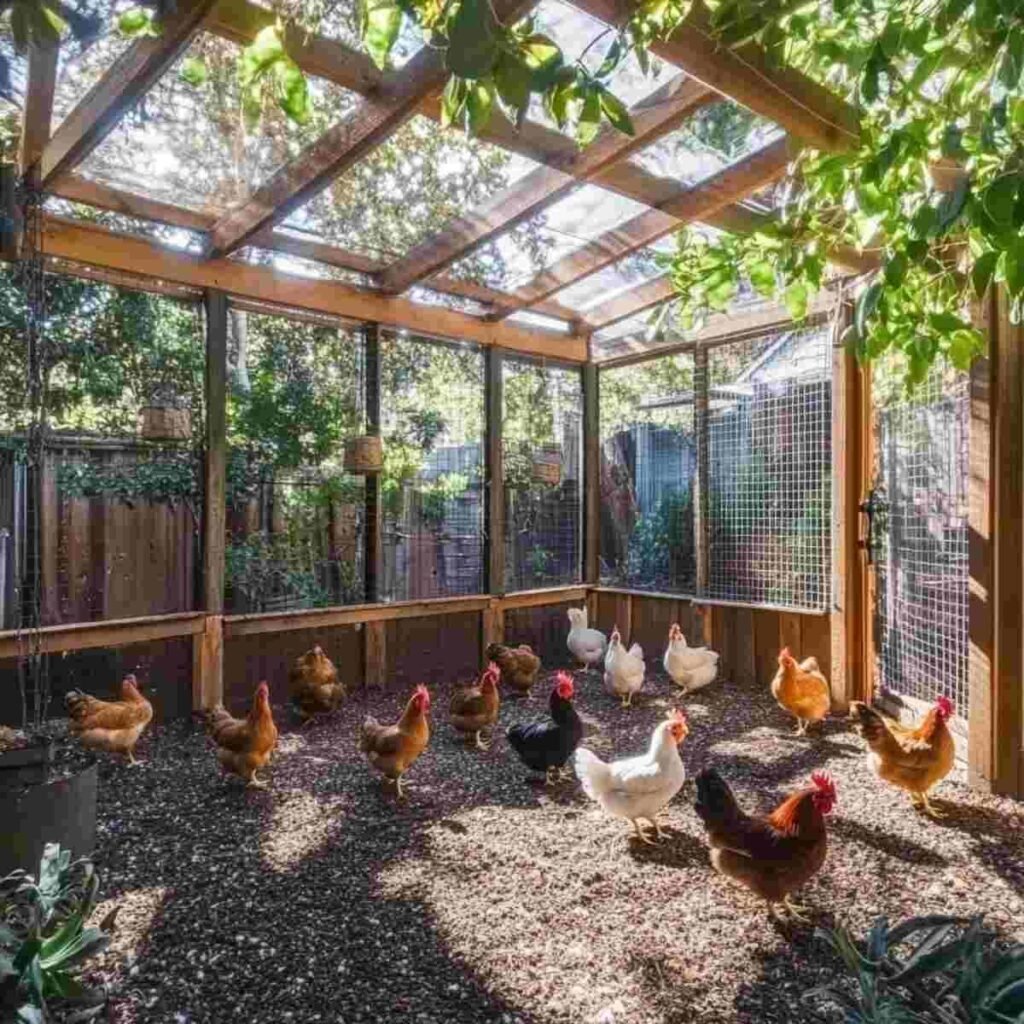
Start with space. Each hen needs at least 4 square feet of indoor coop space and 10 square feet of outdoor run space. More is always better.
Next, predator-proof your setup. Many hens stop laying simply because a fox, raccoon, or hawk is prowling around at night. A physical attack is not even needed — the stress alone can disrupt their laying cycle.
Predator-proofing checklist:
- Use hardware cloth (not chicken wire) on all openings
- Bury wire 12 inches underground to stop diggers
- Lock the coop door every night — an automatic door opener can help
- Cover the run with netting to block aerial predators
Finally, keep a consistent daily routine. Feed at the same time each day. Collect eggs at the same time. Sudden changes make hens anxious.
Managing Flock Introductions
Introducing new birds is one of the biggest stress triggers. Always introduce new hens slowly.
Use the “see but don’t touch” method: keep new birds in a separate area, visible to the main flock, for 1 to 2 weeks before fully integrating them. This greatly reduces fighting and stress.
Tip 5 — Keep the Coop Clean and Healthy
Dirty Coops Are Egg Production Killers
A dirty coop leads to sick hens. Sick hens stop laying. It’s a straightforward chain of events that many backyard farmers don’t connect until production has already dropped.
Ammonia buildup from droppings is especially dangerous. Even at low levels, ammonia damages the respiratory system in chickens and causes stress and illness.
Good coop hygiene is one of the most practical backyard mini farms egg production tips you can put into action starting today.
Weekly and Monthly Cleaning Tasks
You don’t need to deep-clean every single day. But you do need a consistent schedule.
Daily tasks:
- Remove any visibly soiled nesting material
- Check water drinkers and refill with clean water
- Collect eggs (2 to 3 times a day if possible)
Weekly tasks:
- Add fresh bedding on top (deep litter method) or strip and replace
- Clean and scrub water drinkers
- Inspect feed containers for mold or pests
Monthly tasks:
- Full coop cleanout with fresh bedding
- Check the coop for gaps, damage, or pest entry points
- Dust or treat for mites and lice if needed
The Deep Litter Method Explained
The deep litter method is popular among small backyard farms because it saves time and actually improves hen health.
Here’s how it works:
- Start with 4 to 6 inches of bedding — pine shavings work best
- When the surface gets dirty, add a fresh layer on top — don’t remove the old bedding
- Turn the litter occasionally to help it compost
- Do a full cleanout once or twice a year
The composting process generates mild heat (useful in winter) and creates beneficial microbes that can actually ward off disease. Many farmers report better egg production after switching to this method.
Parasite Control Is More Important Than You Think
Red mites and lice are extremely common in backyard flocks. They feed on hens at night and cause serious stress, anemia, and feather damage.
According to the University of Florida IFAS Extension, regular monitoring and early treatment of external parasites is one of the most effective ways to protect flock health and maintain consistent egg production.
Signs your hens have mites or lice:
- Pale combs
- Weight loss
- Drop in egg production
- Feather damage around the vent area
Treat with food-grade diatomaceous earth dusted in nesting boxes and on the coop floor. For serious infestations, use a permethrin-based poultry spray.
Tip 6 — Choose the Right Breeds for Maximum Egg Output
Not All Chickens Lay the Same Number of Eggs
This is the most important point in any list of backyard mini farms egg production tips, yet it often gets skipped over.
Breed matters enormously. Some breeds are built specifically for the purpose of laying large quantities of eggs. Others have been bred for meat, show, or temperament — and they lay far fewer eggs.
If maximum egg production from a small backyard farm is your goal, you need to start with the right birds.
Top Egg-Laying Breeds for Backyard Farms
| Breed | Avg Eggs Per Year | Egg Color | Temperament |
|---|---|---|---|
| White Leghorn | 280–320 | White | Active, flighty |
| ISA Brown | 300–320 | Brown | Calm, friendly |
| Rhode Island Red | 250–300 | Brown | Hardy, easy to keep |
| Golden Comet | 250–300 | Brown | Docile, great for beginners |
| Plymouth Rock | 200–280 | Brown | Docile, dual-purpose |
| Easter Egger | 200–280 | Blue/Green | Curious, fun |
| Australorp | 250–300 | Brown | Gentle, record-setting layer |
Should You Mix Breeds?
Yes — and it’s actually a great idea for most backyard setups.
Mixing high-production breeds such as ISA Browns or Leghorns with calmer breeds like Plymouth Rocks or Australorps keeps a steady egg supply coming with a friendlier, more manageable flock.
Avoid mixing extremely aggressive breeds with gentle ones — the bullying will stress your chickens and reduce laying.
When to Retire Old Hens
Most hens lay well for their first 2 to 3 years. After that, production drops significantly. By year 4 or 5, many hens lay only sporadically.
You don’t have to remove older hens — many backyard keepers keep them as pets. But if maximum egg production is your goal, plan to refresh your flock with younger pullets every 2 to 3 years.
Putting It All Together — A Simple Weekly Egg Production Checklist
Here’s a quick-reference checklist you can print and pin up in your coop:
| Task | Frequency | Why It Matters |
|---|---|---|
| Check lighting timer | Weekly | Keeps laying cycle consistent |
| Refill layer feed | Daily | Protein drives egg production |
| Replenish oyster shell | Weekly | Strong shells need calcium |
| Collect eggs | 2–3x daily | Prevents breakage and egg eating |
| Clean waterers | Weekly | Dirty water = sick hens |
| Add nesting material | As needed | Comfortable hens lay more |
| Check for predator signs | Daily | Stress stops laying |
| Inspect for mites/lice | Monthly | Parasites devastate production |
FAQs — Backyard Mini Farms Egg Production
Q: How many eggs should I expect from each hen per week? A: A healthy, prime laying hen should produce 5 to 7 eggs per week. High-production breeds such as ISA Browns or White Leghorns lay closer to 6 to 7 per week.
Q: Why did my hens suddenly stop laying? A: Sudden drops in production are typically caused by one of the following: stress from a predator, a change in lighting, molting, illness, extreme weather, or a feed switch. Go through the list methodically and rule out each cause one by one.
Q: Do I need a rooster for my hens to lay eggs? A: No. Hens lay eggs without a rooster present. You only need a rooster if you want fertilized eggs for hatching chicks.
Q: How long do hens lay eggs? A: Most hens lay well for 2 to 3 years. Production begins to fall off significantly after year 3. Some hens will still lay sporadically at age 7 or even 8.
Q: Is it worth adding artificial light in winter? A: Yes, for most backyard farmers. Supplementing with 4 to 6 hours of light in winter can bring production back to near normal during the short days. The cost of running a small LED bulb is minimal compared to the egg output gained.
Q: Can I improve egg production without spending much money? A: Absolutely. Some of the most important improvements come from free or very low-cost changes: a consistent routine, better feed management, clean nesting boxes, and blocking stress sources. You don’t need expensive equipment to see real results.
Q: What is the best feed for maximum egg production? A: The gold standard is a quality commercial layer pellet with 16 to 18 percent protein. Supplement with oyster shell for calcium and occasional protein-rich treats like mealworms or cooked eggs.
Wrapping It All Up — Small Farm, Big Egg Production
It isn’t magic to get great egg production from a backyard mini farm. It’s just good management.
When you give your hens the right light, the right feed, clean and comfortable housing, a low-stress environment, and start with productive breeds — the eggs come naturally.
You don’t need to apply all six of these backyard mini farms egg production tips overnight. Start with the one that feels most out of place on your farm right now. Fix that one thing. Then move to the next.
Small, consistent improvements add up quickly. A few changes today could mean dozens more eggs per month by next season.
Your hens want to lay. Your only job is to make it easy for them.