
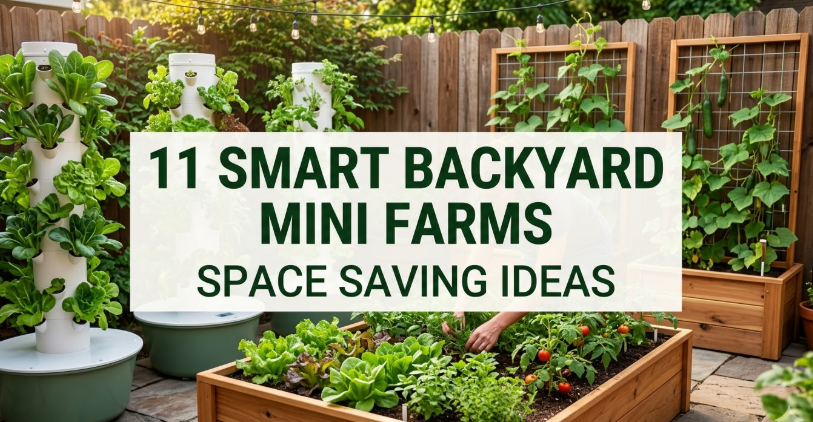
Meta Description: Mini farms space saving ideas for backyard help to growing in less space. I am all about productive small-space gardening, and here are 11 tips for smart, practical challenges to gnaw at.
11 Space Saving Ideas for Smart Mini Backyard Farms
Do you stare at your small backyard and determine there is no room for a garden? Think again.
A backyard mini farm doesn’t require much land. Some of the most productive food gardens on earth, in fact, are quite small. People grow tomatoes on rooftops, lettuce in hallways and herbs on windowsills. Not even a 10×10 foot patch of backyard, with the right space-saving ideas, can provide a family fresh vegetables all season long.
In this guide I take you through 11 smart, tested ideas for transforming any backyard — large or small — into a working mini farm. So, whether you’re renting, or in the suburbs, or simply want to grow your own food without ripping up your whole lawn, these tips will do just that.
Let’s dig in.
Backyard Mini Farms: Why You Should Have One
We will share the ideas in a moment, but first let’s talk about the reasons behind why people create backyard mini farms more and more.
Food prices keep going up. A bag of lettuce can run three or four dollars. Growing your own can take a big bite out of your grocery bill. Research has indicated that a properly managed home garden can yield over a pound of food per square foot annually.
Beyond money, there’s freshness. Homegrown vegetables taste better. They’re harvested at peak ripeness, not weeks early for shipping. And you know absolutely what they were grown with — no mystery chemicals, no extended supply chain.
There’s also the mental health issue. Gardening is known to reduce stress and improve mood. Even caring for a few containers on a tiny patio is still meaningful time out of doors.
So, here is the crux of what most rookie gardeners need help with — how to grow a lot of food in a little space? These are all common dilemmas that these backyard mini farm space saving ideas solve.
1. Fill Space for Plants With Vertical Structures
The No. 1 error small-space gardeners tend to make is thinking only in terms of what can grow horizontally. Your fence, your walls, even a freestanding trellis frame — all of those things are growing space that you’re not utilizing.
What Grows Well Vertically
Vertical growing is best with vining or climbing plants. These include cucumbers, pole beans, peas, indeterminate tomatoes, squash and even melons (when supported in slings). Vertical frames are also well-adapted for certain herbs, like nasturtiums and basil.
One 6-foot-tall trellis at the end of a fence can support five or six tomato plants in a single line. That same row in a traditional garden would be 15 to 20 square feet of ground space.
How to Set It Up
You don’t need anything expensive. Bending a cattle panel (that kind of wire grid panel that you can buy at farm supply stores) into an arch forms a handsome, well-functioning growing tunnel. Stacked wooden pallets with fabric pockets stapled to their face work well for herbs and strawberries. Bamboo teepee frames are a DIY project for little or no cost.
The trick is getting the plants off the ground early, so they grow up instead of out.
2. Raised Garden Beds — Go Up, Not Out
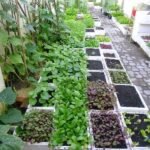
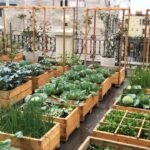
Raised beds are one of the central backyard mini farm space saving ideas for good reason. They allow you to plant much closer together than traditional row gardening. Why? Because the deep, warm, rich soil in a raised bed lets roots go down rather than sideways.
Ideal Raised Bed Dimensions
The traditional rule is to keep beds no wider than 4 feet. That way you can always make it to the middle from either side without stepping in, compacting the soil. Length isn’t as much of a factor — it can be as long as your space permits.
Depth matters too. Most vegetable roots have ample room in a bed that’s at least 12 inches deep. For root vegetables such as carrots and beets, plan for 18 inches.
| Bed Size | Best For | Plants per Sq Ft |
|---|---|---|
| 4×4 ft | Herbs, greens, radishes | 4–16 depending on crop |
| 4×8 ft | Mixed vegetables | 4–9 per sq ft for small crops |
| 4×12 ft | Tomatoes, peppers, beans | 1–2 per sq ft |
The Square Foot Gardening Method
SFG — Square Foot Gardening — is an ingenious technique developed by Mel Bartholomew to use alongside the raised bed. Break your bed into one-foot squares and plan how many plants to grow per square depending on the particular plant size. Radishes get 16 per square. Spinach gets 9. Tomatoes are one per four squares.
This simple thing alone increases your yield 3–4 fold compared to planting in traditional rows.
3. Maximize Every Inch With Companion Planting
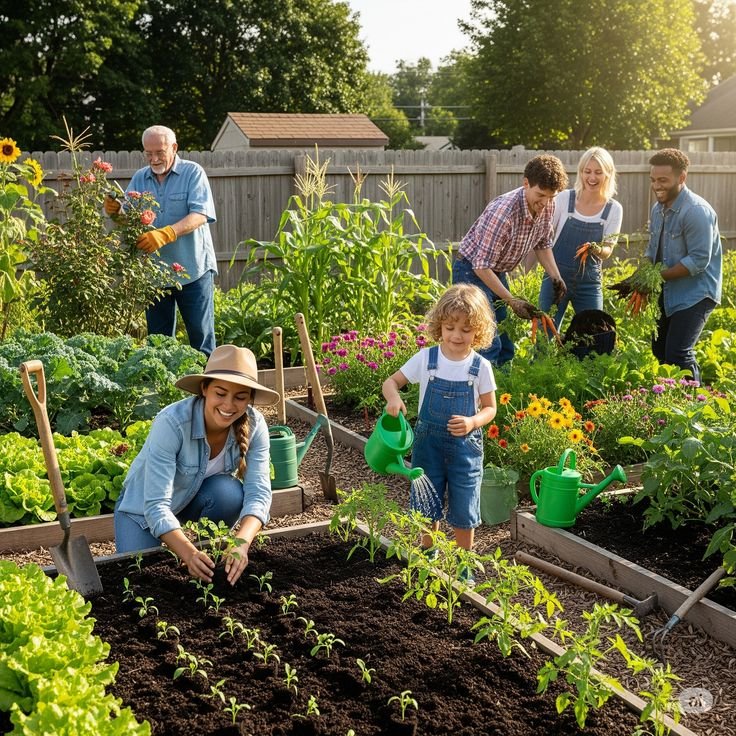
Companion planting is growing two or more plants that do well together. It has a double advantage for a mini farm — it fills in empty space and it works as an organic guard against your plant enemies.
The Three Sisters Method
One of the most established examples is a combination widely adopted by Native Americans: corn, beans and squash together — the “Three Sisters.” The corn towers tall and provides something for the beans to climb. The beans enrich the soil by fixing nitrogen, which feeds the other plants. The squash sprawls low and broad, shading the soil so moisture stays locked in and weeds can’t break through.
These three working together can yield more food from a smaller area than any of the three grown separately.
Other Winning Combos
Tomatoes pair nicely with basil. Basil might help deter some of the same pests, and they share growing preferences. Carrots and onions are also a classic pairing — they grow at different depths in the soil, so they compete for different resources.
Marigolds, planted around the perimeter of any bed, are a mini farmer’s best friend. They entice pollinators, deter destructive nematodes and occupy space that would otherwise be bare earth.
4. Consider Keyhole Garden Beds for Maximum Access
A keyhole bed is a circular raised bed with a tiny path cut into it — resembling a keyhole from above. The middle holds a compost basket or tube that feeds the entire bed as it decomposes.
Why It Works for Small Spaces
The circular design means that you can access every nook of the bed from either the outer edge or the inner keyhole path. No space is farther than an arm’s length. That means you can make the bed much wider than a standard rectangular bed — sometimes six or eight feet in diameter — without ever having to step on the soil.
Keyhole beds are particularly popular in dry climates, because the center compost tower serves as a watering funnel. Pouring water or scraps in the center, nutrients and moisture gradually move outward.
They’re also good looking, which can be important if your mini farm is in a front yard or a visible corner of your property.
5. Build Up Your Layers — The Food Forest Method
Nature does not grow in straight, even lines. A natural forest has layers: tall trees, shorter understory trees, shrubs, ground cover plants, root vegetables underground and vining plants climbing up through it all. A food forest imitates this principle on a micro scale.
How to Grow an Edible Forest in Your Backyard
You can stack growing layers even in a space as small as 15 by 15 feet. A dwarf apple tree on the outside. Below it, blueberry bushes that love partial shade. Strawberries for ground cover under the bushes. A grape vine climbing against the fence.
Each layer extracts a different slice of sunlight and soil. They don’t compete — they complement. And once planted, a food forest requires little attention. It requires far less watering, weeding and fertilizing than conventional garden rows.
Start Small
You don’t have to do everything all at once. Start with one fruit tree and one understory plant. Add a layer each year. In five years you will have a productive system that delivers fruit from late spring to early fall.
6. Grow in Containers — Anywhere, Anytime
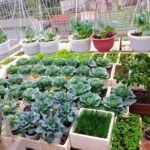
Container gardening is the ultimate flexible backyard mini farm space saving method. Containers can go anywhere: patios, balconies, driveways, rooftops or along a fence line. When frost looms, you can bring tender plants inside. When you need more light, you simply roll the pot.
What to Grow in Containers
If you have a deep enough pot, almost anything can be grown in a container. Tomatoes thrive in five-gallon buckets or larger pots. Peppers thrive in three-gallon containers. Lettuce, spinach and herbs work well in smaller pots and window boxes.
| Plant | Minimum Container Size |
|---|---|
| Herbs | 6–8 inches deep |
| Lettuce / Spinach | 8 inches deep |
| Peppers | 3 gallons (10–12 inches) |
| Tomatoes (determinate) | 5 gallons |
| Tomatoes (indeterminate) | 10–15 gallons |
| Dwarf citrus | 15–25 gallons |
Don’t Forget the Mix
Ordinary garden soil is too heavy and compacts in pots. Use a high-quality potting mix. Add perlite for drainage and a slow-release fertilizer. Because container plants dry out more quickly, they need to be watered more often — sometimes every day in summer.
7. How to Build a Wall Garden or Pocket Planter
If there is zero ground space, go right up the wall. Wall-mounted planter systems — from basic felt pocket organizers to modular polypropylene panels — allow you to cover six feet of fence with dozens of plants.
DIY Felt Pocket Planters
You can purchase felt shoe organizers at a dollar store and hang them from a fence. One herb plant, a strawberry plant or a cutting of lettuce goes in each pocket. A single three-foot fence organizer with 20 pockets can provide you with fresh herbs for months.
Modular Hydroponic Wall Systems
On the upmarket side, modular wall systems — such as living wall panels — can be installed with a drip irrigation system that automatically waters everything. These are particularly effective with herbs, leafy greens and edible flowers.
The primary challenge with wall gardens is that pockets dehydrate quickly and have shallow root space. Choose shallow-rooted plants: herbs, lettuce, spinach, strawberries and small flowers.
8. Cold Frames and Hoop Houses: Extend Your Season
One genius method to extract more food from the same space is just to use it longer. A cold frame or mini hoop house allows you to grow earlier in spring and later in fall by weeks. In temperate climates, you can grow greens all winter long.
Cold Frames: Simple and Cheap
A cold frame is simply a box — typically wood — with a transparent lid (an old window does the trick). It sits over your plants and captures the sun’s heat, forming a microclimate that’s 10 to 20 degrees warmer than the air outside.
You can assemble one in an afternoon using scrap lumber and a used storm window. Put it on your raised bed in October, plant cold-hardy greens such as kale, spinach and mâche, and harvest fresh salads in November and December.
Hoop Houses: Larger and More Versatile
A hoop house is essentially a tunnel of flexible PVC pipes covered by clear plastic sheeting. They’re more substantial and can cover an entire raised bed or row.
The advantage is flexibility. You can take the plastic off on warm days and put it back on cold nights. Some gardeners construct them permanently but roll up the sides only.
9. Set Up a Simple Hydroponic or Aquaponic System
Hydroponics sounds complicated. It doesn’t have to be. At heart, it’s simply growing plants in water rather than soil. The roots are anchored in a growing medium — perlite, clay pebbles or rockwool — while nutrient-rich water flows past them continuously.
Why It’s a Fantastic Space Saver
Hydroponic systems produce food faster than soil growing while using up to 90% less water. They can be set up indoors, on a balcony or in a corner of the garage. No weeding, no soil-borne pests and no heavy bags of compost to move around.
For a mini farm in your backyard, a deep water culture (DWC) system or nutrient film technique (NFT) system works beautifully for lettuce, spinach, basil and other leafy crops. According to the University of Arizona’s Controlled Environment Agriculture Center, hydroponic lettuce can grow up to 25% faster than soil-grown lettuce under optimal conditions.
Aquaponics: Fish Are Included in the Equation
Aquaponics is a combination of hydroponics and fish farming. Fish waste fertilizes the plants. The plants clean the water for the fish. It is a closed-loop system that is very efficient. Even a small 50-gallon system can grow edible fish such as tilapia or koi, along with enough lettuce and herbs for a small family.
The initial investment is higher but the productivity gains over time are phenomenal.
10. Collect Rainwater to Reduce Waste
This one is not about where you grow — it’s about how you maintain that growth. A backyard mini farm consumes water. A lot of it in summer. If you pay for municipal water, this adds up quickly. And in some places, drought restrictions are making it difficult to keep plants alive.
Assemble an Easy Rain Barrel System
A 55-gallon rain barrel that you attach to your downspout can collect thousands of gallons of free water in a growing season. That water is also better for your plants — it’s soft, unchlorinated and at just the right temperature.
You can combine multiple barrels for additional storage. Attach a spigot near the bottom, and you can gravity-feed a drip irrigation system that automatically waters your entire mini farm.
Drip Irrigation: Water Smarter
Drip irrigation puts water directly on the roots of plants. It eliminates runoff and evaporation. Paired with a rain barrel, it can turn your mini farm into an almost self-sustaining system during wet months.
Even a simple DIY drip system with a soaker hose and a timer can halve your water use while raising the health of your plants.
11. Reduce Input Costs by Utilizing Worm Bins and Composting
The best backyard mini farms reuse everything. Kitchen scraps, coffee grounds, cardboard, lawn clippings — all of it can be transformed into rich compost that feeds your soil year after year.
Starting a Worm Bin
The quickest, most space-efficient form of compost is through a worm bin (vermicomposting). A container the size of a large storage tote can handle a family’s vegetable scraps within weeks. The resulting castings are very rich — much more potent than most store-bought fertilizer.
Worm bins can live under the kitchen sink, in a garage or on a shaded corner of the patio. The best species for this job: red wigglers. They’re inexpensive and simple to order online.
Hot Composting for Bigger Batches
For lawn waste or larger amounts of garden debris, traditional compost systems are best. With the right mix of green materials (nitrogen-rich: grass, vegetable scraps) and brown materials (carbon-rich: cardboard, straw, dried leaves), a compost pile heats up and breaks down within weeks.
Fresh compost made at home means you pay almost nothing for fertilizer — one of the main ongoing costs for gardeners.
How to Combine These Ideas: Mini Farm Sample Layout
This is a practical example of how you could combine multiple space-saving ideas in a 20×20 foot backyard.
| Zone | Strategy | Crops |
|---|---|---|
| Fence line (back wall) | Vertical trellis + wall pockets | Beans, cucumbers, herbs |
| Raised bed #1 (center-left) | 4×8 raised bed, SFG method | Tomatoes, peppers, basil |
| Raised bed #2 (center-right) | Keyhole bed with compost center | Greens, carrots, onions |
| Corner left | Container row on casters | Dwarf tomatoes, strawberries |
| Corner right | Dwarf fruit tree + shrubs | Apple, blueberry, thyme |
| Against house wall | Hydroponic shelf unit | Lettuce, microgreens |
| Patio edge | Cold frame (seasonal) | Spinach, kale, mâche |
| Shed side | Rain barrel + compost bin | Water and soil supply |
This layout takes advantage of every horizontal and vertical surface. There’s no wasted corner, there are no empty fences and no bare soil. And it encompasses all the big food groups: greens, fruits, root vegetables, herbs and protein-supporting legumes.
5 Mistakes You Do NOT Want to Make in Your Backyard Mini Farm
No matter the best ideas for saving space, several common mistakes snag new mini farmers. Watch out for these:
Not enough sun. Most vegetables require six to eight hours of direct sunlight. Don’t put your bed in a shady corner and then wonder why nothing is growing. Map your sun exposure before you plant.
Overwatering containers. Plants grown in the ground are more tolerant of overwatering than those in containers. Check the top inch of the soil — if it’s still damp, don’t water.
Planting too close. Some spacing rules still apply even in a mini farm. Crowded plants compete for light, air and nutrients — and as a result they become diseased and produce poor yields.
Skipping compost. Backyard bare dirt is not garden soil. Without organic matter, it sets up hard in summer and becomes waterlogged in rain. Compost is non-negotiable.
Trying everything at once. Begin with two or three approaches. Get confident. Add more the next season. Aiming to create an aquaponic system, food forest and hydroponic wall in year one is a surefire way to burn out.
Frequently Asked Questions
Q: What is the absolute minimum size for a backyard mini farm? A: There’s no true minimum. Even just a 4×4 foot raised bed can grow significant amounts of food. Balcony container gardens can produce pounds of tomatoes and herbs. You can grow something if you have any outdoor space — or even a sunny window.
Q: What is the simplest crop to begin growing in a small space? A: Lettuce, radishes and herbs make the best starting points. They grow rapidly, require little space and are virtually foolproof. From seed, you can harvest lettuce within 30 days.
Q: Do I have to own my home to do a mini farm? A: No. Container gardens do well in rental properties because they are fully movable. Just check with your landlord that container gardening is allowed on the patio or balcony.
Q: Just how much money does a backyard mini farm actually save? A: Estimates vary widely, but a well-run small garden can realistically save a family of four $300 to $800 on groceries a year. High-value crops like herbs, cherry tomatoes and salad greens provide the largest return on investment.
Q: I want to start hydroponics — is it worth the investment? A: A basic deep water culture system is pretty easy to master. It’s worth it if you have little outdoor space or want to grow year-round indoors. Instead of building from scratch, get a small kit.
Q: How can I water a mini farm without spending much time on it? A: A drip irrigation system tied to a timer is your best friend. All you do is set it up once, and it waters everything on a schedule. Pair it with a rain barrel and you’ll hardly need to think about watering.
Q: Is it realistic to grow enough food from a backyard mini farm to survive on? A: Supplementing, yes. Unless you have plenty of growing space and do lots of food preservation, it is very hard to be 100% self-sufficient in a small backyard. However, a well-designed mini farm is quite capable of producing 10–30% of your produce.
Wrapping It All Up
A backyard mini farm is not about having a perfect garden. It’s about using your available space wisely.
You now have 11 proven backyard mini farm space saving ideas to play with. Some are free (companion planting, cold frames made from scrap material) or cheap (worm bins out of old totes). Some are major investments (hydroponics, aquaponics) that return dividends over the longer term. You don’t have to do them all.
Choose one concept that will work with your space and with your wallet. Set it up this week. Get comfortable with it. Then bring in another idea next season.
In brief, the aim is clear: more food, less space, less waste. With an appropriately careful plan, even the tiniest backyard can become a surprisingly productive little farm.
Start small. Grow big.