




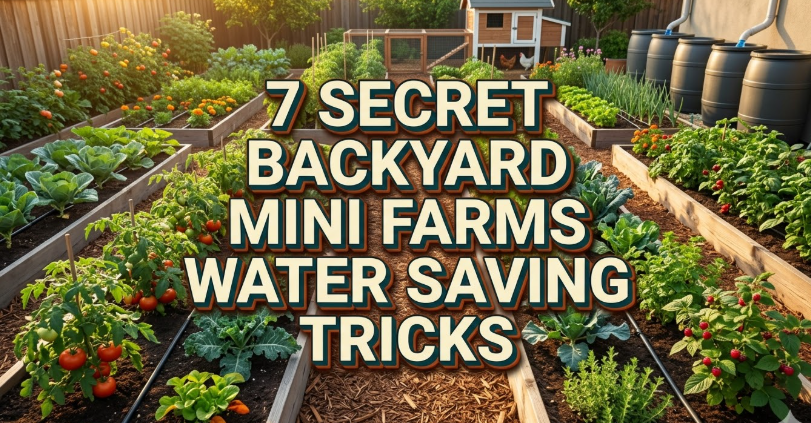
Meta Description: Backyard Mini Farms water saving tricks will cut your water bill in half and give you more food with less work. Learn 7 Secret Techniques That Give Real Results.
7 Working Tricks For Saving Water In Your Backyard Mini Farm
Right now, there’s a quiet revolution taking place in backyards across the globe. People are converting little plots of land into productive micro farms — growing vegetables, herbs, and fruits right outside their back doors. It sounds exciting. And it is.
But here’s the issue all new players contend with: water.
A mini farm in a backyard wastes hundreds of gallons a week when watered the wrong way. It drives up your water bill. It stresses your plants. And it can even lower your garden’s productivity.
The good news? A few clever tricks — many of them ignored by weekend gardeners — will reduce your water usage by 50% or more. No expensive equipment required. No complicated systems.
This guide outlines 7 secret tricks for your backyard mini farms water saving that experienced growers have been using for a long time. Read until the end, because one of those tricks (#7 to be exact) is something most people never even think about.
Why Water Efficiency Is More Important Than You Realize
Understanding the why behind water is important before we dive into how to navigate your miniature farm without wasting it.
Most average backyard gardens consume 1 to 2 inches of water per week. It may not seem like much. But over a complete growing season, that totals thousands of gallons — even for a small plot.
Smart watering techniques can reduce your overall water use by nearly 50 percent — no matter the size of your plot. That savings translates into real money in your pocket. And healthier plants, because overwatering is one of the key reasons that home gardens fail.
Trick #1 — Bury a Clay Pot and Let Physics Do the Rest
This technique is millennia old. Ancient Persian farmers used it. Modern gardeners are rediscovering it. And it works brilliantly.
It’s called ollas (pronounced “oy-yahs”). You bury a non-glazed clay pot in the ground near your plants’ roots. Fill it with water. The permeable clay gradually leaches moisture directly into the adjacent soil.
Why It Works So Well
Roots follow the moisture. Plants are naturally drawn toward water when it is delivered underground, in close proximity to where their root zone extends. They get just what they need, exactly when and where they need it.
Meanwhile, the surface stays dry. That means fewer weeds. Fewer fungal problems. Zero evaporation loss at the top of the system.
How to Set One Up
You can buy fancy ollas, but you don’t have to. Two matching terracotta pots from a garden center do the trick. Use waterproof sealant to seal the drainage hole of one pot. Stack them rim-to-rim and seal that edge, too. Bury the joined vessel up to its neck. Leave the top open so you can fill it.
A single buried olla can hydrate a 3 to 4 square foot area for several days before needing to be filled again. For a 25 square foot bed, four or five ollas take care of the job.
Trick #2 — Create a Heavy Mulch Blanket (Heavier Than You Realize)
Most gardeners mulch. But most gardeners do not mulch enough.
A 1-inch layer of mulch is a thin coat that will do little to retain moisture. Real results require at least 3 to 4 inches. In hot climates, some mini farmers will go as high as 6 inches.
The Best Mulch Materials for Mini Farms
Not all mulch is equal. Here’s a brief rundown of the most popular options:
| Mulch Type | Water Retention | Cost | Added Nutrients |
|---|---|---|---|
| Straw | Very High | Low | Low |
| Wood chips | High | Free (arborist) | Yes (slow) |
| Shredded leaves | High | Free | Yes (fast) |
| Grass clippings | Medium | Free | Yes (nitrogen) |
| Plastic sheeting | Very High | Low | None |
| Compost | Medium | Low–Medium | Very High |
Straw and wood chips from local arborists are almost always the lowest cost options. Mulch made of wood chips from companies that trim trees is often free — a lot of times they will bring a load at no charge to avoid disposal fees.
One Important Tip
Keep mulch a few inches away from plant stems. Mulch laid against stems retains moisture at the base and may cause rot. Leave a small space there, but then pile up plenty around the rest of the root zone.

Trick #3 — Water at the Right Time (It Changes Everything)
This sounds almost too simple. But one of the best water saving tricks there is depends on when you water your backyard mini farm.
Especially in summer, watering during the afternoon means a huge chunk of your water goes straight to evaporation before it can even reach roots. In hot climates, studies indicate that watering midday may result in a waste of 30 to 40% of water applied.
The Golden Window
Water early morning or late evening. Early morning — between 5 AM and 9 AM — is best. The soil is cool. Evaporation is minimal. Plants have efficient water uptake throughout the day.
Watering in the evening works but comes with one risk: as plants sit wet overnight, fungi can gain a foothold. If you do it in the evening, direct your water at the soil and not on the foliage.
How Much Less Water You Really Need
Timing your watering correctly is essentially a 30–40% bonus on every gallon you apply. For a mini farm that typically goes through 200 gallons a month, this little trick alone could save 60 to 80 gallons — without requiring any changes in equipment.
Trick #4 — Go Deep and Go Less Often
Here’s a mistake almost all beginners make: watering just a little bit, every single day.
It feels responsible. It makes you feel like you’re caring for your plants. However, watering frequently and not deeply actually conditions plants to develop weak, shallow root systems. Those roots remain near the surface and are susceptible to heat and drought.
Train Roots to Go Deep
The solution is watering deeply but less often. Soak your soil thoroughly — deep enough to drive moisture 6 to 8 inches down. Then water only when the top inch or two of soil is dry.
That method ensures roots grow down, pursuing moisture deeper in the soil. Plants that develop deep roots are much more drought-resistant. They tap into a larger store of soil water and continue to be productive when conditions on the surface grow dry.
A Simple Finger Test
Stick your finger 2 inches into the dirt near your plants. If it’s wet, don’t water. If it’s dry, it’s time. That takes 5 seconds — and gets better results than any timer or calendar-based schedule.
| Watering Style | Root Depth | Drought Tolerance | Water Used |
|---|---|---|---|
| Daily shallow watering | 1–2 inches | Very Low | High |
| Every 2–3 days, moderate | 3–4 inches | Medium | Medium |
| Every 4–7 days, deep soak | 6–8 inches | High | Low |
Trick #5 — Build Sunken Beds to Catch Every Drop of Rain
This is one of the least known backyard mini farms water saving tricks — and it has an outsized impact.
A traditional raised bed sits above ground level. Rainwater runs off the sides. Irrigation water pools and drains. You lose a significant portion with every watering.
A sunken bed does the opposite.
How to Build a Sunken Bed
Dig your growing area 6 to 8 inches below the surrounding soil level. This creates a natural basin. Instead of draining off, water pools in the lower area when it rains. Every drop stays exactly where you need it when you irrigate.
This technique — known in some circles as a “waffle garden” — has been employed by Native American farmers in the desert Southwest for centuries. It was designed for places where there is very little rain and every drop needs to be saved.
Combine It With Swales
In sloped backyards, combine sunken beds with swales — shallow ditches that follow the contour of the slope. Swales catch and direct runoff toward your growing areas. Sunken beds and swales together can render a backyard mini farm nearly self-watering when it rains.
Trick #6 — Collect Rainwater From Your Roof
Every time it rains, your roof catches a huge amount of water. Most of it flows directly into the storm drain and is never seen again.
If you can redirect even a small percentage of that water into storage barrels, it can seriously cut down how much tap water your mini farm requires.
How Much Water Can Your Roof Collect?
An easy formula: for every 1 inch of rainfall, every 1,000 square feet of roof area will catch about 600 gallons. A typical house with 1,500 square feet of roof surface accumulates 900 gallons per inch of rain.
Setting Up a Simple Rain Barrel System
All you need are three components: a rain barrel (55-gallon food-grade barrels are perfect and inexpensive to find secondhand), a diverter connected to your downspout, and a spigot near the bottom for attaching a hose.
For many backyard mini farms, two or three joined barrels provide enough storage to tide you over through dry spells between rain events.
According to the Environmental Protection Agency (EPA), outdoor water use accounts for as much as 30% of household water consumption — and in dry climates, that figure can climb even higher. Rain barrels are one of the simplest ways to offset that usage directly.
Important note: Check your local regulations first. Rainwater harvesting is restricted in some areas, though many have relaxed those laws recently.
Trick #7 — Choose Plants That Match Your Climate (Stop Battling Nature)
This is the trick that most people miss because it simply doesn’t feel like a “trick” at all. It feels like common sense. But it’s the single biggest leverage point for reducing water use on a backyard mini farm.
Most gardeners grow what they want to grow. Tomatoes, peppers, cucumbers. All thirsty plants that require regular moisture. Keeping those plants alive requires huge amounts of water in a dry climate.
Choose Drought-Tolerant Crops Instead
Here’s a little secret: many crops grow beautifully with relatively small amounts of water — if you plant the right ones.
| Crop | Water Needs | Drought Tolerance | Yield Potential |
|---|---|---|---|
| Sweet potatoes | Low–Medium | High | Very High |
| Amaranth | Low | Very High | High |
| Cowpeas (black-eyed peas) | Low | Very High | High |
| Armenian cucumber | Low | High | High |
| Quinoa | Low | High | Medium |
| Tepary beans | Very Low | Exceptional | Medium |
| Swiss chard | Low–Medium | Medium–High | High |
| Moringa | Very Low | Exceptional | Very High |
Reduce Water Demand With Companion Planting
Certain plant combinations naturally lessen water requirements. Taller plants cast shade on shorter ones, helping keep soil cooler and slowing evaporation. The traditional “Three Sisters” — corn, beans, and squash — is a centuries-old companion planting system specifically intended to conserve moisture in the soil. The leaves of the squash act as a living mulch layer, keeping the soil shaded and retaining moisture.
Group Plants by Water Needs
Instead of mixing thirsty and drought-tolerant plants randomly, group them by water requirement. This allows you to water thirsty zones more heavily while leaving drought-tolerant zones virtually untouched. You conserve water and reduce the chances of over or underwatering.
Putting It All Together — A Simple Mini Farm Water Plan
These seven tricks are even more effective together. Here is what a smart setup could look like:
Morning: Finger test all your beds. Only water areas that require it. Do this before 9 AM.
Ongoing: The buried ollas take care of the root zone. Thick mulch seals in moisture. Sunken beds capture every raindrop.
Seasonal: Rainwater barrels fill when it rains. You pull from them in dry times. The drought-tolerant crops in your most arid zones demand nothing of you whatsoever.
Result: An efficient mini farm consuming only a fraction of the water that a conventional garden uses.
Common Backyard Mini Farm Watering Mistakes to Avoid
Even with the best intentions, a few habits quietly waste water. Watch out for these:
Sprinklers during windy or hot periods. Wind carries water away from plants. Heat sends it up before it sinks down. Sprinklers are the least effective way to water mini farms — almost always, drip irrigation or hand-watering at ground level is better.
Ignoring soil type. Sandy soil drains quickly and requires watering more often. Clay retains moisture but can become overly saturated. Understanding your soil type helps inform how deeply and how frequently you should water.
Watering by schedule rather than by need. Setting timers and calendar reminders is orderly. But plants are not aware of what day it is. The soil itself is the only thing that can reveal how dry it actually is.
Planting too densely without planning. Overcrowded plants compete for water. There has to be room for each plant’s root zone. Dense planting does work — but not without careful spacing planning and sufficient water infrastructure.
FAQs About Backyard Mini Farm Water Saving
How much water does a backyard mini farm really need?
A mini farm usually requires about 1 to 2 inches of water a week during the growing season. That amounts to about 0.6 gallons per square foot per week. A 50-square-foot bed needs about 30 gallons a week using traditional methods — or as little as 12 to 15 gallons if you use the water-saving tricks in this guide.
What single water saving technique works best for mini farms?
In hot, dry climates, buried ollas (clay pot irrigation) combined with deep mulching consistently outperform other methods. The duo delivers water directly to roots while preventing evaporation from the surface. Data on olla irrigation shows 30 to 70% water savings compared to surface drip irrigation, depending on conditions.
Is it really worth setting up rainwater harvesting?
Yes — for most mini farm setups, it pays off within one season. A simple rain barrel system can cost anywhere from $30 to $80 to install. In places with moderate rainfall, it can provide 50 to 100% of a small mini farm’s water needs during the growing season.
Can I grow a productive mini farm without ever using tap water?
It varies by climate and what you grow. Where there are 30 or more inches of rain a year and the right water-saving infrastructure is in place (sunken beds, swales, rain barrels, mulch, and drought-tolerant crops), many growers make it through entire seasons without any supplemental water. In drier climates, you’ll still need some supplemental irrigation, but smart techniques can significantly reduce how much tap water you rely on.
How do I know if I’m overwatering my mini farm?
Common signs include yellowing leaves, mushy stems near the soil, soil that remains wet more than a day or two after watering, and a sour or moldy smell from the soil. Your most reliable guide is the finger test — if the top 2 inches of soil feels moist, don’t water.
Do drought-tolerant crops taste as good as regular vegetables?
Many do — and some are even tastier. Armenian cucumber is crisp and refreshing. Amaranth leaves are both nutritious and tasty. Cowpeas are very tasty and super versatile. Moringa leaves are nutrient-dense with a very mild and pleasant taste. The key is to align crop choice with your cooking and eating preferences, not simply water needs.
What if I have heavy clay soil that doesn’t drain well?
Clay soil holds water well but drains slowly. In clay, water less frequently but apply it slowly so there is no runoff. Adding compost over time improves the drainage and structure of clay soil. Raised beds or no-dig beds built on clay can completely bypass the problem.
Final Thoughts — Small Changes, Big Results
Saving water in a backyard mini farm is not about compromise. It’s about collaborating with nature rather than fighting it.
Every trick in this guide has been used by real farmers — some for thousands of years. Ollas. Sunken beds. Deep watering. Rainwater harvesting. Mulching. Smart crop selection. None of these cost much. None require special skills.
Together, they can drastically reduce your water consumption while actively improving the productivity of your mini farm. Plants receive what they require, exactly when and where they need it. Roots grow deeper and stronger. Soil stays healthy.
Begin with only one or two tricks this season. See how your garden responds. Then add more. At the end of a full growing season, you might discover that your backyard mini farms water saving efforts have not only changed your water bill — but also fundamentally rewired how you think about gardening.
Focus keyword: backyard mini farms water saving tricks