
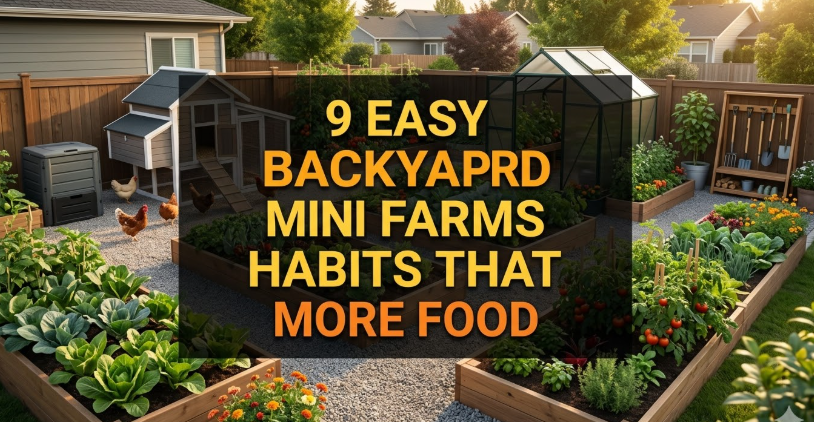
Meta Description: 9 Habits to Get a Mini Farm for Food from Your Backyard — Learn about easy, proven daily routines that enable you to grow more food with less work.
9 Simple Backyard Mini Farm Habits That Grow More Food
Have you ever looked at your yard and said, “I could grow food here”?
You absolutely can. And it doesn’t take much land, money, or farming experience to do it.
Mini farms in backyards are sprouting up across neighborhoods, apartment patios, and small suburban lots. People are growing tomatoes, herbs, lettuce, beans, and even fruit — right outside their doors.
But the thing that many early growers really miss out on is: it’s not just about planting seeds. What distinguishes a scraggly backyard garden from one that truly thrives is daily practice.
Small, steady steps taken every day or every week completely change the game. The right habits allow your plants to grow faster, produce more, and stay healthier longer.
In this article, you’ll discover 9 simple backyard mini farm habits that you can implement starting today — habits real home growers follow to maximize their harvests, even in small areas.
Why Daily Habits Are More Important Than Major Choices
The vast majority of people assume that growing food is just about making one big decision — what to plant, which soil to buy, and where to get those seeds.
But experienced growers know better.
The secret of a productive backyard mini farm is not what you do once, but what work you undertake consistently. It is similar to brushing your teeth. You can’t save yourself from cavities by doing it once. But doing it every day? That changes everything.
What applies to you also applies to your garden.
Building smart habits around your backyard mini farm helps you discover problems early, maintain healthy soil, and enable your plants to produce food week after week — not just once.
Let’s get into the 9 habits that make the most difference.
Habit 1: Take a Walk-Through Every Single Day
This one sounds simple. It is — and it works.
Walk your backyard mini farm for 5 to 10 minutes every morning. Look at your plants closely. Check the leaves. Smell the soil. Notice anything new.
This daily check-in does several important things:
You identify pest problems before they get out of hand. One caterpillar today will be 50 next week if you don’t move quickly.
You notice signs of disease early. Yellowing leaves, spots, or a wilting look can signal a problem that is simple to remedy if you catch it early.
You pay attention to when plants are thirsty. Soil varies from day to day based on weather, and your on-the-spot inspection keeps you informed.
What to Look for on Your Morning Walk
- Curled, spotted, or yellowing leaves
- Insects on the underside of leaves
- Dirt that appears dry or crinkled
- New growth starting to come through (a great sign!)
- Fruit or vegetables ready for harvesting
Many backyard mini farm growers say this simple habit saves their harvest more than any product they buy.
Habit 2: Water at the Right Time — Not Just When You Remember
Watering is one of the most critical tasks you perform. The timing of when you water is just as important as how much you water.
The best time to water a backyard mini farm is early in the morning, before 10 a.m.
Why? Because watering in the morning allows moisture to soak into the soil before the sun heats up. Plants can absorb it gradually throughout the day. Much less water evaporates, so none is wasted.
Watering in the evening has the disadvantage of leaving leaves wet overnight, which encourages fungal disease.
Watering midday in the sweltering sun causes quick evaporation, and your plants don’t get the full benefit.
How Much Water Does Your Mini Farm Need?
Most vegetable plants require approximately 1 inch of water each week. That comes from rain plus whatever you add. That figure can increase in hot summers.
A simple way to measure: place an empty tuna can in your garden. When it fills to the top, that is about 1 inch of water.
The best investment you can make for a backyard mini farm is a drip irrigation system. They deliver water directly to plant roots, cut down on waste, and give you back your time.
Habit 3: Feed Your Soil, Not Just Your Plants
Here is something most beginners get wrong.
They concentrate on feeding their plants. But the true secret to a productive backyard mini farm is soil fertility.
Healthy soil feeds healthy plants. It’s that simple.
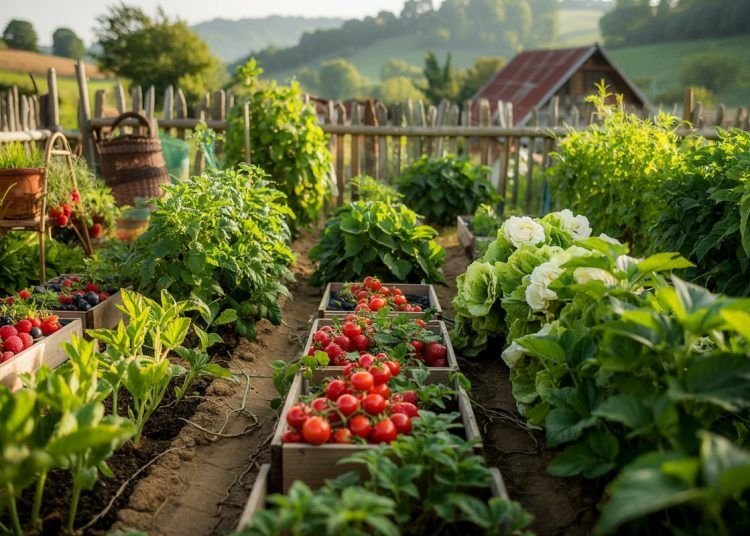
Soil is alive. It’s teeming with bacteria, fungi, worms, and microorganisms that help decompose organic matter and make nutrients available to the roots of your plants. When your soil is healthy, your plants naturally grow stronger and produce more.
A Composting Habit That Makes All the Difference
Start a compost pile or bin. Add kitchen scraps like vegetable peels, coffee grounds, and eggshells. Add dry materials such as dried leaves or cardboard.
Turn it every week or two. In just a few months, you’ll have dark, rich compost to blend into your garden beds.
You can also apply compost tea — water that’s been “brewed” with compost — directly to soil or sprayed onto leaves. It’s a quick, natural nutrient boost.
At a minimum, aim to incorporate organic matter into your beds once each season. Each year, your soil will continue to improve.
If you’re serious about building a productive growing system, Backyard Mini Farms is a great resource packed with practical advice for home growers of all levels.
Habit 4: Plant in Waves, Not All at Once
This one habit can double what you harvest from your backyard mini farm.
This is called succession planting, and it’s a remarkably effective technique.
Instead of seeding all your lettuce on the same day, seed a small batch every 2 to 3 weeks. By the time you finish with one batch, another is ready to be picked.
This means fresh food gets to your table for months rather than weeks.
Best Crops for Succession Planting
| Crop | Days to Harvest | Plant Every |
|---|---|---|
| Lettuce | 30–45 days | 2–3 weeks |
| Radishes | 20–30 days | 2 weeks |
| Spinach | 40–50 days | 3 weeks |
| Bush beans | 50–60 days | 3–4 weeks |
| Cilantro | 21–28 days | 2 weeks |
This table makes planning your waves easy. Choose your favorite fast-growing crops and stagger them throughout the season.
Habit 5: Apply Mulch and Let It Do the Work
Mulching is one of the laziest habits on this list — and also among the most rewarding.
Mulch is anything you spread on top of your soil around your plants. It could be straw, wood chips, shredded leaves, or even cardboard.
Here’s what it does for your backyard mini farm:
It retains moisture so you don’t have to water as often. It blocks sunlight so weeds cannot grow. It decomposes slowly and replenishes the soil. It stabilizes soil temperature for roots.
A 2- to 3-inch layer of mulch around your plants can reduce your watering needs by up to 50%. That’s less work and a lower water bill.
How to Mulch the Right Way
Keep mulch several inches away from plant stems. Direct contact can cause rot. Distribute it out to the edges of your plant’s canopy.
Renew your mulch layer once or twice a season as it decomposes. Straw and wood chips are affordable and widely available at most garden centers.
Habit 6: Harvest Regularly — The More You Pick, the More You Get
For many new backyard mini farm growers, this habit comes as a surprise.
Many vegetables will produce more food if you harvest them frequently. If you leave ripe vegetables too long on the plant, the plant believes its work is finished. It slows down production.
But when you continue to harvest, the plant keeps producing.
This is especially true for:
Zucchini — if you allow one to grow giant, the plant will stop producing new ones. Beans — harvest them when young and pick often for a longer harvest window. Cucumbers — left on the vine too long, they turn yellow and bitter. Herbs such as basil — regular cutting deters bolting, and more leaves keep coming.
Build the “Harvest Every 2 Days” Habit
At peak season, do a light harvest pass every 2 days. Bring a small basket. Grab whatever looks mature, even if it’s tiny.
This not only keeps production levels high, but also means you are eating fresher food at peak flavor.
According to the University of Illinois Extension, harvesting vegetables at peak ripeness is one of the most effective ways to keep plants productive throughout the growing season.
Habit 7: Use Companion Planting to Boost Your Garden Naturally
Companion planting refers to the practice of growing certain plants alongside each other because they provide mutual benefits.
Some plants repel pests. Some draw beneficial insects such as pollinators. Some improve soil for their neighbors.
This is a free, natural way to protect and improve your backyard mini farm without any chemicals.
Classic Companion Planting Pairs
| Plant | Good Companion | Why It Helps |
|---|---|---|
| Tomatoes | Basil | Repels aphids and whiteflies |
| Corn | Beans + Squash | “Three Sisters” — feed and shade each other |
| Carrots | Onions | Repel each other’s pests |
| Cucumbers | Nasturtiums | Nasturtiums draw aphids away |
| Brassicas (cabbage, broccoli) | Dill | Attracts predatory wasps |
| Peppers | Marigolds | Repel nematodes in soil |
Begin with one or two of these pairs. In time, your mini farm will become a more balanced, self-defending ecosystem.
Habit 8: Keep a Simple Garden Journal
This one practice is what separates good backyard mini farm growers from great ones.
You don’t need a fancy notebook. A plain spiral notebook will do just fine. Even your phone’s notes app will work.
Take a few notes each week about:
- What you planted and when
- What’s growing well and what isn’t
- What pests you’ve seen
- What the weather has been like
- When you first harvested each crop
At the end of the season, read back through your notes. You’ll start seeing patterns. “Every year, aphids hit my tomatoes in July.” “My lettuce always bolts during a heat wave.” “The corner bed never does well — probably not enough sun.”
What Makes This Habit Worthwhile Year After Year
Your journal becomes your own personal growing guide — built from your own yard, your own climate, and your own experience.
No gardening book can give you that.
After only a season or two of journaling, you will make wiser planting decisions, avoid repeating mistakes, and get better results year after year.
Habit 9: Grow Upward — Use Vertical Space to Multiply Your Harvest
The one thing most backyard mini farms are limited by is space.
But growers sometimes forget that space doesn’t just expand outward. It goes upward.
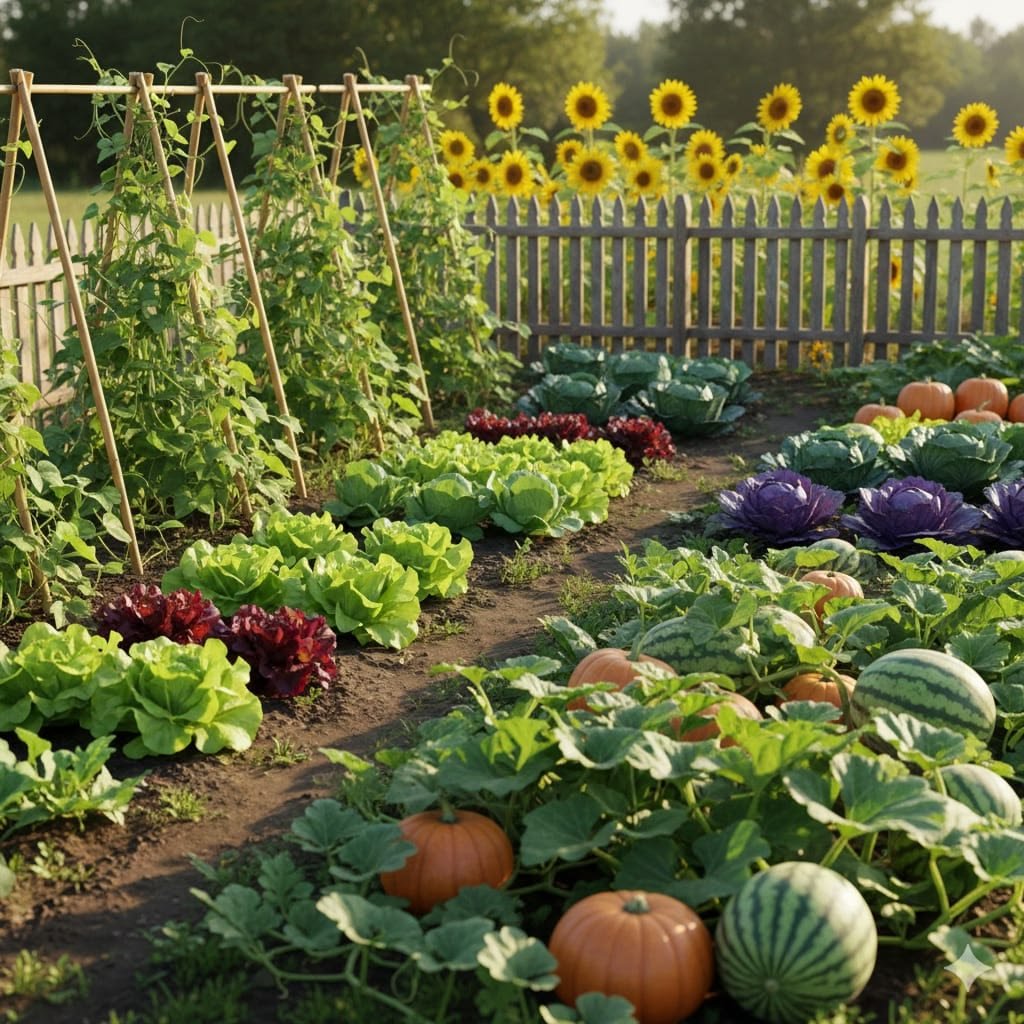
Vertical growing involves training vining plants to grow up a trellis, fence, cage, or rope system instead of spreading across the ground.
This one habit can effectively double your growing area without adding a single square foot of ground space.
Best Plants for Vertical Growing in Your Mini Farm
Cucumbers — grow beautifully on a trellis and are easier to harvest. Pole beans — climb naturally and produce for months. Peas — love a fence or mesh to climb. Winter squash — can be trellised with slings made from old pantyhose. Tomatoes — indeterminate varieties can reach 6–8 feet tall.
Vertical growing not only saves space, it also improves airflow around plants. Better airflow leads to fewer fungal diseases. That means less work for you and more food from your mini farm.
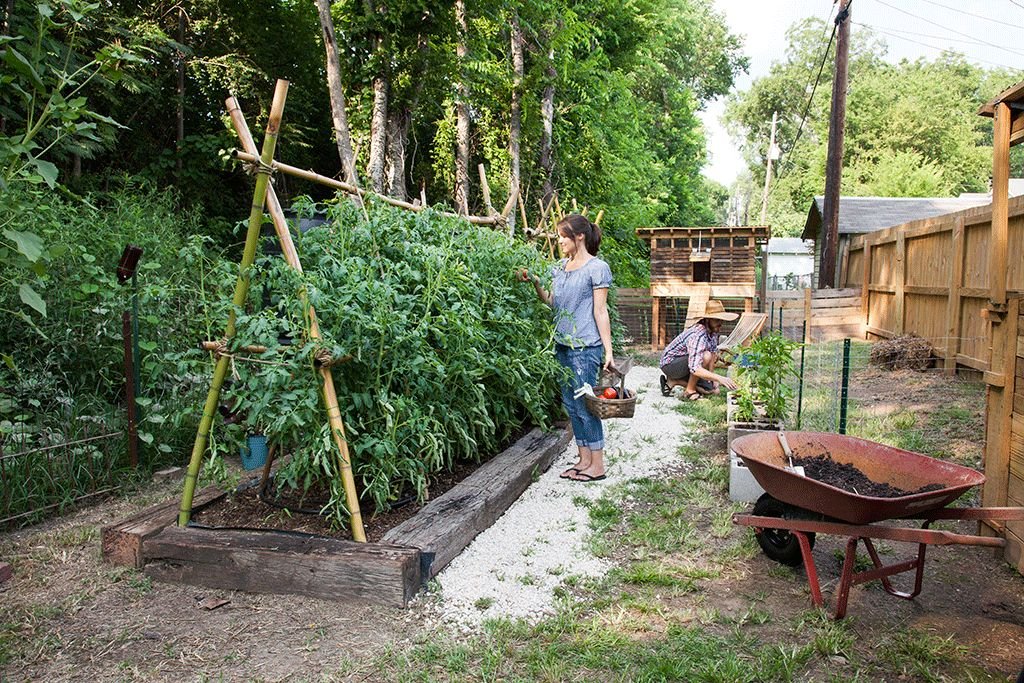
A basic A-frame trellis made from bamboo poles and string costs next to nothing and can transform how much you can grow.
How These 9 Habits Work Together
Each of these habits is valuable on its own. But when you put them together, something greater happens.
Your backyard mini farm becomes a system — not just a collection of plants.
Your healthy soil (Habit 3) feeds plants that your morning walk (Habit 1) keeps problem-free. Your mulch (Habit 5) reduces watering time so you can spend it harvesting (Habit 6). Your companion plants (Habit 7) protect the crops you’re succession-planting (Habit 4). Your journal (Habit 8) tracks it all so next year is even better.
And as you grow vertically (Habit 9), the entire system takes up less room — leaving space for even more food.
This is what a real backyard mini farm looks like when it’s humming along.
Getting Started: A Simple Week-by-Week Routine
You don’t need to implement all 9 habits at once. Start with three and go from there.
Here’s a beginner-friendly weekly rhythm:
Every morning (5–10 minutes): Walk your beds, inspect plants, harvest anything ready.
Every 2–3 days: Water in the morning, do a small harvest pass.
Once a week: Add to your compost pile, check mulch, make notes in your journal.
Once a month: Plant the next wave of fast-growing crops, evaluate what’s working.
Each season: Refresh mulch, read through your journal, revise your companion planting plan.
By the end of your first season, these habits will feel completely natural. By your second season, you’ll wonder how you ever gardened without them.
FAQs About Backyard Mini Farms
What size backyard do I need for a mini farm? You can grow a productive backyard mini farm in as little as 4×4 feet of ground space. With vertical growing and container gardening, even a small patio or balcony can sustain a significant food garden. Space matters less than smart habits.
Which vegetables are the easiest to grow in a backyard mini farm? Lettuce, radishes, beans, herbs, zucchini, and cherry tomatoes are all beginner-friendly choices. They grow quickly, yield generously, and don’t take a lot of experience to succeed with.
When will I be able to harvest food from my mini farm? Radishes are ready in as little as 20 days. Lettuce takes about 30–45 days. Tomatoes and peppers are longer — about 60 to 80 days from transplant. If you plant quick crops first, you’ll be harvesting within a month.
Can I start a backyard mini farm without spending a lot of money? Yes. Compost replaces expensive fertilizers. Seed saving reduces what you spend on seeds. Mulch materials such as straw and leaves are inexpensive or free. Many of the best habits — morning walks, harvesting regularly, journaling — cost nothing at all.
Do backyard mini farms work in hot climates or dry regions? Absolutely. Mulching and watering in the morning are especially important in hot, dry climates. Choose heat-tolerant crops such as peppers, sweet potatoes, okra, and melons. Drip irrigation is a huge help in dry climates and quickly pays for itself in water savings.
What is the biggest mistake new backyard mini farm growers make? Getting overwhelmed by planting too much at once. Start small. Master a few habits. Then expand. A small, carefully tended mini farm always produces more than a large, neglected one.
Do I need fancy equipment to start a backyard mini farm? Not at all. A trowel, a watering can or hose, some basic seeds, and decent soil are all you really need to begin. You can add tools and systems over time as your confidence grows.
Conclusion: Your Backyard Mini Farm Starts With One Habit
You’ve just discovered 9 simple backyard mini farm habits that allow real growers to produce more food with less hassle.
The single most important thing to remember is that you don’t have to do it all at once.
Focus on one habit — perhaps the morning walk-through, or the harvest-every-2-days rule — and commit to it for two weeks. Then add another.
Before you know it, you’ll have a backyard mini farm routine that feels easy, not overwhelming. You’ll be eating fresh food you grew yourself, season after season.
The best time to start was last spring. The second-best time is right now.
Go look at your backyard. Your mini farm is waiting.