
Meta Description: Backyard Mini Farms Gardening Tips – Even the smallest yard can be a food-producing powerhouse. Learn 11 straightforward ways to grow more food, save money, and experience fresh harvests all year long.
11 Tips For Powerful Backyard Mini Farms Gardening That Works
Imagine going out your back door and harvesting fresh tomatoes, herbs, lettuce, and even eggs — all from your own little plot of land. That’s the miracle of a backyard mini farm.
You don’t need acres of land. You do not have to come from a farming family. What you do need are the right strategies, some planning, and the motivation to roll up your sleeves.
No matter if you have a small urban lot or a generous suburban yard, these backyard mini farms gardening tips will allow you to grow more food, waste less space, and enjoy the whole process along the way.
Let’s dig in.
Why Backyard Mini Farms Are Booming at This Moment
More people are growing their own food than at any time in the past. Increased grocery prices, anxiety over the quality of food, and a longing for more sustainable living are all encouraging families to turn toward home food production.
A backyard mini farm is not just a basic vegetable garden. It’s a small, purposeful, productive little farm that operates like what you’d find on a real farm — but on a much smaller scale. You plan out your space, manage your soil, do some succession planting, and maybe keep some small animals like chickens or rabbits.
The results can be impressive. A small mini farm of just 1,000 square feet, well managed, can grow hundreds of pounds of food a year.
Tip 1: Kick Off With an Intelligent Layout Plan
Don’t Just Dig — Design First
Before you put in a single seed, take out a notebook and map your space.
A good layout avoids many typical problems. Think about:
- Sunlight — Most garden vegetables require 6–8 hours of sunlight each day
- Water access — Put beds nearby a hose or rain barrel
- Pathways — As you walk between beds, you need to avoid compacting the soil
- Wind direction — Tall plants can shield from sun or shelter delicate crops
One helpful rule of thumb is to orient your garden beds north to south. This allows sunlight to reach each plant no matter where it is in the day.
Zones Make Life Easier
Steal the idea of “zones” from permaculture design. Zone 1 is nearest your house — this is where you put herbs and salad greens you’ll be visiting every day. Zone 2 is a bit farther — ideal for tomatoes, peppers, and beans. Zone 3 and beyond may contain fruit trees, compost piles, or chicken coops.
This layout saves time and energy every day.
Tip 2: Construct Raised Beds for Greater Control
The Advantages of Raised Beds Versus In-Ground Planting
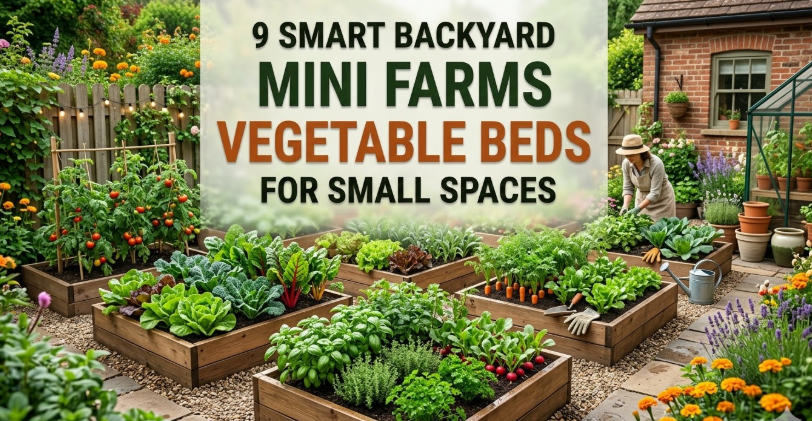
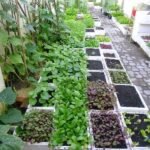
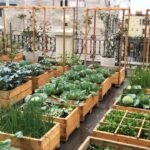
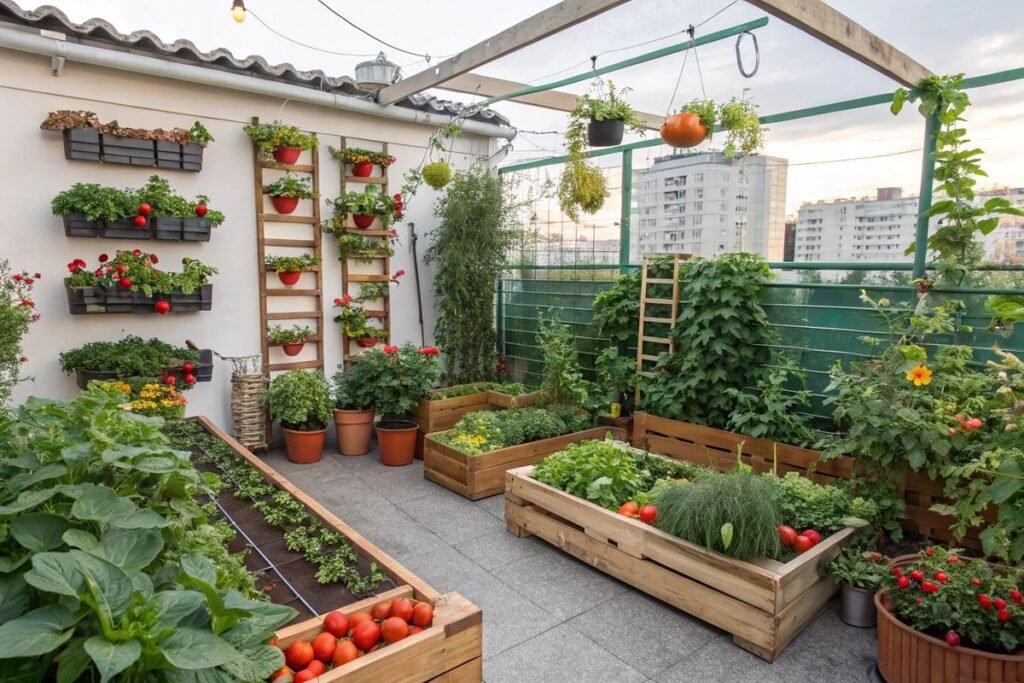
Raised beds are one of the best investments you can make in your backyard mini farm. They allow you to have full control over your soil quality, they drain better, they warm sooner in spring, and they’re easier on your back.
Standard raised beds are typically 4 feet wide (to allow you to reach the center without stepping in) and 8 to 16 feet long. Most vegetables do best at about 12 inches deep.
What to Fill Them With
Do not use your backyard soil alone. A good raised bed mix should contain:
| Ingredient | Proportion | Purpose |
|---|---|---|
| Compost | 40% | Nutrients and microbial life |
| Topsoil | 40% | Structure and weight |
| Perlite or coarse sand | 20% | Drainage and aeration |
This combination leaves roots space to grow deeply and robustly, making for larger, healthier plants.
Tip 3: Learn How to Succession Plant
Grow Food All Season Long
One common mistake that beginner mini farmers make is trying to plant everything all at once. They have a big harvest in July and then nothing for the rest of the year.
Succession planting fixes this. Rather than planting all your lettuce in May, plant a small batch every 2–3 weeks. That means you’re collecting fresh lettuce from May all the way through October.
What Crops Are Best for Succession
Fast-growing crops are your best friends here:
- Lettuce — Ready in 30–45 days
- Radishes — Harvest in only 25 days
- Spinach — Ready in 40–50 days
- Bush beans — 50–60 days to harvest
- Cilantro — Ready in 45–70 days
Note your planting dates on a calendar. Treat your mini farm like a schedule, not a hobby.
Tip 4: It’s Not Just Your Plants That Need Food — Nurture Your Soil
Healthy Soil = Healthy Harvests
Here’s a truth most novices fail to grasp: you’re not really a plant farmer. You’re a soil farmer. What’s happening underground is crucial to the wellbeing of everything above ground.
Great soil is alive. It contains bacteria, fungi, earthworms, and microscopic organisms that decompose organic matter and deliver nutrients to the root systems of what you’re growing.
Build a Compost System
Composting is free fertilizer. Create a simple three-bin system in a corner of your yard:
- Bin 1 — New scraps added (kitchen waste, grass clippings, cardboard)
- Bin 2 — Active decomposition occurring
- Bin 3 — Completed compost, ready to use
Turning your compost pile every few weeks can propel the process along. Then, 2–3 months later, you’ll have rich, dark compost your plants will thrive on.
Other Soil Boosters
- Worm castings — Excellent organic fertilizer
- Wood chip mulch — Smothers weeds and feeds fungi
- Cover crops — Sow clover or buckwheat in empty beds to fix nitrogen and add organic matter
Tip 5: Fill Every Space Using Intensive Planting
Think Dense, Not Wide
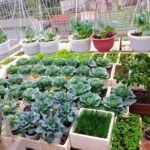
Traditional row gardening wastes a lot of space between plants. Intensive planting fills up that room and multiplies your yield dramatically.
The concept is straightforward: space the plants close enough that when mature, their leaves will touch and form a living canopy. This blocks weeds, holds moisture in the soil, and allows you to grow more food per square foot.
The Square Foot Gardening Method
This popular method divides each bed into 1-foot squares. Each square contains a different crop, sown in a tight grid. Here’s a quick guide:
| Plant | Plants per Square Foot |
|---|---|
| Lettuce | 4 |
| Spinach | 9 |
| Carrots | 16 |
| Radishes | 16 |
| Tomatoes | 1 |
| Peppers | 1 |
| Kale | 1 |
| Onions | 16 |
It is productive and easy for beginners. A 4×4 raised bed done this way can feed a family of two in salads all summer long.
Tip 6: Companion Planting Is Your Ace
Plants That Help Each Other Grow
Not all plants get along. But some pairings are so potent that farmers have relied on them for thousands of years.
The best-known example is the Three Sisters — corn, beans, and squash. Native American farmers planted all three together because:
- Corn grows tall and provides a supporting pole for the beans
- Beans fix nitrogen in the soil, feeding the corn and squash
- Squash grows along the ground, smothering weeds and conserving moisture
That’s nature taking care of the hard part.
For more in-depth companion planting guides and seasonal growing charts, Backyard Mini Farms is a great resource to bookmark.
More Winning Combinations
- Tomatoes + Basil — Basil can repel aphids and whiteflies; both prefer similar conditions
- Carrots + Onions — Each deters the primary pest of the other
- Roses + Garlic — Garlic repels aphids from roses
- Cucumbers + Nasturtiums — Nasturtiums lure aphids away from cucumbers (trap cropping)
Avoid planting fennel near just about everything — it’s a famously bad neighbor in the garden.
Tip 7: Water Smarter, Not More
Most Gardens Are Overwatered
Overwatering is one of the leading causes of plant loss for new gardeners. Waterlogged roots cannot breathe and become susceptible to rot and disease.
Learn how to check soil moisture before watering. Insert your finger 2 inches into the soil. If it still feels wet, wait another day.
Drip Irrigation Changes Everything
The single best upgrade you can make to your backyard mini farm is a drip irrigation system. Drip lines deliver water directly to the root zone instead of watering from above, which wastes water and causes fungal disease.
Benefits of drip irrigation:
- Uses up to 50% less water than sprinklers
- Minimizes fungal disease by keeping leaves dry
- Time-saving — set it on a timer and forget about it
- Plants grow faster because roots have consistent, even moisture
A basic drip setup for a small mini farm costs around $50–$100 and will quickly pay for itself in water savings and better yields.
Collect Rainwater Too
Put up a rain barrel below your downspout. A single downpour can top up a 50-gallon barrel, providing free water for your garden between rains. According to the EPA’s WaterSense program, harvesting rainwater is one of the simplest and most effective ways homeowners can reduce outdoor water use.
Tip 8: Vertical Growing — Double Your Space
Go Up When You Can’t Go Out
If you are short on square footage in your backyard mini farm, the solution is to grow up. Fences, trellises, arches, and towers can make a huge difference in how much food you’re able to produce.
Vertical growing also increases airflow between plants, which helps reduce disease.
Best Crops for Vertical Growing
- Cucumbers — Love to climb a trellis; easier to pick as well
- Pole beans — Grow twice as long and produce more than bush beans
- Peas — They climb all on their own; ideal for spring and fall
- Tomatoes — Stake or cage to prevent them from laying on the ground
- Winter squash — Surprisingly robust; can vine with support
- Melons — Can be grown vertically with fabric slings to support the fruit
A simple wooden trellis or cattle panel arch is cheap and easy to build and can hold heavy crops for years.
Tip 9: Add Small Animals for a Real Mini Farm Vibe
Chickens Are the Gateway Animal
Chickens are the best way to turn a backyard garden into a true mini farm. Even just a small flock of 2–4 hens can give a family fresh eggs on almost a daily basis.
Beyond the eggs, chickens are amazing for your garden:
- Their manure is great compost material (aged first)
- They consume pests like slugs, beetles, and grubs
- They scratch and aerate the soil
- They’re surprisingly low maintenance
First, check your local ordinances — many cities permit hens (but not roosters) in residential areas.
Other Small Animals to Consider
- Rabbits — Non-disruptive, low maintenance, great fertilizer, and optional meat source
- Quail — Small birds that produce tiny eggs; very quiet and do well in cramped quarters
- Ducks — Good for pest control (especially slugs); require a small water source
- Bees — Not exactly an animal, but a hive or two will do wonders for your pollination and provide you with honey
Get comfortable with one animal type before adding any more.
Tip 10: Preserve Your Harvest So Nothing Goes to Waste
Too Much of a Good Thing
Once established, a productive backyard mini farm will produce more food than you can consume fresh. That’s a nice problem — but only if you know how to work with it.
Food preservation means your harvest is working for you season after season.
Easy Preservation Methods for Beginners
Freezing is the easiest method. Blanch vegetables briefly in boiling water, shock in an ice bath, dry them off, and freeze in bags. Beans, peas, corn, and kale freeze beautifully.
Canning does require a bit more equipment but allows you to keep tomatoes, salsa, pickles, jams, and other things at room temperature for up to a year or longer. For food safety, stick to tested recipes from reliable sources like the USDA or Ball Canning.
Drying/Dehydrating is excellent for herbs, peppers, tomatoes, and fruit. You can purchase a simple dehydrator for $30–$60 and you’ll definitely get your money’s worth.
Fermenting is among the most ancient and effective preservation techniques of all time. Sauerkraut, kimchi, pickles, and fermented hot sauce are all simple projects that only require salt and a jar.
Tip 11: Keep a Garden Journal and Track Everything
The Most Underrated Gardening Habit
Okay, this may sound boring, but keeping a garden journal is one of the strongest habits you can build for your backyard mini farm. Experienced farmers swear by it.
What to track:
- Planting dates — What you planted and when
- Germination notes — How long seeds took to sprout
- Pest and disease problems — What happened and what worked
- Harvest dates and amounts — How much you grew
- Weather notes — Frost dates, periods of drought, heat waves
- Variety performance — Which variety crushed it and which did not
Eventually, this journal becomes an invaluable tool. You’ll know exactly what thrives in your particular microclimate, with your particular soil, in your particular conditions.
No app can substitute for years of your own personal data.
A Quick Overview: Mini Farm Production by Space
| Space Available | Realistic Annual Yield |
|---|---|
| 100 sq ft | 50–100 lbs of produce |
| 500 sq ft | 200–400 lbs of produce |
| 1,000 sq ft | 400–800 lbs of produce |
| 2,000 sq ft | 800–1,500+ lbs of produce |
These figures are based on good soil, good planning, and consistent management.
The Most Common Backyard Mini Farm Mistakes to Avoid
No matter how many backyard mini farms gardening tips you have, it’s easy to stumble. Below are the most common pitfalls:
- Planting too much at once — Begin small and increase as you gain experience
- Ignoring soil health — Feed your soil every season
- Skipping mulch — Bare soil dries out quickly and allows weeds to move in
- Not labeling plants — You’ll lose track of what you planted where
- Quitting after one bad season — All gardeners have failures; the important thing is what you learn from them
- Planting in too much shade — Sunlight is non-negotiable for most vegetables
FAQs About Backyard Mini Farms
Q: What space do I need to start a backyard mini farm? You could start with as little as 100 square feet. Even a 4×8 raised bed can provide a lot of food. The trick is to plan your space carefully and select high-yield crops.
Q: What is the investment in setting up a backyard mini farm? A simple setup of 2–3 raised beds, quality soil mix, seeds, and basic tools can run between $200–$500. Over the years, building compost, saving seeds, and reusing materials significantly lower costs.
Q: If I’m just starting out, what are the easiest crops to grow? If you’re a beginner, lettuce, radishes, zucchini, bush beans, and cherry tomatoes will all yield highly productive crops. Herbs such as basil and mint are also easy to grow; kale is among the most effortless greens.
Q: I rent my house — am I able to have a backyard mini farm? Yes! Use moveable containers and raised beds. Ask your landlord for permission and look into portable chicken coops if you want animals.
Q: How many hours a week does a mini farm take? A mini farm of 500–1,000 square feet generally needs 3–7 hours a week during the growing season. Techniques such as drip irrigation, mulching, and effective planning can reduce this a lot.
Q: Do I need to use chemicals or pesticides? No. Many mini farmers use companion planting, physical barriers, beneficial insects, and organic sprays such as neem oil and grow completely organically. A balanced ecosystem within your garden is your greatest pest deterrent.
Q: When should I start? The best time is now. Plan in the winter, prepare your beds in early spring, and plant once your last frost date has passed. Use one of several free USDA zone maps to check local frost dates.
Wrapping It All Up
One of the most rewarding things you can do for your family, your health, and your wallet is to build a mini farm in your backyard.
You don’t have to do all 11 of these backyard mini farms gardening tips at once. Choose two or three that seem manageable right now and expand from there. Add a raised bed. Start a compost pile. Try succession planting with lettuce.
Every little action adds up to a bigger impact. A year from now, you might be stepping out to your backyard and harvesting most of your family’s vegetables, herbs, and even eggs — all produced on a piece of land you used to just mow.
That’s the power of a mini farm. And it begins with you, a shovel, and some know-how.
Now go grow something.