

Meta Description: Backyard mini farms mistakes can waste your harvest even before it starts. Find the 11 most common beginner mistakes, and learn exactly how to avoid them for a thriving garden.
11 Backyard Mini Farms Mistakes to Avoid as a Beginner
It is exciting to start a backyard mini farm. You envision fresh tomatoes, crunchy lettuce and perhaps some chickens pecking around. But this is the fact — common mistakes of beginners. And those errors take time, money and plenty of frustration.
The good news? Well, each of these errors is preventable.
This guide outlines the 11 most common backyard mini farms mistakes so that you can avoid the hard lessons and go straight to growing food that works.
The Downside of the Backyard Mini-Farm: Why So Many Fail in Their First Year
Perhaps backyard farming appears straightforward — at face value. There is a world of difference between planting seeds and growing a productive mini farm.
Most beginners do not fail because they are not passionate — but because they do not have a plan.
They pick the wrong spot. They overwater. Plant everything together and watch it all die together. Sound familiar?
Let’s fix that right now.
Mistake #1 — Choosing a Bad Location for Your Farm
When it comes to backyard farming, the primary element is location.
Your plants need sunlight. Most vegetables need direct sun 6 to 8 hours a day, every single day. Nothing will grow well in some parts of the yard, no matter how much you water or fertilize, if you place your beds there.
How to Choose the Right Spot
Take a stroll through your yard at various times of day. Pay attention to where the sun falls, and for how long. Mark the sunniest areas. That’s where your farm goes.
Also consider:
- Wind exposure — Strong winds dry out soil fast and damage young plants
- Water access — You’re going to be watering a lot, so stay near a hose or spigot
- Drainage — Stay away from low areas where water collects after rain
A bad location is one of the most common backyard mini farms mistakes — and yes, it’s one of the hardest to fix after you’ve already built your beds.
Mistake #2 — Not Preparing Your Soil
Bad soil = bad results. It’s that simple.
Many novices just dig a hole, throw in a seed and wonder why nothing grows. The soil is almost always the problem. Soil found in most backyards is compacted, low in nutrients or clay-ridden.
What Good Garden Soil Should Look Like
Good soil is dark, crumbly and full of life. It retains moisture but drains well. It smells earthy — a little like your forest floor.
Here’s one easy soil solution to get you started:
| Soil Problem | Simple Solution |
|---|---|
| Hard and compacted | Add compost and till lightly |
| Sandy (drains too fast) | Mix in compost or coconut coir |
| Clay-heavy (drains slowly) | Add perlite and aged compost |
| Low nutrients | Add balanced organic fertilizer |
| Too acidic or alkaline | Test pH and adjust with lime or sulfur |
Purchase a standard soil test kit from any garden center. It costs a few dollars and will tell you precisely what your soil needs before you’ve planted a single seed.
Mistake #3 — Overextending Too Soon
This is the error made by almost every eager novice.
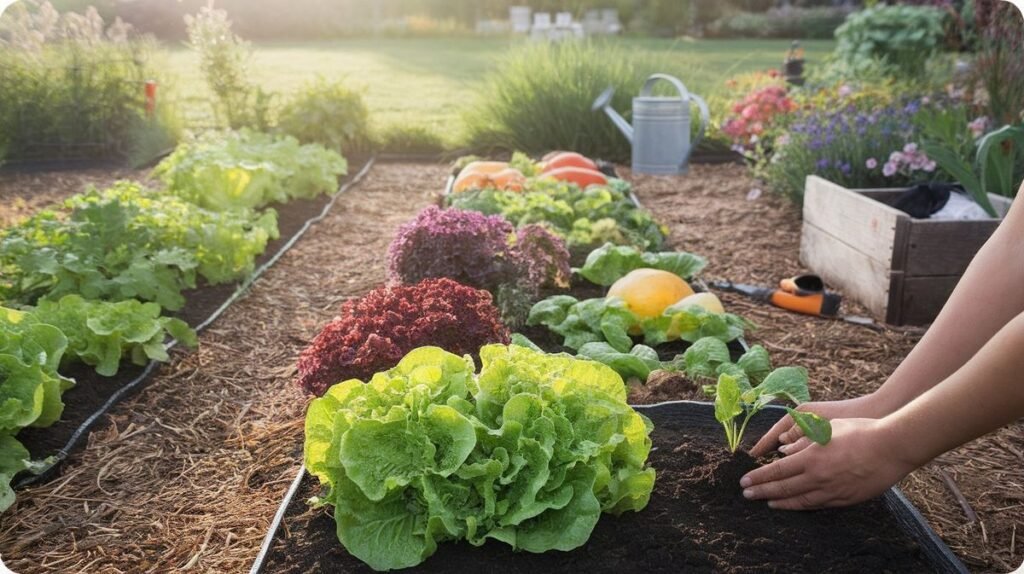
You want to grow everything. Tomatoes, peppers, zucchini, cucumbers, beans, herbs, strawberries — all in the first season. The result? You get swamped, nothing receives adequate attention, and most of it fails.
Start Small and Expand Slowly
Choose 3 to 5 crops for your first season. Choose beginner-friendly vegetables like:
- Lettuce — quick to grow, requires little care
- Radishes — harvestable in as few as 25 days
- Zucchini — very productive with little work
- Green beans — simple to seed and harvest
- Cherry tomatoes — easier to work with than larger types
Once you learn how those grow on your property, plant even more next season. A small, well-run backyard mini farm will always beat out a big, neglected one.
Mistake #4 — Wrong Watering (Too Much or Not Enough)
Watering feels like the simplest part of farming. It’s not.
Overwatering is actually the number one cause of plant death in backyard mini farms. Over-watering creates flooded roots and root rot. Not enough water puts the plant under stress and prevents fruit production.
How to Water Your Mini Farm the Right Way
The rule of thumb: water deep, not often.
Rather than watering a bit each day, water deeply 2 to 3 times weekly. This forces moisture down into the soil and helps roots reach deep — strengthening your plants and making them more resistant to drought.
Quick watering tips:
- Water in the morning, never at night (night watering causes fungal disease)
- Stick your finger 2 inches into the soil — if dry, water; if moist, hold off
- Use a drip irrigation system or soaker hose to conserve water and minimize disease
- A layer of mulch over your beds retains moisture and stops it from evaporating
Mistake #5 — Neglecting Crop Rotation
Planting the same thing in the same spot, year after year, leads to a build-up of problems.
Pests and diseases that love tomatoes, for instance, will live on in the soil over winter. They’re waiting and ready next spring. Meanwhile, certain plants draw the same nutrients from the soil season after season, draining it of resources.
A Simple Crop Rotation Plan
Divide your beds into sections. Rotate crops to a different section each season using this pattern:
| Season | Bed A | Bed B | Bed C | Bed D |
|---|---|---|---|---|
| Year 1 | Tomatoes | Leafy greens | Root veggies | Legumes |
| Year 2 | Legumes | Tomatoes | Leafy greens | Root veggies |
| Year 3 | Root veggies | Legumes | Tomatoes | Leafy greens |
| Year 4 | Leafy greens | Root veggies | Legumes | Tomatoes |
This straightforward system keeps your soil healthy and pests confused — a victory for your backyard mini farm.
Mistake #6 — Not Composting (Free Fertilizer You’re Just Throwing Away)
Each time you discard a banana peel, coffee grounds or vegetable scraps — you’re throwing away free fertilizer.
Compost is one of the best things you can put into your mini farm. It improves the structure of your soil, adds nutrients and feeds beneficial bacteria and worms that keep your garden thriving.
According to the U.S. Environmental Protection Agency, composting at home not only reduces waste sent to landfills but significantly enriches garden soil — making it one of the smartest habits any backyard grower can build.
How to Start a Compost Pile in 5 Simple Steps
- Choose a corner of your yard (minimum 3×3 feet)
- Start with a layer of brown materials (dry leaves, cardboard, straw)
- Add a layer of green materials (kitchen scraps, fresh grass clippings)
- Continue layering and dampen slightly if too dry
- Turn the pile every 1 to 2 weeks — compost will be ready in 2 to 3 months
What to compost:
- Fruit and vegetable scraps
- Coffee grounds and tea bags
- Eggshells
- Dry leaves and plant trimmings
- Shredded paper or cardboard
What NOT to compost:
- Meat or dairy products
- Pet waste
- Diseased plants
- Oily or cooked food
One of the biggest backyard mini farms mistakes is spending money on store-bought fertilizer while throwing away perfectly good compost material every single day.
Mistake #7 — Timing Your Planting Incorrectly
Timing is more important than most novices think.
Plant too soon and a frost kills your seedlings overnight. Plant too late and the summer heat fries cool-season crops before they bear anything.
Know Your Growing Zone and Frost Dates
Online, you can enter your zip code to discover your USDA hardiness zone. This tells you your average first and last frost dates — the two most critical numbers in backyard farming.
Here’s a general planting guide:
| Season | What to Plant | When to Start |
|---|---|---|
| Early spring | Lettuce, spinach, peas, kale | 4–6 weeks before last frost |
| Late spring | Tomatoes, peppers, cucumbers | After last frost date |
| Summer | Beans, squash, corn | When soil is consistently warm |
| Fall | Broccoli, carrots, radishes | 6–8 weeks before first frost |
Keep a simple garden journal. Make notes on when you plant, what the weather was like and what happened. Over time, this data becomes your personal farming guide.
Mistake #8 — Waiting Until It’s Too Late to Address Pests
One day your plants are standing tall. The next day, half of them are gone.
Pests move fast. Aphids multiply overnight. Caterpillars can strip a plant bare in days. If you wait until you see damage to act, you are almost always already a step behind.
Pest Prevention Comes Before Pest Control
Prevention is the best pest management. Here’s how to stay ahead:
- Check plants three times a week — inspect under leaves and on stems
- Use row covers — lightweight fabric that keeps insects out but allows light in
- Plant companion plants — basil wards off aphids; marigolds repel many pests
- Attract beneficial insects — ladybugs, lacewings and parasitic wasps eat garden pests
- Discard damaged leaves right away — do not leave infested material sitting in your beds
If pests do appear, start with the least harmful option:
- Pick by hand and drop into soapy water
- Spray with neem oil (natural and effective)
- Use insecticidal soap spray
- Chemical pesticides should be a last resort — they kill beneficial insects too
Mistake #9 — Ignoring Plant Spacing
Plants need room to breathe.
When new gardeners see a tiny seedling, it’s tempting to crowd them in. But that little tomato seedling becomes a 5-foot bush. Overcrowded plants compete for water, sunshine and nutrients. They also trap moisture between leaves, which leads to fungal disease.
Spacing Guide for Common Mini Farm Crops
| Crop | Spacing Between Plants | Spacing Between Rows |
|---|---|---|
| Tomatoes | 18–24 inches | 36 inches |
| Lettuce | 6–8 inches | 12 inches |
| Zucchini | 24–36 inches | 36–48 inches |
| Carrots | 2–3 inches | 12 inches |
| Peppers | 12–18 inches | 24 inches |
| Beans (bush) | 4–6 inches | 18 inches |
| Kale | 12–18 inches | 18–24 inches |
Always read the seed packet. The spacing recommendations exist for a reason — and not following them is one of the most overlooked backyard mini farms mistakes among new growers.
Mistake #10 — Skipping a Water Management Plan
Relying on rainwater alone is a gamble you’ll usually lose.
Some weeks it rains every day. Other weeks there’s nothing for two or three weeks straight. Without a regular water plan, your crops suffer through both extremes.
Easy Water Management Solutions for Small Farms
Collect rainwater. Install a rain barrel connected to your downspout. A single rain event can fill a 55-gallon barrel — that’s a lot of free water for your plants.
Use mulch. A 2-to-3-inch layer of straw, wood chips or shredded leaves on top of your soil can reduce water loss by as much as 70%. It also suppresses weeds and moderates soil temperature.
Consider drip irrigation. A simple drip system runs about $30 to $50 and can be set on a timer. It sends water right to the root zone, minimizing waste and disease.
Track rainfall. A basic rain gauge tells you exactly how much natural water your garden is receiving so you can adjust your watering schedule appropriately.
Mistake #11 — Quitting After One Bad Season
This could be the most damaging mistake of all.
Every farmer — novice or expert — has bad seasons. A late frost kills off seedlings. A pest infestation wipes out a crop. In a drought, every plant in the yard suffers. These things happen. They don’t mean you failed.
What a Bad Season Really Teaches You
Each failure gives you information:
- Which crops are too delicate for your climate
- Where your soil needs improvement
- Which pests attack your garden specifically
- What timing adjustments will help in the coming year
The farmers who succeed long-term treat every bad season as a lesson learned, not a loss. Return to your garden journal. Figure out what went wrong. Make one or two adjustments. Try again.
Growing your own food is a skill — and like all skills, it improves with practice.
Quick Reference: 11 Mistakes and How to Fix Them
| # | Mistake | Simple Fix |
|---|---|---|
| 1 | Wrong location | Map out sun patterns before you plant |
| 2 | Bad soil | Test and amend soil before each season |
| 3 | Planting too much | Start with only 3–5 crops |
| 4 | Watering wrong | Water deep, not daily |
| 5 | No crop rotation | Rotate crop families every season |
| 6 | No composting | Start a compost pile with kitchen scraps |
| 7 | Wrong planting time | Use frost dates to guide your timing |
| 8 | Ignoring pests | Check plants three times a week |
| 9 | Poor spacing | Always follow seed packet guidelines |
| 10 | No water strategy | Use rain barrels, mulch, or drip irrigation |
| 11 | Quitting too soon | Keep a garden journal and keep going |
FAQs About Backyard Mini Farms Mistakes
Q: How much space do I need to establish a backyard mini farm? You can begin with as little as 100 square feet — about a 10×10 space. Raised beds, vertical growing and containers make it possible even in very small yards.
Q: What easy crop would you recommend for a beginner backyard mini farm? Lettuce, radishes and green beans are some of the easiest. They grow fast, require little upkeep and provide quick results that keep you motivated.
Q: How can I tell if my soil is suitable for growing vegetables? There are test kits for pH and nutrients available at garden centers. Soil with a pH in the range of 6.0 to 7.0 and adequate levels of nitrogen, phosphorus and potassium is considered ideal for growing vegetables.
Q: Is it possible to have a backyard mini farm without using chemicals? Absolutely. Composting, crop rotation, companion planting and manual removal of pests are all effective organic methods. Many mini farms operate 100% chemical-free.
Q: How often do I need to fertilize my backyard mini farm? If you compost routinely, extra fertilizer may not be necessary. If you do apply fertilizer, a balanced organic fertilizer every 4 to 6 weeks through the growing season will generally suffice.
Q: What is the number one reason backyard mini farms fail? The top reason is poor planning. Without considering sunlight, good soil, proper timing and crop selection, even the most committed beginner will struggle.
Q: Is growing your own food cheaper than buying it? Over time, yes. There are startup expenses the first season (beds, soil, tools). But by years two or three, your cost per pound of food drops significantly — especially for high-value crops like herbs, tomatoes and peppers.
Grow Smarter, Not Harder
The mistakes you make with your backyard mini farms do not have to define your experience as a new grower.
Every error on this list has a fix — most are simple, low-cost and something you can implement before your next planting day. The key is to begin with a plan, tune into what’s actually happening in your garden and show yourself grace when things don’t go perfectly.
Pick the right spot. Feed your soil. Start small. Water smart. Rotate your crops. Watch for pests. And above all — don’t stop.
Your backyard mini farm can feed your family, save you money and connect you deeply to the source of your food. Don’t let avoidable mistakes get in the way of that.
Start with one change. Then another. Your skills will grow right alongside your garden, season by season.