
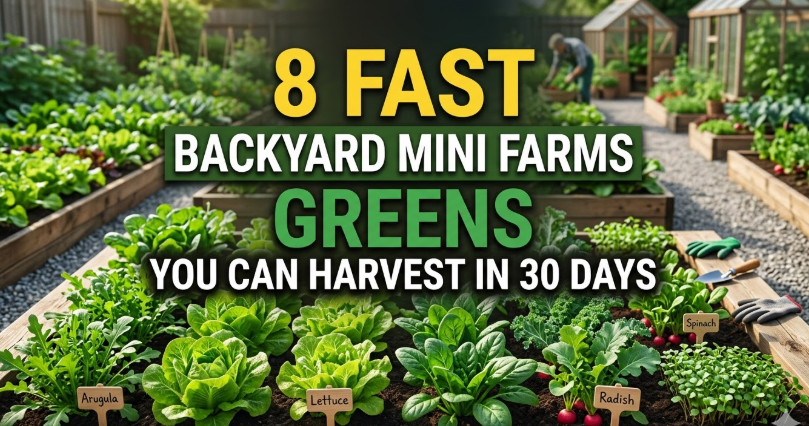
Meta Description: 8 Backyard Mini Farms Greens You Can Have in 30 Days or Less — even if you are short on space and gardening experience, grow your own fresh, nutritious greens at home fast.
8 Fast-Growing Greens for Backyard Mini-Farms You Can Harvest in 30 Days
Growing your own food doesn’t need to take months. You don’t need a big yard, expensive tools, or decades of experience. With the right greens, you can go from seed to harvest in only 30 days — right in your backyard mini farm.
These fast-growing greens are great for novices. They grow fast, taste great, and help you save on the grocery bill. And no matter if you can offer a small patio, a few raised beds, or even just containers on a balcony, these plants will do well.
So let’s dig into the 8 best greens for your own backyard mini farm that can be harvested within 30 days or less.
Why the Backyard Mini Farm Makes So Much Sense Right Now
Food prices keep rising. More people are reflecting on where their food comes from. A mini farm in your yard gives you fresh, clean produce right at hand.
You don’t require much space. Using clever planting techniques, many folks grow amazing amounts of food in very small spaces. Fast-growing greens are a great place to start because you get results quickly.
Quick wins build confidence. When you pick your first crop of lettuce or radishes in less than a month, you’ll be hooked. That’s how backyard mini farms become a hobby that turns into a legitimate source of food.
If you’re ready to dive deeper into planning your setup, Backyard Mini Farms is a great resource to explore layouts, tools, and beginner guides for growing food at home.
What Makes a Green “30-Day Ready”?
Not every plant grows fast. Greens that make the 30-day list have some things in common.
They sprout fast — generally in 3 to 7 days. Their leaves or roots grow rapidly to an edible size. They don’t need much maintenance. And they thrive in small spaces, containers, or raised beds.
Here’s a quick breakdown of what to expect from every plant covered in this piece:Now let’s go through each green, one by one.
1. Radishes — The Fastest Crop on Your Mini Farm
Radishes are your best friend for the fastest win in your backyard mini farm greens garden. They can go from seed to your plate in as little as 21 to 25 days. That’s faster than most people can have a pizza delivered and removed from their consciousness.
Radishes are so simple that kids can grow them. They need very little care. Just plant, water, and wait.
How to Grow Radishes Fast
Sow seeds approximately half an inch deep. Space them 2 inches apart. They like full sun but can withstand some shade. Water them regularly — around an inch of water a week.
Soil must be loose and well-drained. Radishes come out funny-looking when the soil is compacted. A simple raised bed or container with quality potting mix is just fine.
When to Harvest Radishes
Radishes are ready when you can see the shoulder (the top of the root) pushed up above the ground. Pull one and feel — it should be firm and marble-size or larger.
Don’t wait too long. Radishes left in the ground too long become pithy (empty and spongy within) and lose that crisp flavor.
Pro tip: Plant a new batch of radish seeds each week. That gives you a harvest every time, all season long.
2. Spinach — A Nutritional Powerhouse in 30 Days
Spinach is some of the most nutrient-dense greens you can grow. It’s packed with iron, vitamin K, and antioxidants. And it grows quickly enough to reach your salad bowl in 25 to 30 days.
It is a cool-weather crop, so it’s well suited to early spring or fall planting. It actually becomes sweeter after a light frost.
How to Grow Spinach in a Mini Farm
Spinach thrives in containers, raised beds, or directly in the ground. It doesn’t require a great deal of depth — 6 inches or so of good soil is sufficient.
Sow seeds half an inch deep and 1 inch apart. When seedlings emerge, thin to 3 inches apart. This helps each plant spread its leaves.
Baby Spinach vs. Full Leaves
Even sooner, in about 20 days, you can harvest baby spinach by snipping young leaves. Or you can wait until the full leaves form at 30 days.
Harvest from the outside of the plant only. Leave the middle leaves on and it continues to produce.
Spinach doesn’t love heat. If summer temperatures rise over 80°F (27°C), it will bolt (go to seed) and become bitter. In hotter months, plant in a location with afternoon shade.
3. Loose-Leaf Lettuce — The Cut-and-Come-Again Champion
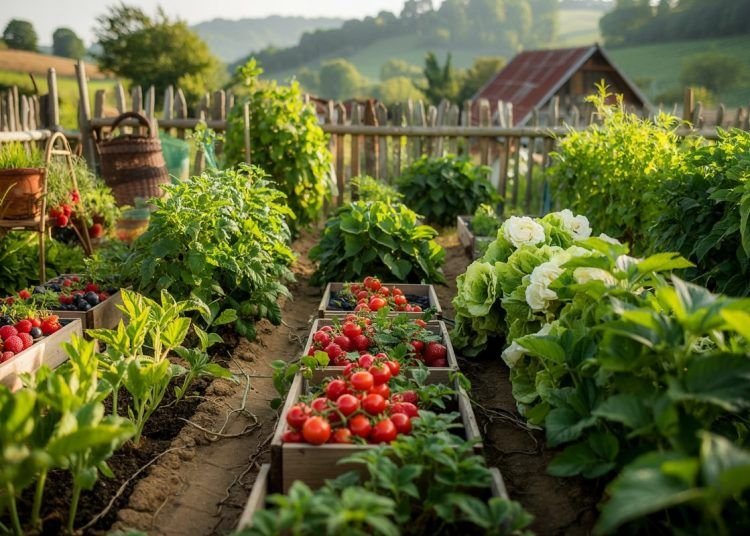
Loose-leaf lettuce is a very rewarding green to grow for a backyard mini farm. You can harvest it in as little as 28 days, and the plant continues growing back with each cut.
This “cut-and-come-again” ability allows you to harvest several times from a single planting. That’s a lot of value from a little bit of space.
Best Varieties for Speed
- Black Seeded Simpson — fast-growing, mellow flavor
- Red Sails — vibrant and sweet
- Oak Leaf — bolt-resistant, adaptable in warm conditions
Any of these can be harvested in about 4 weeks.
Planting and Care Tips
Disperse seeds sparingly over your bed or container. You don’t have to plant them in perfectly spaced rows. Lettuce is forgiving.
Keep the soil moist but not soaked. Lettuce has shallow roots that dry out quickly. A simple drip system or daily watering keeps them happy.
Lettuce can tolerate partial shade, which even slows bolting. This is excellent if your backyard has some afternoon shadow.
4. Arugula — Quick-Growing and Full of Peppery Punch
In the world of backyard mini farms, arugula is a rock star. It’s fast growing (21 to 28 days), tolerates cool weather, and adds a spicy, peppery zing to salads and sandwiches.
It’s one of those greens that makes you feel like a gourmet cook without any of the effort.
Growing Arugula the Right Way
Sow seeds directly in the soil and press them in gently. They’re small — you don’t need to plant them deep. Just sprinkle and water.
Arugula prefers cool temperatures. It bolts fast in summer heat. For backyard mini farm success, spring and fall are the best times to go.
Harvesting for Maximum Flavor
Young arugula leaves (grown to around 21 days) are less pungent and more tender. Older leaves get progressively pepperier and a little tougher.
The best time to harvest is before the plant begins flowering. Once the leaves flower, they become quite sharp-tasting. This is too intense for most people.
Arugula, like spinach and lettuce, is a cut-and-come-again green. You cut what you need, leave the rest, and it grows right back.
5. Mustard Greens — Bold Flavor, Grows Super Fast
Mustard greens deserve more credit. They grow in only 21 to 28 days, thrive through cold weather like a champion, and bring a spicy, piquant snap to stir-fries, soups, and salads.
They’re also incredibly nutritious. Mustard greens are high in vitamin C, vitamin K, and fiber.
How Mustard Greens Work on a Mini Farm
Mustard greens get a bit bigger than most fast greens. Space each plant about 6 inches apart. They also perform well in containers, provided the pot is at least 8 inches deep.
Plant seeds a quarter inch deep. They germinate within 5 to 7 days. After seedlings appear, water regularly and provide full sun to partial shade.
Taming the Heat
Mustard greens can be pretty spicy, particularly as they get older. If you want something milder, pick them when they are young — about 21 days.
Blanching (briefly boiling and then chilling in ice water) before eating greatly reduces their spiciness. This technique, used in many Asian cuisines, makes mustard greens more palatable.
They’re a great green to stir-fry with garlic and olive oil. Quick, healthy, and absolutely delicious.
6. Baby Kale — Ready to Harvest in 30 Days, and Tastier Without the Tough Leaves
Full-grown kale can take 50 to 70 days to mature. But baby kale? In as little as 25 to 30 days, you can harvest tender young leaves.
Baby kale leaves are more tender, delicate, and easier to eat raw than mature leafy greens. They’re great in smoothies, salads, and wraps.
Getting Baby Kale Going Fast
Plant kale seeds at roughly a quarter inch in depth. Once seedlings are 2 inches tall, thin to about 4 inches apart.
Kale loves fertile soil. At planting time, mix some compost into your potting mix or raised bed. This provides a nutrient boost to the plants from day one.
Water consistently. Kale doesn’t want to dry out completely, but it also doesn’t want soggy roots. The sweet spot: evenly moist soil.
Baby Kale as a Centerpiece of Your Mini Farm
Succession planting is one trick used by experienced mini farmers. Plant a new row or container of kale every 2 weeks. By the time you’ve harvested that first batch, the second one is nearly ready.
This gives you a mini farm that’s producing fresh greens consistently, in small batches instead of vast, overwhelming bursts.
7. Microgreens — The Quickest Harvest You Will Ever Get
In the backyard mini farm world, microgreens are the kings of speed. They are ready to harvest in only 7 to 14 days. That’s not a typo. Time from seed to plate: one to two weeks.
They’re the tiny, freshly germinated shoots of vegetables and herbs. Despite their small size, studies show that microgreens can pack up to 40 times the nutrients of their mature counterparts. According to research published by the USDA Agricultural Research Service, microgreens from 25 different varieties were found to contain significantly higher levels of vitamins C, E, and K than mature leaves.
What Can You Grow as Microgreens?
Almost anything. The most popular choices include:
- Sunflower — crunchy, nutty flavor
- Pea shoots — sweet and tender
- Radish microgreens — hot and crunchy
- Broccoli — mild and nutritious
- Basil — aromatic and flavorful
Setting Up a Microgreen Tray
Microgreens don’t even need outdoor space. A shallow tray on a bright windowsill is perfect.
Fill a shallow tray (2 inches deep or so) with potting mix or a specialized medium for growing microgreens. Scatter seeds thickly over the surface — much thicker than for regular plants. Press them down gently.
For the first 3 days, cover them with another tray or a piece of cardboard to keep them in the dark. This encourages fast germination. Then uncover and set in bright light.
Harvest when you see the first true leaves, typically between day 7 and 14. Cut with scissors just above the soil line.—
8. Swiss Chard — Colorful, Versatile, and Ready in 30 Days
If your backyard mini farm has an artist, it’s going to be Swiss chard. Its stems are a riot of bright red, yellow, orange, and white. It’s lovely to behold and extraordinarily useful in the kitchen.
You can begin harvesting baby chard leaves at 28 to 30 days. Like many of the greens on this list, it’s a cut-and-come-again plant.
Why Swiss Chard Belongs in Your Mini Farm
Swiss chard is incredibly versatile. The leaves can be used like spinach — in salads, smoothies, and stir-fries. Use the colorful stems like you would celery — in soups and sautés.
It performs better under heat than spinach or lettuce. This makes it an excellent choice for summer planting when other greens have quit.
Growing Swiss Chard for Rapid Results
Plant seeds half an inch deep and 4 inches apart. Chard seeds are actually clusters — you may get 2 to 3 seedlings from each “seed.” Once they sprout, thin them out to one plant per spot.
Chard needs full sun for fastest growth. While it will tolerate some shade, it does not grow as quickly.
Water deeply but infrequently. Chard develops a deep root system, so watering deeply once or twice weekly is better than light daily watering.
Smart Planting Strategies to Get More From Your Mini Farm
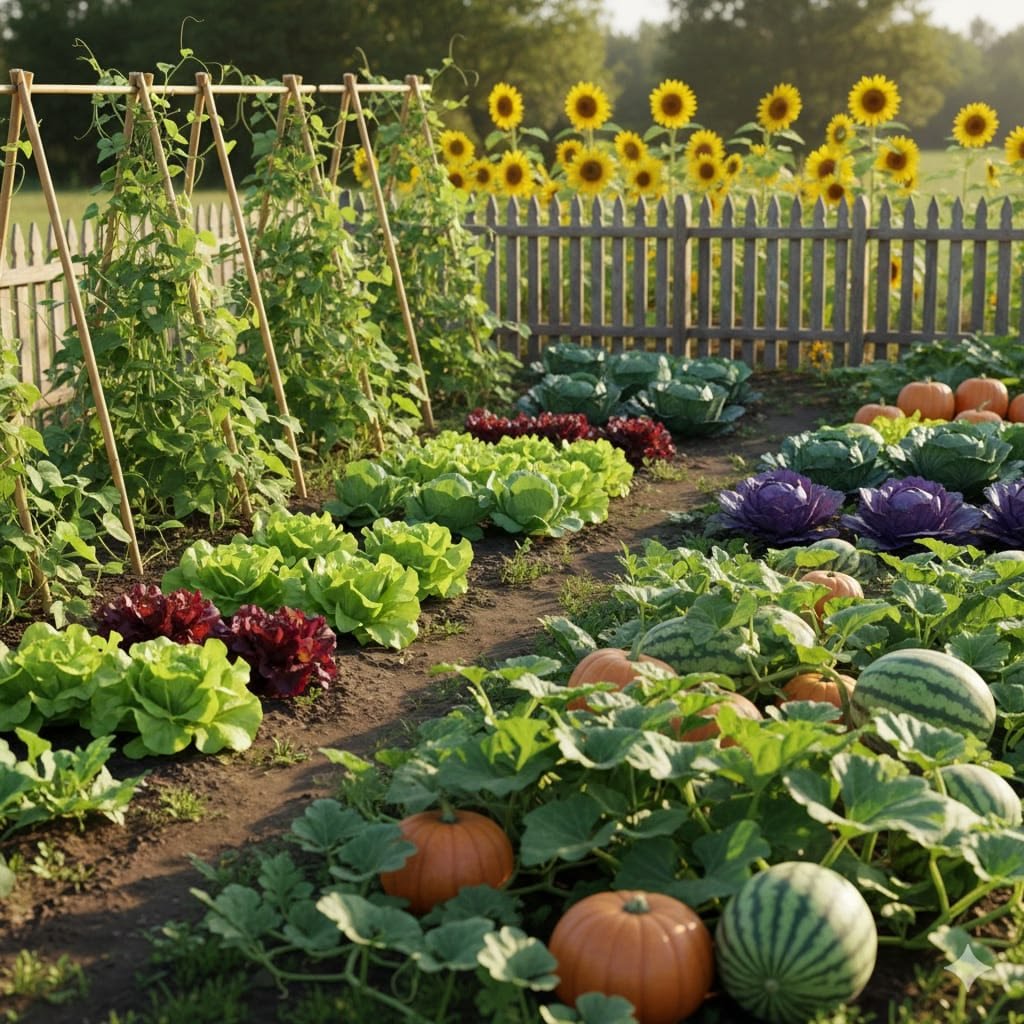
Growing one type of green sounds fantastic. But mixing in smart strategies transforms your backyard mini farm into an everlasting food system.
Succession Planting — Never Be Without Greens
Succession planting means you plant small batches every 1 to 2 weeks rather than planting everything at once. This staggers your harvests so there’s always something on hand to pick.
For instance, rather than sowing 100 radish seeds on day one, you could sow 20 seeds per week for weeks one through five. You’ll have fresh radishes every couple of weeks for more than a month.
Companion Planting — Let Plants Help Each Other
Some plants grow better together. This improves pest resistance, soil health, and space use.
- Radishes planted near lettuce help repel aphids.
- Spinach and arugula thrive in the same container.
- Mustard greens can also be planted around other greens as a pest deterrent.
Container Gardening — Little Space, High Return
It does not require any ground space at all. Most of these 30-day greens respond beautifully to containers.
For shallow greens such as spinach, lettuce, and arugula, use pots that are at least 6 inches deep. Radishes need 8 to 10 inches. Swiss chard and kale thrive at 10 to 12 inches deep.
Use a high-quality potting mix — not garden soil, which compacts in containers and retards growth.
Essential Care Tips That Apply to All 8 Greens
Regardless of which of these fast greens you select for your backyard mini farm, these fundamentals apply to all.
Watering: Keep soil consistently moist. Most of these greens contain about 90 percent water, so adequate hydration is key. Watering in the early morning is preferable — it minimizes evaporation and avoids most fungal diseases.
Sunlight: Most rapid-growing greens like 6 hours of light a day. Some (such as spinach, lettuce, and arugula) can tolerate 3 to 4 hours well.
Soil quality: The biggest differentiator in growth speed is rich, well-draining soil with good compost. Add compost before planting for best results.
Pest control: Examine plants periodically. The pests that bother the most are aphids and slugs. Diluted dish soap, lightly sprayed, takes care of the aphids. Slugs are deterred by beer traps or copper tape.
Fertilizing: Quick-growing greens enjoy a light liquid fertilizer every two weeks. A balanced fertilizer (such as 10-10-10) or liquid fish emulsion is effective.
Nutrition Snapshot — Why These Greens Are Worth Growing
Growing your own food is more than a convenience. These 8 backyard mini farm greens are nutrition rockstars.Homegrown greens are also packed with more nutrients than store-bought. Commercial greens may be harvested days before you consume them. Your backyard mini farm greens travel straight from soil to table.
Mistakes New Mini Farmers Make (And How to Avoid Them)
Even the simplest of greens can falter if a few critical things go awry. These are the most common errors — and easy fixes.
Overwatering: More new gardeners drown their plants than starve them. Overwatering is the most common reason people kill plants. The fix? Put your finger an inch into the soil. If it’s still wet, hold off on watering.
Planting in bad soil: Inexpensive or old soil drains poorly and retains fewer nutrients. Use only fresh, high-quality potting mix or compost-fortified garden soil.
Planting too closely: It’s easy to want to pack a lot of seeds into a small area. But crowded plants fight for water, nutrients, and light. Thin seedlings as instructed on individual seed packets.
Not hardening off transplants: If you start seeds indoors, don’t take them outside on a sunny day without preparation. Acclimate them to the outdoors over a week.
Harvesting too late: Timing is everything with fast greens. Radishes turn pithy. Arugula turns bitter. Mustard greens get too sharp. When you’re close to the harvest window, inspect your plants every 2 to 3 days.
The 30-Day Plan to Launch Your Mini Farm
Not sure where to start? Here is a simple 30-day plan that will get you your first harvest of greens from your backyard mini farm.
Day 1: Set up your space. Choose pots or a raised bed. Fill with quality potting mix. Pick 2 or 3 greens from this list.
Day 1–3: Plant your seeds. You can plant radishes and arugula on the same day. If you want your harvest as fast as possible, set up a microgreen tray.
Day 3–7: Germination happens. Keep soil moist. Check for sprouts every day.
Day 7–14: If necessary, thin seedlings. The first microgreens can be harvested now.
Day 14–21: Getting visible growth. Radishes may already be shouldering their way up.
Day 21–25: First radish harvest. Begin to monitor arugula and mustard greens as well.
Day 28–30: Harvest your first lettuce, spinach, Swiss chard, and baby kale.
Congratulations — in just one month you’ve grown real food from scratch.
FAQs About Backyard Mini Farm Greens You Can Harvest in 30 Days
Q: If I don’t have a yard, can I grow these greens indoors? Yes. Many of these backyard mini farm greens thrive indoors, near a sunny south-facing window. Microgreens and lettuce are particularly well suited for growing indoors. If you’re short on natural light, a small grow light can also help.
Q: Do I need special soil for these quick-growing greens? You don’t need anything exotic. All you need is a good quality potting mix with added compost. Do not use ordinary garden soil in containers — it compacts too much and stunts growth.
Q: How much water do these greens require each day? They mostly need about 1 inch of water each week. On hot or windy days, they might require more. Press a finger in about an inch to gauge whether soil is dry, checking it daily. Water when the top inch feels dry.
Q: Can these greens be grown in winter? Cool-season greens such as spinach, arugula, mustard greens, and lettuce can withstand light frosts. In cooler climates, use a cold frame, row cover, or greenhouse to lengthen your season. Microgreens grow year-round indoors.
Q: What is the most forgiving green for an absolute beginner? Radishes and microgreens are the two easiest entry points for any backyard mini farm. Radishes nearly plant themselves. Microgreens don’t even require outdoor space or deep planters.
Q: How can I tell when greens are ready to harvest? Use the days-to-maturity on your seed packet as a baseline. For leafy greens, pick them when the leaves are large enough to use but before they flower. For radishes, look to see when the top of the root pushes up through the soil.
Q: Will these plants come back after I harvest them? Yes — many leafy greens on this list are cut-and-come-again. Spinach, lettuce, arugula, Swiss chard, mustard greens, and baby kale all grow back after a cut. Never remove the center growing point.
Q: Is growing your own greens worth it for saving money? Absolutely. A packet of seeds costs $2 to $4 and can produce dozens of harvests. At a store, one bunch of baby kale costs $3 to $5. Growing your own backyard mini farm greens is super cost effective right away — and succession planting will really accelerate those savings.
Conclusion — Start Your Backyard Mini Farm Now
There has never been a better time for growing your own food. These 8 fast backyard mini farm greens show you don’t need months of patience, acres of land, or a botany degree to eat fresh from your own garden.
Radishes provide you with something to eat in three weeks. Microgreens are ready in one. Spinach, lettuce, arugula, mustard greens, baby kale, and Swiss chard complete a full, nutritious, homegrown menu — all in 30 days.
Start small. Pick one or two greens. Plant them this weekend. Water them, watch them grow, and harvest them in a month.
Having a backyard mini farm starts with one seed and one decision. Make that decision today.
Happy growing!